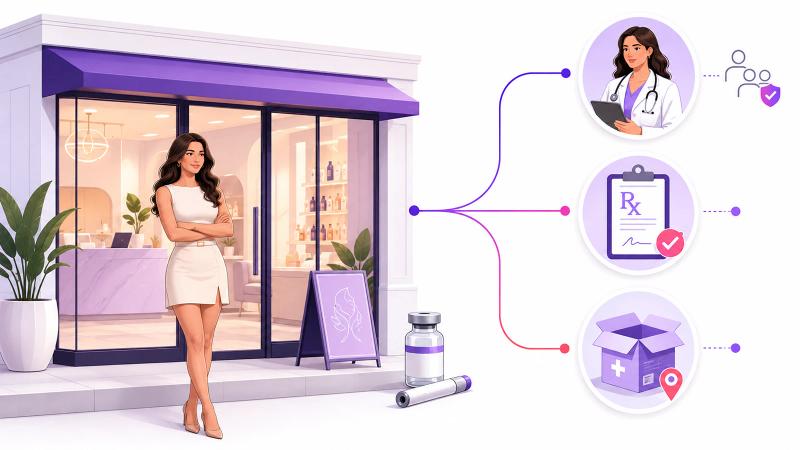

A regional diagnostics brand with five locations and 18,000+ annual customers kept hearing the same question after results came back: what do I do next? Rather than stitching together vendors for software, providers, pharmacy, and payments, it launched a white-label telemedicine storefront on FUSE Health in six weeks — starting with one high-intent program, hormone optimization, instead of the three leadership originally wanted. Existing lab customers routed straight into treatment while others were sent to testing first, refill logic was configured before the first enrollment, and telemedicine revenue was tracked separately from lab revenue. Most first-90-day enrollments came from the existing base, and adding programs later became a configuration step rather than another build.
Core Insights
Introduction
A regional diagnostics brand uncovered a strong revenue opportunity inside its existing customer base.
Customers were purchasing hormone, metabolic, and performance lab panels, reviewing their results, then asking the same next-step question: “What should I do next?”
The company already had five testing locations, more than 18,000 annual customers, and a trusted reputation among health-conscious consumers. Demand was not the issue. The challenge was creating a scalable way to convert lab-driven intent into healthcare revenue.
Building telehealth internally would have required software development, provider recruitment, pharmacy partnerships, compliance oversight, payment systems, refill management, and support training before serving a single patient.
Instead, the company partnered with FUSE Health to launch a white label telemedicine platform. The business kept its own brand and customer relationship while provider review, prescribing workflows, pharmacy fulfillment, payments, and refills were supported through established infrastructure.
The first program went live in six weeks.
The Challenge
The company’s lab testing business naturally generated demand for treatment guidance. Customers wanted help understanding their results and determining whether treatment options were available.
The leadership team needed answers to several operational questions before launching. Who reviews patient intake? How are lab results incorporated into clinical decisions? When should payments be processed? Who determines treatment eligibility? How are prescriptions fulfilled? How are refills managed? What can support staff discuss without providing medical advice?
The company explored custom telehealth software solutions but quickly saw how fragmented the process could become. One vendor could build the customer-facing experience. Another could support intake. Provider coverage, pharmacy fulfillment, payment systems, and refill management still required separate agreements and workflows.
FUSE Health simplified the path by providing a white label telemedicine platform designed around the full patient journey, from enrollment and intake to provider review, fulfillment, refills, and retention.
Step 1 - Program Selection
Leadership initially wanted to launch hormone optimization, metabolic support, and performance recovery at the same time.
FUSE Health recommended launching one program first. Every additional program introduces new intake requirements, clinical review criteria, pharmacy considerations, refill schedules, and support processes. Starting with one offering reduced complexity and accelerated implementation.
Hormone optimization support became the first program because it aligned closely with existing customer behavior. Customers were already purchasing hormone-related lab panels and actively seeking guidance after receiving results.
The launch strategy was simple: start with one high-intent program, use existing customer demand, validate workflows before expansion, and add additional programs later.

Step 2 - Storefront Configuration
FUSE Health configured a storefront that matched the company’s existing brand identity. Customers could move naturally from lab testing into telemedicine services without feeling redirected to an unfamiliar healthcare portal.
The storefront included program information pages, eligibility-focused intake forms, checkout functionality, payment authorization workflows, customer account access, program status tracking, and refill management tools.
Because customers already trusted the company through its testing services, maintaining a consistent brand experience was essential. The white label telemedicine platform extended that trust into healthcare services while preserving the company’s ownership of customer relationships and marketing efforts.
Behind the scenes, FUSE Health managed the operational infrastructure necessary to support healthcare delivery.

Step 3 - Intake, Labs, and Provider Review
The intake process needed to accomplish more than basic customer data collection. The platform had to connect eligibility screening, lab verification, provider review, and treatment decisions into one clean workflow.
FUSE Health configured the process so customers completed all required steps before clinical review occurred. Existing lab customers could move into the treatment path, while customers without current labs were routed toward the required testing step before review.
The customer journey followed a structured sequence: the customer selected a program, completed intake, verified lab requirements, moved into provider review, received a prescription when appropriate, entered pharmacy fulfillment, and continued with refills and follow-up according to protocol.
Lab-Driven Enrollment - Customers entered the program from existing testing demand rather than cold acquisition. This lowered friction because trust already existed before telemedicine was introduced.
Provider Review Workflow - Clinical decisions remained inside the provider review process. Support staff helped customers with operational questions but did not determine treatment suitability.
Payment Authorization Logic - Payment workflows were aligned with clinical review requirements so the customer experience stayed smooth while the process remained controlled.
Recurring Revenue Model - Refill workflows were configured before the first enrollment. This helped the company build a recurring healthcare revenue channel instead of a one-time consultation product.
Revenue Separation - Telemedicine revenue was tracked separately from lab testing revenue, giving leadership a clean view of the new channel’s performance.

Build Your Telehealth Platform Faster
Launching digital healthcare services requires complex infrastructure. FUSE provides the tools needed to connect patients, providers, and pharmacies in one platform.
Step 4 - Pharmacy, Payments, and Refills
The company understood traditional product fulfillment but had limited experience with prescription fulfillment.
Before launch, FUSE Health configured workflows for prescription routing, fulfillment procedures, shipping expectations, refill schedules, and customer communications. Payment authorization was also aligned with provider review requirements, since telemedicine programs cannot operate like standard e-commerce transactions.
The platform tracked new enrollments, approved patients, incomplete applications, declined cases, refill activity, monthly recurring revenue, and telemedicine revenue separate from lab revenue.
This visibility allowed leadership to evaluate performance immediately after launch and understand whether the white label telemedicine platform could become a durable revenue channel.
What Launched
The company launched its first white label telemedicine program in six weeks.
The implementation included a branded telemedicine storefront, program-specific intake workflows, lab requirement routing, provider review processes, pharmacy fulfillment infrastructure, payment authorization workflows, refill management systems, revenue reporting tools, and customer support procedures.
The company did not need to hire providers, negotiate pharmacy contracts, or build custom software. Instead, it launched a healthcare revenue channel that complemented its existing testing business.
Core Insights
The first 90 days validated the strategy. Most enrollments came from existing customers, which helped keep acquisition costs low. Promotion happened through email campaigns, SMS messaging, post-result communications, in-location QR codes, and customer support interactions.
Within the first month, the company identified the customer segments most likely to enroll. By the second month, messaging around provider review and treatment eligibility had improved. By the third month, refill activity demonstrated the potential for recurring revenue rather than a temporary launch spike.
The most important outcome was operational. The company added healthcare revenue without changing its core business model. Future expansion became a matter of configuration rather than rebuilding infrastructure from scratch
References
- FUSE Health Case Studies
- LegitScript Healthcare Merchant Certification
- Health Products Compliance Guidance

Daniel is a two-time founder who has scaled service businesses across major U.S. markets. A Y Combinator competition winner, he focuses on removing operational and regulatory barriers so operators can build and scale modern healthcare businesses.
- Background
- Startup Operations & Service Systems
- Experience
- 2x Founder, Multi-Market U.S. Scaling
- Qualifications
- Healthtech Market Expertise & Operational Scaling
- Key Achievement
- Scaled Premier Staff & Eventstaff across major U.S. markets