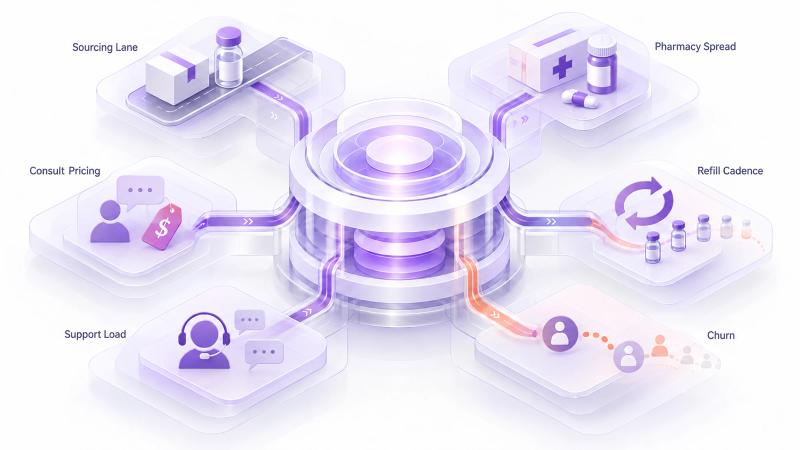
A white-label GLP-1 program took this wellness brand from no clinical setup to live sales in weeks. LegitScript and healthcare payments cleared before launch, refills ran from the first patient, and by day 90 refill revenue had overtaken first-purchase revenue.
This direct-to-consumer wellness brand had 80,000 people on its email list and a reputation built on metabolic health content. Its subscribers kept asking about semaglutide and GLP-1 programs by name.
So the demand was there. What the brand lacked was everything a prescription program runs on: licensed providers, pharmacy contracts, HIPAA-ready data handling and a payment processor willing to bill for healthcare subscriptions.
It launched its own white-label GLP-1 program on FUSE Health in weeks. Here's how each piece was set up and what the revenue mix looked like at day 90.
Executive Summary
| Item | Detail |
|---|---|
| Client | Direct-to-consumer wellness brand focused on metabolic health, with 80,000 email subscribers |
| What launched | A white-label GLP-1 program, sold under the brand's own name on FUSE Health |
| Time to launch | Weeks, against an in-house estimate of 14 to 18 months |
| Ready at launch | LegitScript certification, healthcare-approved payment processing, refill and payment recovery flows |
| Clinical model | Independent licensed clinicians review every intake; licensed partner pharmacies dispense |
| Day-90 result | Monthly refill revenue exceeded first-purchase revenue |
The Challenge
Nobody on the brand's team had run a clinical operation. They had no plans to hire a clinical director, and they didn't want to spend months negotiating pharmacy agreements before selling a single subscription.
They priced out two other routes first.
| Route | What it involved | Why it didn't fit |
|---|---|---|
| Build it in-house | A healthcare attorney estimated 14 to 18 months: provider credentialing in each target state, pharmacy contracts, HIPAA architecture and LegitScript certification, which the estimate put at 60 to 90 days on its own | More than a year before the first sale |
| Clinical-review-only platform | Provider review, with no pharmacy integration or subscription billing | Three vendors to manage from day one, and overhead the team expected to eat most of the margin |
What the brand wanted was one setup where it sold the program and the regulated work ran behind the storefront.
Where GLP-1 Launches Usually Stall
In the GLP-1 telehealth launches we support, the storefront is rarely what slows things down. The delays come from three places.
- Ads that can't run. Meta requires LegitScript certification before telehealth providers can promote prescription drugs, and Google requires a telemedicine certification too. Apply after launch and the first weeks pass without paid traffic.
- A processor that won't bill. Many standard merchant accounts decline healthcare subscription billing, and brands often find out when the first charges fail.
- Refills left to the patient. If every renewal depends on someone remembering to reorder, revenue resets each month and the brand ends up paying to win back customers it already had.
This brand dealt with all three before its first order.
How the Program Launched, Step by Step
The brand sold the GLP-1 program. Clinical decisions sat with independent licensed clinicians, dispensing sat with licensed pharmacies, and FUSE Health's white-label telehealth platform connected the storefront to both. Here's what each piece did.

1. Storefront and Intake
Patients bought through the brand's own storefront, under its own name. The intake form was built around the clinical criteria in the prescribing protocol, so people who didn't qualify were screened out before a clinician saw their file. Clinician time went only to eligible submissions.
2. Clinician Review
Eligible submissions went to independent licensed clinicians through an asynchronous review workflow with a defined turnaround. Every prescribing decision was the clinician's.
Operators usually ask two things here: does the brand need a medical license, and does it see patient records? This one needed neither. It had no access to individual patient health data, which stayed on the clinical side of the platform. State rules on who can own or direct a medical practice do vary, so check the CPOM rules for every state you plan to sell in.
3. Pharmacy Fulfillment
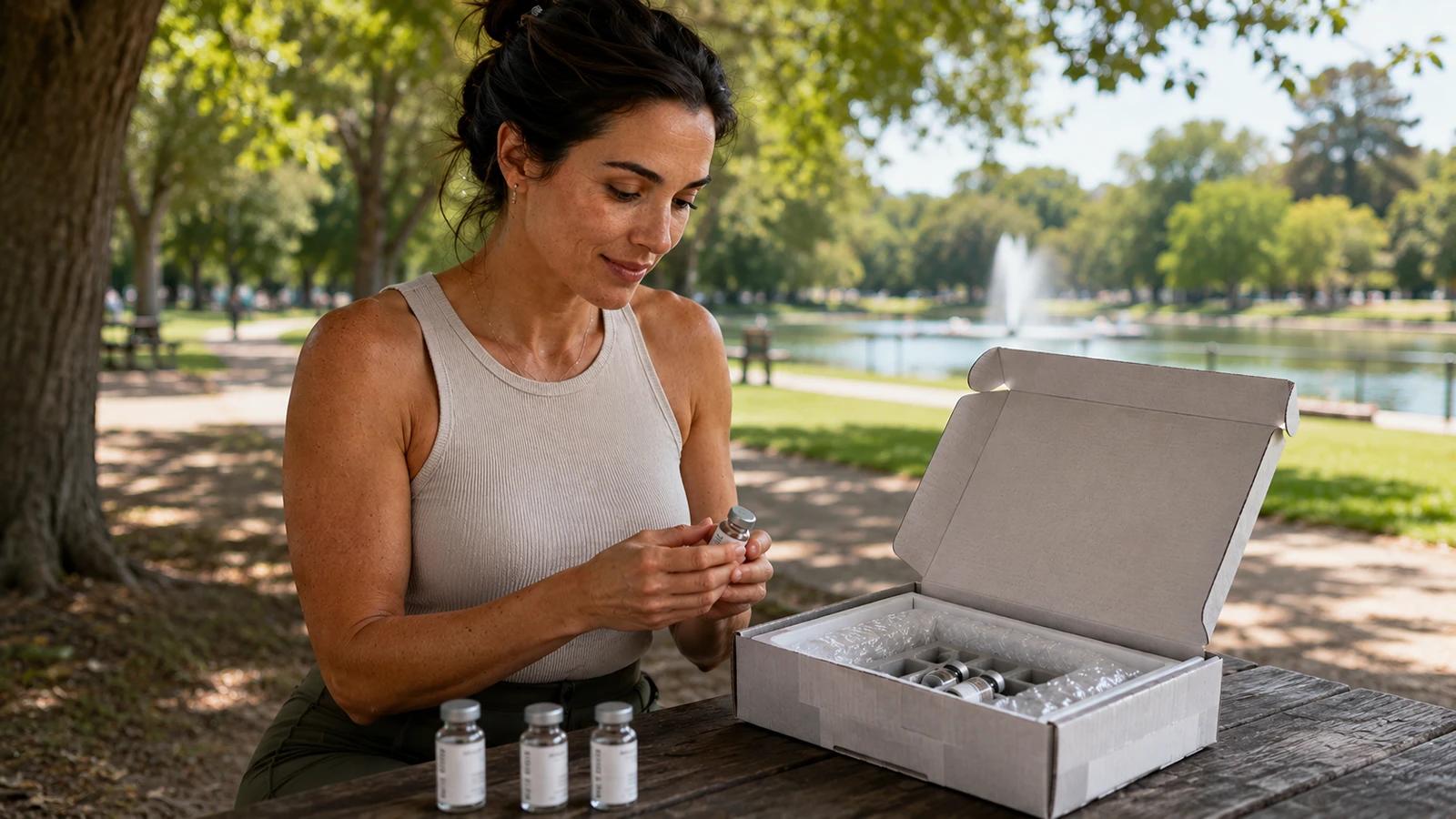
Approved prescriptions went through automatic pharmacy routing to a licensed partner pharmacy, which dispensed and shipped straight to the patient. Which medication a patient received, FDA-approved or compounded, was the prescriber's call under the federal and state rules in force at the time. Nobody at the brand touched a prescription or a pharmacy order.
4. Refills and Payment Recovery
Subscription refills were configured before the first patient enrolled. When a cycle ended, the next supply started automatically, so patients stayed on the program without reordering by hand. Failed payments, expiring cards and lapsed refills each had a recovery flow in place before go-live, and nobody on the team had to chase them.
5. LegitScript and Payments Before Go-Live
Certification sat inside the pre-launch plan, so the brand could run paid campaigns on Google and Meta from launch day. Payment processing approved for healthcare subscription billing was confirmed before the first charge went through.
GLP-1 Program Results After 90 Days
- Live in weeks, against an in-house estimate of 14 to 18 months.
- LegitScript certification was in place at launch, so paid acquisition started on day one.
- Refills and payment recovery were running before the first patient enrolled.
- Brand staff never handled a prescription or a pharmacy order.
- Within 90 days, monthly recurring revenue from refills was higher than revenue from first purchases.
That last result is the one I'd point other operators to. First-purchase revenue rises and falls with ad spend. Refill revenue builds with every cohort that stays. When refills pass new sales inside one quarter, most of the program's revenue is coming from customers it has already paid to acquire.
What It Costs to Run
We publish our pricing, so here's what a brand launching a white-label GLP-1 program would pay today. The Growth plan is $5,600 upfront, which covers expedited LegitScript coordination and the first month, then $699 a month from month two. There's a 2% merchant fee on patient payments processed through FUSE Health and no per-visit or per-prescription fees.
Our breakdown of telehealth revenue models compares this with the other ways to run a program.
Regulatory Note
GLP-1 rules changed fast between 2024 and 2026. FDA declared the tirzepatide shortage resolved on December 19, 2024, and the semaglutide shortage resolved on February 21, 2025. Its guidance, current as of April 1, 2026, states that neither drug appears on the 503B bulks list or on FDA's drug shortage list. If you're weighing pharmacy types, see 503A vs 503B. On advertising, Google is adding NABP accreditation as a second route to telemedicine certification from November 2026, alongside LegitScript.
This case study describes one brand's launch. It isn't medical or legal advice, and it makes no claims about treatment outcomes for any patient. FUSE Health provides the technology and does not configure or provide medical treatment. Get qualified healthcare counsel before launching a GLP-1 program.
What This Means for Your Launch
The brand brought an audience that already trusted it. Everything regulated was in place behind the storefront before the first order: certification, healthcare payments, clinician review, pharmacy routing and refills. That order of work is why paid traffic started on day one, and why refills had overtaken new sales by day 90.
If you have the audience and your subscribers are already asking, the next step is a launch plan for your own white-label GLP-1 program, with a date on it. Book a demo and we'll build that plan with you.
References
- FDA, FDA clarifies policies for compounders as national GLP-1 supply begins to stabilize (content current as of April 1, 2026)
- FDA, Tirzepatide Declaratory Order (December 19, 2024)
- FDA, Semaglutide Declaratory Order (February 21, 2025)
- Meta Transparency Center, Advertising Standards: Drugs and pharmaceuticals
- Search Engine Roundtable, Google Ads Gains A New Telemedicine Certification Option (NABP, November 2026)
- LegitScript Healthcare Merchant Certification
- FUSE Health pricing (checked November 10, 2026)

Daniel is a two-time founder who has scaled service businesses across major U.S. markets. A Y Combinator competition winner, he focuses on removing operational and regulatory barriers so operators can build and scale modern healthcare businesses.
- Background
- Startup Operations & Service Systems
- Experience
- 2x Founder, Multi-Market U.S. Scaling
- Qualifications
- Healthtech Market Expertise & Operational Scaling
- Key Achievement
- Scaled Premier Staff & Eventstaff across major U.S. markets