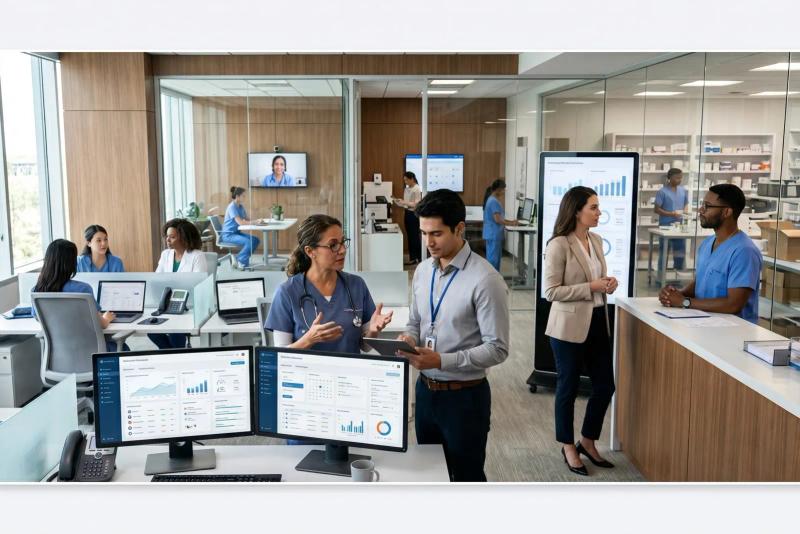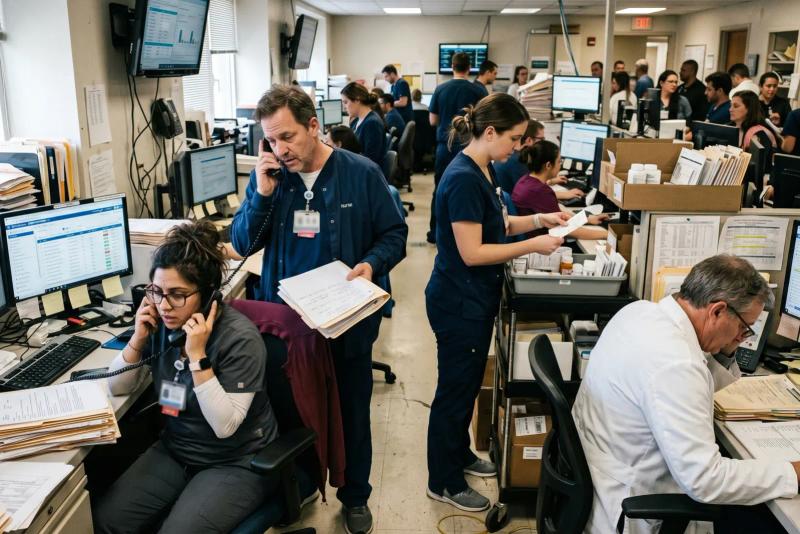
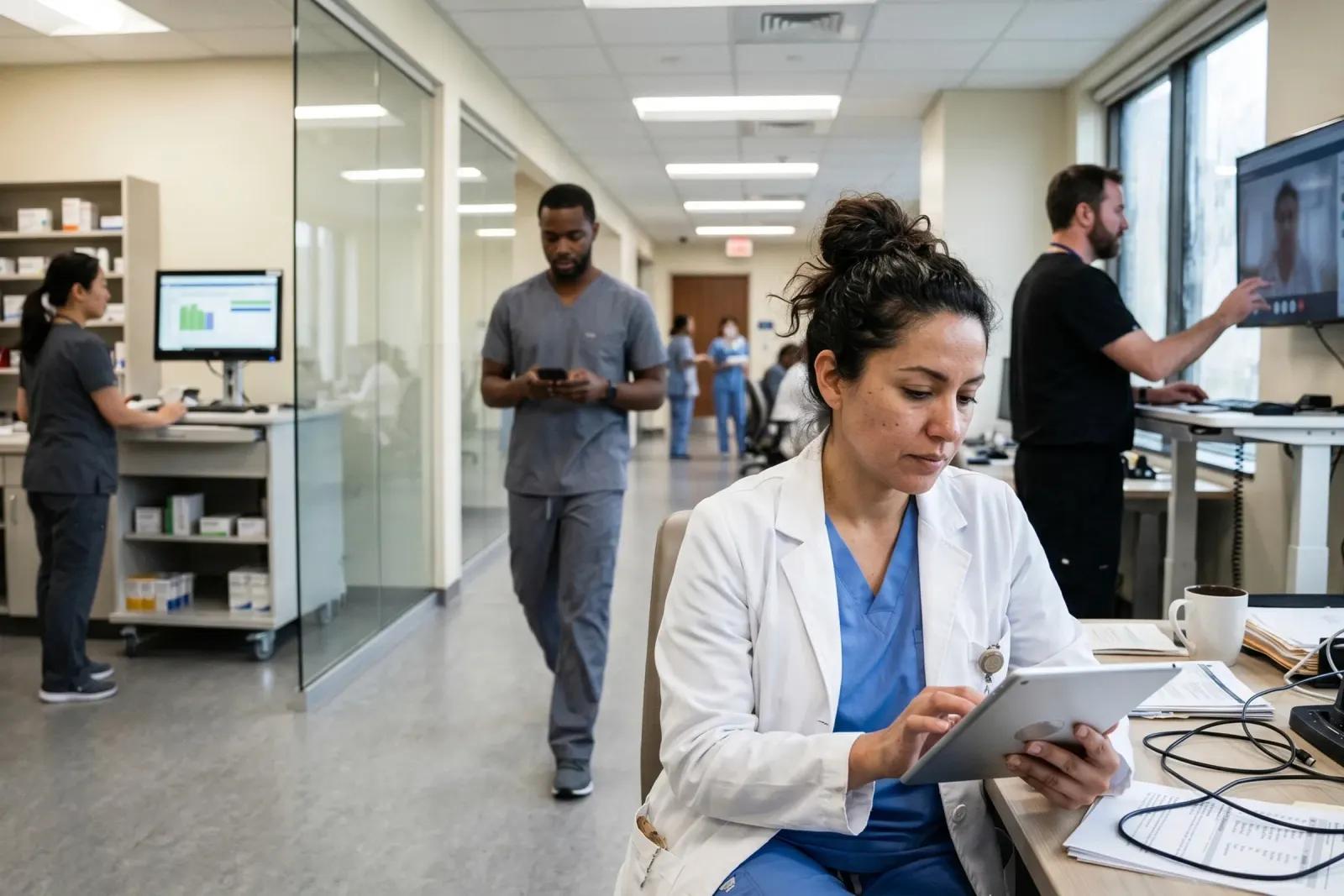
Nurse practitioners and independent clinicians know how to deliver care — but building the technology stack to run a digital practice takes months and significant capital. FUSE Health provides the infrastructure layer that lets NPs launch a compliant, structured digital practice fast and scale patient volume without the operational overhead of a traditional synchronous practice.
The Operational Gap in Independent NP Practice
Nurse practitioners choosing independent practice know their clinical domain. What they consistently underestimate is the operational infrastructure required to see patients digitally at any meaningful scale.
A compliant independent digital practice requires: a patient intake system with clinical logic built in; an asynchronous or synchronous review interface; e-prescribing connected to licensed pharmacy partners; HIPAA-compliant data handling and storage; billing and payment infrastructure; and state-specific prescribing logic that accounts for the NP's practice authority status in each state where patients are located.
Building this from scratch with a developer and a healthcare IT consultant takes six to twelve months and costs well above what most independent practitioners are positioned to invest before seeing revenue. The result is that many qualified NPs delay launch, accept employed positions to avoid the technology burden, or launch with makeshift processes that break under even modest patient volume.
FUSE Health provides this infrastructure as a pre-built, configurable layer that NPs access rather than build.
Who This Infrastructure Serves
The FUSE Health infrastructure layer is designed for nurse practitioners, physician assistants, and independent clinicians who are either launching a digital practice for the first time or expanding an existing practice into digital channels.
The relevant profiles include: NPs transitioning from employed clinical roles to independent practice; clinicians adding asynchronous telehealth to an existing in-person practice to extend patient reach; practitioners entering prescription wellness categories (weight management, hormone health, men's health) where digital delivery is the dominant channel; and NPs who have identified a specific patient population or health category and want to serve it without the overhead of a traditional clinic model.
Practice authority requirements vary significantly by state. Full Practice Authority states allow NPs to prescribe independently without physician collaboration agreements. Reduced and Restricted Practice states require such agreements. FUSE Health's intake and routing logic accounts for the NP's practice authority status in each relevant state this compliance layer is built into the platform, not managed by the practitioner independently.
What FUSE Health Provides for Independent Clinicians
The platform provides five operational components that independent NPs would otherwise need to assemble from multiple vendors or build from scratch:
- Clinical intake system — configured to the NP's practice scope and specific health categories. Patients complete structured intake before the NP reviews their case, generating submission packages that support complete clinical decision-making without synchronous scheduling.
- Asynchronous and synchronous review interface — NPs choose how they see patients. Async review allows batch case review without live scheduling, enabling significantly higher daily patient volume than traditional synchronous models. Synchronous review is available for categories requiring real-time interaction.
- E-prescribing and pharmacy routing — integrated directly into the review workflow. When a prescription decision is made, the prescription routes automatically to the appropriate licensed pharmacy partner. No manual faxing, phone coordination, or pharmacy relationship management is required from the NP.
- State licensing logic — built into the intake and routing workflows. The system accounts for the NP's practice authority status and the patient's location, applying the correct prescribing rules without requiring the NP to audit compliance independently for each case.
- Billing and payment infrastructure — configured for healthcare billing, including subscription models, episodic billing, and payment infrastructure that handles healthcare-category merchant requirements.

The Asynchronous Model and What It Means for Patient Volume
The operational difference between synchronous and asynchronous telehealth is not a matter of preference it is a structural difference in patient throughput capacity.
In a synchronous model, an NP sees one patient at a time through a scheduled video or phone visit. A typical synchronous shift allows 15 to 25 patient visits over 8 to 10 hours, after accounting for documentation, scheduling gaps, and administrative overhead. That ceiling is determined by the number of hours in a shift, not by clinical capacity.
In an asynchronous model, patients complete structured intake independently. The NP reviews submissions in batches reading case packages, making prescribing decisions, and documenting outcomes without synchronous scheduling constraints. A single NP operating in an async model can review 50 to 100+ cases per shift, at the same or higher quality of clinical decision-making, because intake design ensures each submission contains the information needed for a complete evaluation.
FUSE Health is built around the async model. Intake design, case packaging, and review interfaces are all optimized for high-volume asynchronous review. This is what allows independent NPs to serve meaningful patient populations without the scheduling infrastructure that limits synchronous practice growth.
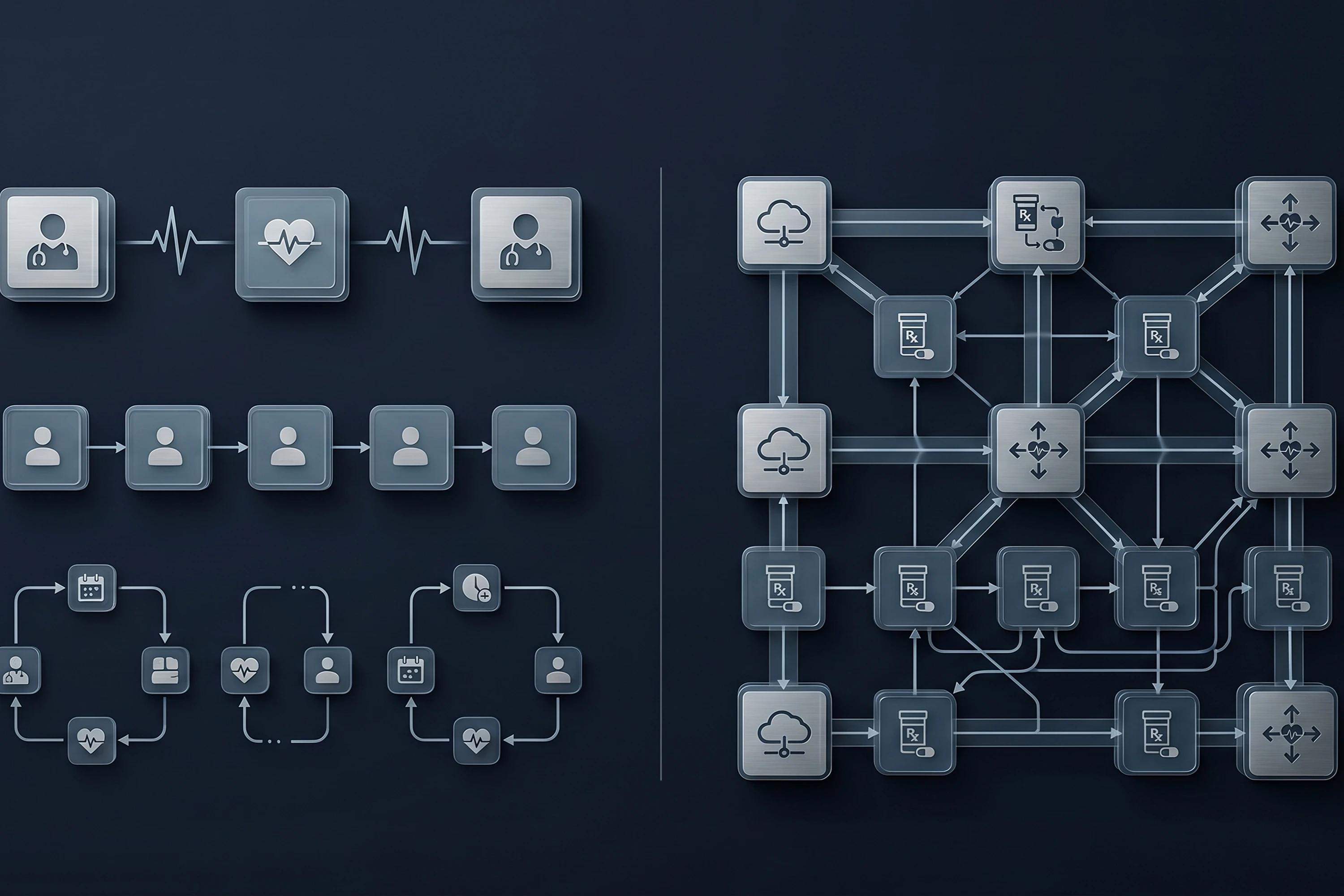
Build Your Telehealth Platform Faster
Launching digital healthcare services requires complex infrastructure. FUSE provides the tools needed to connect patients, providers, and pharmacies in one platform.
Launch and Scale Without a Technology Team
The central value proposition for independent clinicians on FUSE Health is this: you don't need a technology team to launch a digital practice, and you don't need to rebuild your infrastructure as patient volume grows.
NPs who have attempted proprietary builds report that the technology project consumes clinical focus for six to twelve months before the first patient is seen and that the infrastructure they build is often not scale-ready, requiring rework when volume grows beyond the original design assumptions.
On FUSE Health, setup requires a computer, internet access, and a valid clinical license. The intake system, clinical review interface, e-prescribing, pharmacy routing, and HIPAA-compliant patient data infrastructure are all provided and maintained by the platform. Platform updates, compliance changes, and pharmacy routing adjustments are managed by FUSE Health not the practitioner.
Pricing remains in the NP's control. The platform takes a defined fee. The margin the NP sets above that fee is theirs — and that margin scales with every additional case reviewed, creating an income model that grows with volume rather than capping at synchronous scheduling limits.

Conclusion
Independent nurse practitioners should not have to choose between clinical excellence and operational viability. The infrastructure required to run a compliant digital practice is available as a pre-configured platform not a six-month technology project.
FUSE Health provides the intake system, asynchronous review interface, e-prescribing, pharmacy routing, compliance logic, and billing infrastructure that independent NPs need to launch a digital practice and scale patient volume without administrative overhead.
The NP practices medicine. FUSE Health handles the operational layer. The result is a scalable digital practice launched in days rather than months with patient volume potential significantly beyond what synchronous scheduling would allow.
References
- AANP: State Practice Environment
- AANP: Issues at a Glance, Full Practice Authority
- NCSBN: APRN Compact
- HHS: HIPAA for Professionals
- HHS: Telehealth Privacy and Security Guidance
- DEA Diversion Control Division
- CMS: Telehealth
- FTC: Health Breach Notification Rule
- Google Ads: Healthcare and Medicines Policy
- LegitScript: Healthcare Certification

Daniel is a two-time founder who has scaled service businesses across major U.S. markets. A Y Combinator competition winner, he focuses on removing operational and regulatory barriers so operators can build and scale modern healthcare businesses.
- Background
- Startup Operations & Service Systems
- Experience
- 2x Founder, Multi-Market U.S. Scaling
- Qualifications
- Healthtech Market Expertise & Operational Scaling
- Key Achievement
- Scaled Premier Staff & Eventstaff across major U.S. markets