
Remote patient care has moved from niche to normal. Over 71% of US healthcare providers now offer telehealth services, and wellness brands with existing audiences are building prescription programs at scale without building clinics. A remote patient care platform handles the clinical infrastructure: intake, provider review, prescribing workflows, pharmacy routing, and subscription management so that your brand manages customer acquisition and customer experience. This post explains what the platform actually does, what it costs in complexity, and how to evaluate one that fits your program.
What a Remote Patient Care Platform Actually Is
Start with the category mistake most operators make: treating a remote patient care platform like telehealth software.
It's not. Software is the user interface. A platform is the operational system underneath.
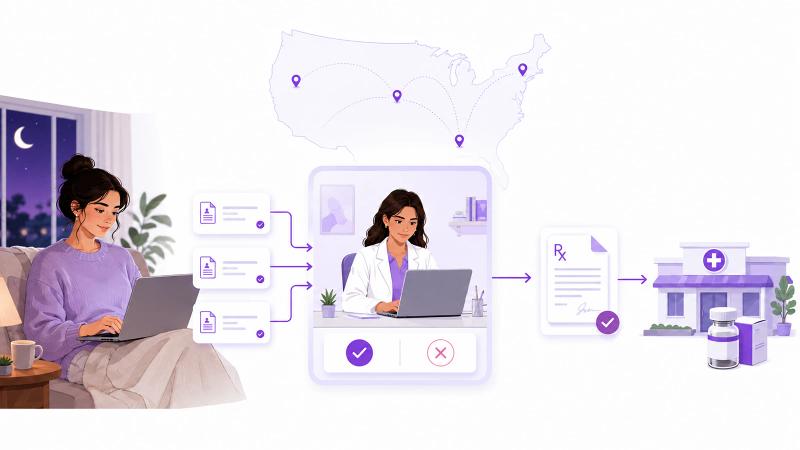
How It Works in Practice
- A customer completes intake on your branded checkout.
- The system collects identity verification and health history.
- A licensed provider in the appropriate state reviews the intake asynchronously or via video call.
- The provider makes a prescribing decision based on clinical protocols.
- If appropriate, the prescription routes to one of your configured pharmacy partners.
- The pharmacy fulfills, ships, and the subscription system renews automatically on your cadence.
- The patient receives updates, reminders, and follow-up communications from your brand.
- Everything happens on your domain, under your brand, with your customer relationships intact.
The Key Distinction
You control what the customer sees. Your storefront. Your brand. Your messaging.
The platform controls what happens in the background. It ensures the system doesn't collapse when volume increases or regulatory requirements shift.

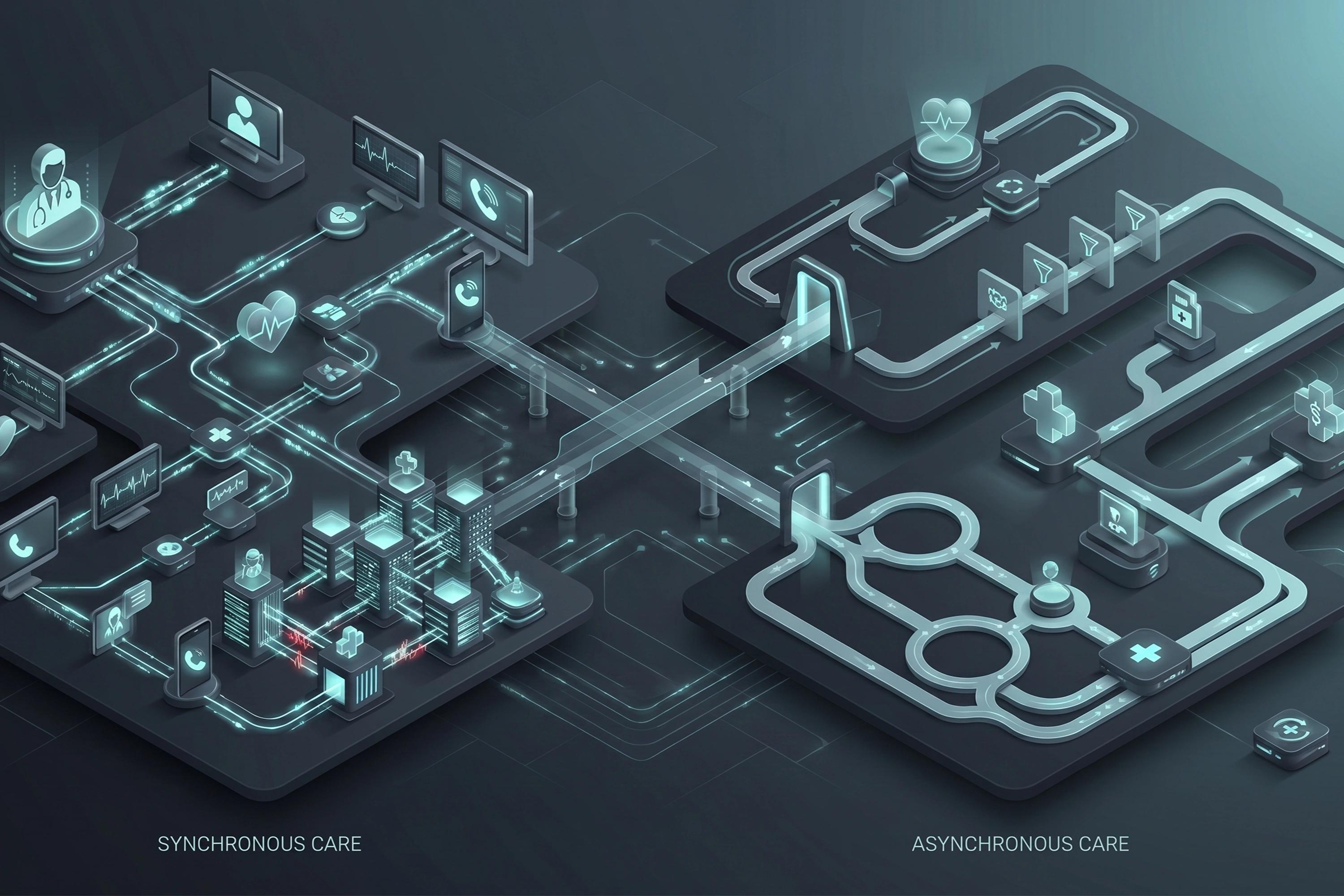
Synchronous vs. Asynchronous: The Choice That Changes Everything
The first real decision you'll face isn't about features. It's about the care delivery model. And it directly affects your unit economics.
Synchronous Care (Real-time interaction)
- Patient and provider meet live via video call, phone, or live chat.
- The provider sees the patient in real-time, asks follow-up questions, and makes a decision immediately.
- Feels familiar to patients and is sometimes required for certain clinical scenarios.
- Hard constraint: A provider can see 8 to 15 patients per day synchronously.
- Your revenue per provider per day is capped by their calendar.
Asynchronous Care (Store-and-forward)
- The patient completes intake whenever they want. No live session required.
- Provider reviews structured responses on their schedule.
- The provider processes 30 to 50 cases per day—three to six times the synchronous throughput.
- For subscription wellness programs in weight management and peptide therapy, async is the model that scales.
- Trade-off: Patients don't get a live conversation; they get a structured review and automated follow-up.
Most mature platforms support both modalities. Your choice depends on your program category and your unit economics expectations.
Why Brands Are Building on Platform Infrastructure (Instead of Clinics)
The financial logic is direct. A wellness brand with 500,000 email subscribers and proven demand has a massive advantage over a pure-play telehealth company spending millions to acquire customers from zero. Your customer acquisition cost is already paid. Your customer trust already exists. What you're missing is the infrastructure.
Building that infrastructure from scratch looks like this:
- Hiring a Chief Medical Officer.
- Credentialing doctors across 40+ states.
- Building custom prescribing workflows.
- Negotiating pharmacy contracts.
- Managing compliance documentation.
- Waiting 18 to 24 months before your first prescription fills.
Or you can plug into a platform built for this use case and go live in weeks.
What the Platform Contributes:
- Licensed provider network credentialed across states.
- Pharmacy integrations and compounding pharmacy partners.
- Compliance infrastructure for HIPAA, LegitScript certification, and advertising compliance.
- Subscription management, billing, refills, and churn automation.
What You Contribute:
- Customer acquisition and go-to-market strategy.
- Brand positioning and customer experience.
- Retention and lifecycle management.
- Product-market fit for your specific audience.
The combination works because neither party could achieve the same outcome independently in the same timeframe.
Where Remote Patient Care Launches Actually Fail
Working with brands across weight loss, peptides, TRT, and similar programs, we see the same three failure points repeat consistently.
1: Intake Data That Doesn't Qualify Properly
Customers complete the intake, but the workflow isn't rejecting edge cases:
- Someone who's on contraindicated medication.
- A health history that doesn't support the program.
- A condition that requires specialist referral rather than your treatment.
The platform can enforce constraints, but only if you've mapped what disqualifies someone. Most brands haven't. They find out when a provider wastes time reviewing a case that should never have been submitted.
2: Refill Workflows That Create Subscriptions
The launch went well. First-month conversion is strong. Then refills arrive, and subscriptions churn silently:
- Provider review wasn't automated.
- Pharmacy routing failed at volume.
- The customer never got a refill reminder.
- Refill authorization logic was never tested.
Most churn happens in month two, not at acquisition. It's a workflow failure, not a product failure. A platform with structured refill logic prevents this. A team without one discovers this hard.
3: Compliance That Feels Improvised
The team launches, hits some scale, then discovers they're not documenting something they should be. Or a regulator asks a question, and no one knows the answer because the compliance documentation was never built into the workflow.
The platform should have built-in controls for audit logging, prescribed documentation, and certification monitoring. This makes compliance feel structured, not like a checklist the team is making up. If it's not built into the workflow before you launch, it won't be built in after.

The Evaluation Checklist (What Actually Matters)
Ask for documented evidence on these points. Marketing claims are not documentation.
1: HIPAA Compliance and Security
Request BAA. Confirm encryption and audit logging. Do not accept claims without documentation.
2: Asynchronous Prescribing Capability
Critical for DTC scale. Is the async workflow purpose-built or bolted on? Ask cases per day. 50+ suggests real scale.
3: Integrated Pharmacy Network
Multiple partners with backup routing required. Identify partners and ask about failover logic.
4: Nationwide Provider Coverage
If accepting patients across states, need licensed providers in every operating state. Ask about gaps.
5: LegitScript Certification
Required by Google, Meta, Microsoft for advertising. Without it, paid channels are blocked from day one.
Conclusion
A remote patient care platform is the infrastructure that makes brand-operated prescription wellness possible without building a clinic.
For operators with existing audiences in wellness, fitness, or aesthetics, it converts that audience advantage into recurring clinical revenue. The platform handles intake-to-refill workflows. You manage acquisition and brand. The partnership works because you're not trying to build clinical infrastructure. You're buying it as a service.
The decision isn't binary: platform or DIY. It's structural. Do you want to own clinical operations, hire MDs, manage compliance staff, and spend 18 months building? Or do you want to launch a revenue channel in weeks, with clinical workflows that work at the scale you're expecting?
The second answer is why platform-powered programs exist. And it's why FUSE exists.
References
- HHS HIPAA Privacy & Telehealth Guidance
- FSMB Telemedicine Policies by State
- LegitScript Healthcare Certification
- FDA GLP-1 Compounding Policy Update
- HHS ONC Telehealth Research Trends

Daniel is a two-time founder who has scaled service businesses across major U.S. markets. A Y Combinator competition winner, he focuses on removing operational and regulatory barriers so operators can build and scale modern healthcare businesses.
- Background
- Startup Operations & Service Systems
- Experience
- 2x Founder, Multi-Market U.S. Scaling
- Qualifications
- Healthtech Market Expertise & Operational Scaling
- Key Achievement
- Scaled Premier Staff & Eventstaff across major U.S. markets