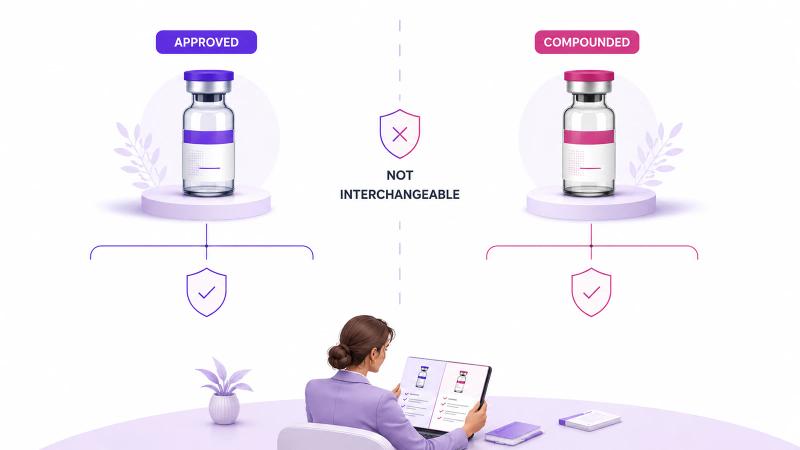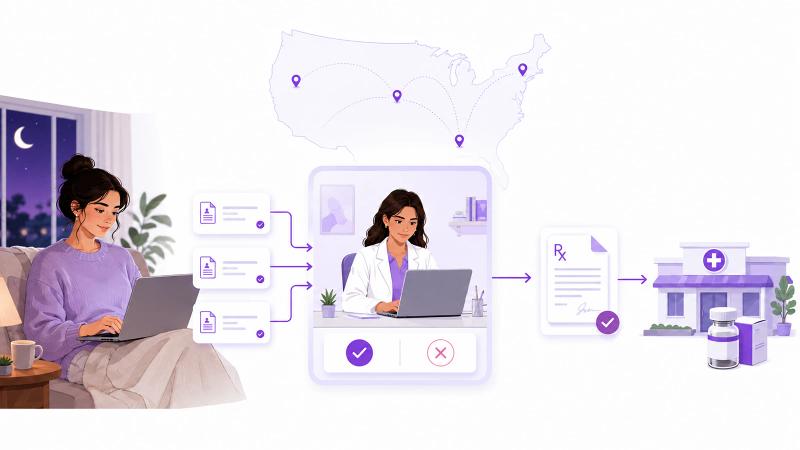

need compliance tools inside the workflow, not separate spreadsheets, inboxes, and after-launch checklists. The core operating stack should cover structured intake, consent version control, provider review, pharmacy routing, HIPAA-aware communication, claims review, and audit reporting. FUSE Health can be positioned as a platform that helps brands launch with intake, provider review, Rx management, fulfillment movement, subscriptions, and administrative visibility connected from the start.
Identity, Eligibility, and Intake Verification Tools
The first compliance layer is intake. Not the pretty form. The logic behind it.
A GLP-1 intake workflow should verify who the patient is, where they are located, whether the program is available in that state, and whether the clinical information is complete enough for provider review. If the intake form lets incomplete, contradictory, or out-of-scope submissions move forward, the provider review queue becomes polluted before a clinician even sees it.
The practical rule is this: provider review should not begin until the system has captured the minimum required information in a structured format. A free-text form and a 'we'll review later' note is not a workflow. It's a future problem.
| Tool Capability | Why It Matters |
|---|---|
| Identity verification | Reduces fraud, duplicate profiles, and account mismatch risk. |
| Age gating | Helps block users who do not meet program eligibility rules. |
| State-specific availability logic | Prevents routing patients into programs where provider or pharmacy coverage is not configured. |
| Medical history capture | Gives reviewers structured information instead of loose notes. |
| Completeness validation | Stops provider review from starting when required answers are missing. |
Consent and Disclosure Management
Consent is often treated like a checkbox. That is too thin for GLP-1 programs.
A platform may need to manage telehealth consent, informed consent, privacy notices, medication-specific risk disclosures, refill policies, cancellation terms, and compounded-drug disclosures where relevant. The exact requirements depend on the program model, state rules, clinical governance, product type, and legal review, but the software job is consistent: show the right disclosure at the right time and preserve evidence that the patient accepted it.
That evidence should include the content version, timestamp, patient account, and IP metadata where appropriate. Version control matters because policies change. Medication availability changes. Refill language changes. Pharmacy relationships change. If a patient accepted version 2.1 of a compounded-drug disclosure in March, the platform should not only know that consent happened. It should know exactly what the patient saw.
This is where many teams get sloppy. They update a page, overwrite the old language, and lose the historical record. That makes the audit response harder than it needs to be.
Provider Review and Prescribing Controls
Asynchronous care can work only when the review process is controlled. Without assignment logic, decision support, contraindication alerts, and escalation paths, asynchronous review becomes a queue of disconnected tasks.
GLP-1 platforms need a provider review layer that documents who reviewed the intake, what they reviewed, what they decided, and what happened next. If the provider requests more information, that request should be tracked. If the patient is denied, the reason for the denial should be captured. If the case needs escalation to a live consultation or supervising clinician, that trail should be visible.
The worst version of prescribing control is a platform where the prescription exists, but the decision trail is unclear. That may pass on a quiet day. It fails when support volume rises, pharmacy questions start, or a reviewer needs to explain why one patient moved forward and another did not.
- Provider assignment rules based on licensing, program coverage, and availability. This protects against accidental mismatches between patient location and reviewer permissions.
- Clinical decision support that flags incomplete answers, potential contraindications, or answers that require follow-up. The tool should support provider judgment, not replace it.
- Documented rationale fields for approvals, denials, follow-up requests, and escalations. The goal is not extra paperwork for its own sake. The goal is to preserve the reasoning behind the decision.
Pharmacy Routing and Fulfillment Compliance Tools
Pharmacy routing is one of the most underestimated parts of a GLP-1 platform. It is not 'send prescription to pharmacy.' It is a rules-based process that has to account for patient location, pharmacy licensing, medication type, product availability, documentation needs, substitution rules, and shipment visibility.
This matters even more because GLP-1 fulfillment is under scrutiny. The FDA has warned about illegally marketed semaglutide and tirzepatide products and has urged consumers to buy only from state-licensed pharmacies. The FDA has also clarified policies around GLP-1 compounding as national supply conditions changed.
Routing rules should combine patient location, medication type, pharmacy coverage, availability, and documentation requirements. If one pharmacy is unavailable, the platform should not rely on someone remembering a workaround. It should show the available routes and preserve the reason for the routing decision.
That record matters because fulfillment problems become support problems, and support problems become trust problems.
HIPAA-Aware Communication and Data Access Controls
Communication tools create risk when teams blur operational alerts with protected health information.
The HHS HIPAA Security Rule sets standards for protecting electronic protected health information, including administrative, physical, and technical safeguards for regulated entities. Federal rules also require covered entities and business associates to protect the confidentiality, integrity, and availability of electronic protected health information.
For GLP-1 platforms, the software implication is clear. Patient communication cannot be treated like normal e-commerce support.
A platform should include secure messaging for PHI-heavy conversations, role-based access, audit logs, encryption, access termination workflows, and integration with relevant vendors. HHS also explains that when a covered entity uses a business associate, there should be a written business associate contract or arrangement requiring the business associate to protect information.
SMS and email still have a role, but that role should be controlled. Use them for operational nudges, appointment prompts, refill reminders, and non-sensitive alerts where appropriate. Move sensitive exchanges into secure channels. The distinction sounds small until a support agent replies to a medication-specific question in the wrong thread.
The tool should make the safe path the easy path.
Conclusion
GLP-1 demand can move faster than operations. That is why compliance tooling has to sit inside the workflow, not beside it.
The right platform does more than collect forms and process orders. It verifies intake, controls consent versions, documents provider review, routes prescriptions through configured pharmacy logic, separates sensitive communication, reviews marketing claims, and keeps audit evidence ready as the program scales.
That kind of system protects growth. It builds stronger partner trust, smoother advertising and payment reviews, cleaner support operations, and a safer path from first sale to recurring revenue.
For GLP-1 operators, compliance is not a launch blocker. Weak workflow is.
References
- HHS: The Security Rule
- HHS: Summary of the HIPAA Security Rule
- HHS: Covered Entities and Business Associates
- eCFR: 45 CFR 164.306 Security Standards
- FDA: Concerns with Unapproved GLP-1 Drugs Used for Weight Loss
- FDA: Policies for Compounders as National GLP-1 Supply Begins to Stabilize
- LegitScript: Healthcare Certification

Daniel is a two-time founder who has scaled service businesses across major U.S. markets. A Y Combinator competition winner, he focuses on removing operational and regulatory barriers so operators can build and scale modern healthcare businesses.
- Background
- Startup Operations & Service Systems
- Experience
- 2x Founder, Multi-Market U.S. Scaling
- Qualifications
- Healthtech Market Expertise & Operational Scaling
- Key Achievement
- Scaled Premier Staff & Eventstaff across major U.S. markets