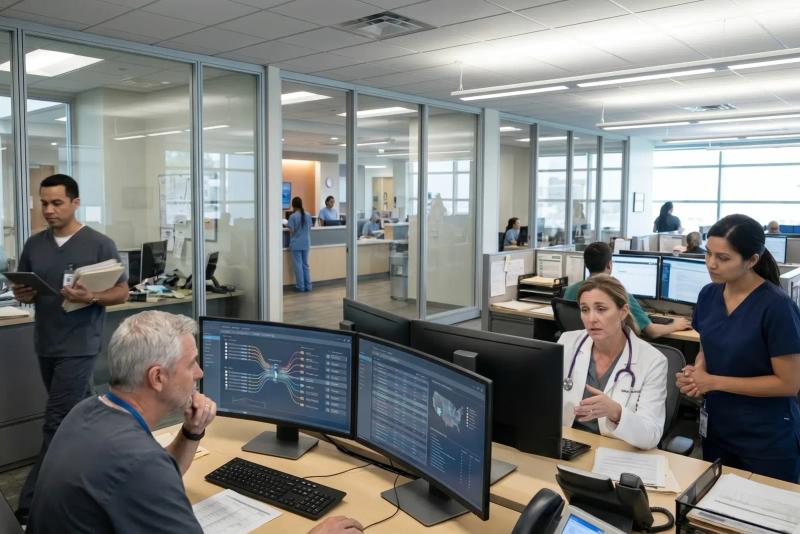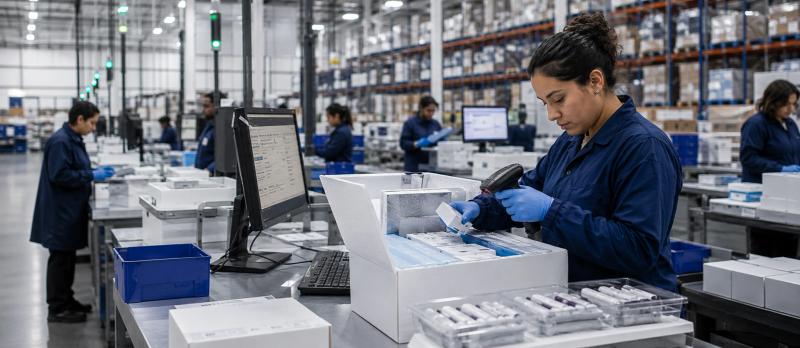

The patient journey in a telehealth program runs from intake through subscription renewal. Manual operations at any stage create friction that compounds into churn and operational overhead that scales with patient volume. Automation at every non-clinical stage creates the reliable, consistent experience that keeps patients subscribed and generates the LTV that makes subscription telehealth economically viable. This guide covers the four automation stages in sequence and explains what each one does, why it matters, and what breaks when it is absent.
Stage One: Automate Acquisition and Intake
Automation starts before the patient completes their intake form. Landing page and ad tracking feeds acquisition data into the platform CRM automatically. This eliminates manual data entry between acquisition channels and the clinical pipeline, and ensures every patient interaction is tracked from the first touchpoint.
Intake automation covers three distinct functions. Pre-screening questions identify disqualifying conditions before a licensed provider reviews the case. This prevents provider time from being spent on cases that will not convert, which directly reduces the per-case clinical review cost and improves provider throughput. Automated identity verification validates patient submissions without requiring a staff member to manually review each case. And automated form routing delivers condition-specific, mobile-optimized intake forms that save progress and provide real-time field validation.
The operational consequence of manual intake is patient drop-off. When a patient starts an intake process and encounters friction, whether from a poorly designed form, a delay in receiving the form, or a lack of progress feedback, they abandon. That abandoned patient still cost acquisition spend to reach. Platforms with well-designed automated intake consistently convert significantly more visitors into completed intake submissions than those using manual or generic intake processes. The conversion gap is not a marketing problem. It is an operational one.
On FUSE Health, intake is configured once per program and runs automatically. Operators do not monitor individual form completions or manually route cases. The intake automation handles pre-screening, form delivery, validation, and case submission to the provider queue without any operator intervention between the patient starting and the provider receiving a clean case for review.
Stage Two: Automate Provider Review and Prescription Routing
Once intake is submitted, automated case routing organizes cases in the provider queue by submission time and protocol category. This eliminates the manual queue management that becomes unworkable at any meaningful patient volume. Providers log in to a structured review interface with clean, complete cases already organized by priority. They review the clinical intake data, make an independent prescribing decision, and approve or decline the case.
Clinical decisions remain entirely with the licensed provider at this stage. Automation handles the operational logistics around those decisions: it does not make clinical judgments, suggest prescriptions, or filter cases based on clinical criteria. What it does is ensure that every case a provider receives is complete, correctly categorized, and ready for review without back-and-forth to gather missing information.
After a provider approves a case, automated prescription generation creates the documentation required for pharmacy transmission. The prescription routes electronically to the designated pharmacy partner immediately on approval, without a manual handoff between the clinical interface and the pharmacy system. The time between provider approval and pharmacy receipt is seconds, not hours or days.
The operational cost of manual prescription routing is most visible at scale. An operator managing 200 cases per month manually can absorb the coordination cost. An operator managing 2,000 cases per month cannot. The bottleneck appears first as delayed pharmacy orders, then as patient complaints about slow fulfillment, then as churn from patients who lose confidence in the program. Automated prescription routing eliminates this failure mode by removing the manual handoff entirely.
Stage Three: Automate Pharmacy Fulfillment and Patient Communications
Automated pharmacy integration ensures that prescription approval triggers the fulfillment workflow immediately. The compounding pharmacy receives the prescription, processes it, and ships the order. At each stage of this process, an automated patient notification updates the patient on the status of their order: prescription received, processing begun, shipped, delivery confirmed.
The business case for fulfillment automation is straightforward. Every patient communication that does not happen automatically becomes a support ticket. A patient who has not received a shipping update within 48 hours of a prescription approval will contact support. If that inquiry is not resolved quickly, the patient will cancel. Automated notifications eliminate the gap between what the patient expects and what they know, which reduces both support volume and the churn that comes from unresolved uncertainty.
Pharmacy fulfillment automation also enables proactive management of fulfillment exceptions. When a shipment is delayed or a pharmacy order encounters a processing issue, the platform can notify the patient automatically and trigger a resolution workflow without requiring an operator to discover the problem through a support ticket. This converts reactive support into proactive management, which changes the patient experience from one of frustration to one of transparency.
FUSE Health manages the pharmacy partner relationships and the electronic routing infrastructure. Operators do not need direct pharmacy contracts or technical integrations. The pharmacy communication layer is pre-built. Operators benefit from it without building it, and patients receive the consistent, professional fulfillment communication that drives retention regardless of which compounding pharmacy is fulfilling the order.
Stage Four: Automate Subscription Renewal and Retention
Subscription renewal automation begins before the renewal date, not on it. Automated refill reminders sent 7 to 14 days before expected supply depletion prompt patients to request renewal or update their payment information before a gap in supply occurs. This window is critical because a patient who runs out of supply before a renewal processes experiences a treatment gap, which breaks adherence and creates a natural exit point.
Involuntary churn in telehealth programs is disproportionately caused by administrative friction: missed refills, failed payments without retry logic, and patients who were never prompted to renew. Research from Paddle indicates that involuntary churn accounts for 20 to 40 percent of total subscription churn in digital health programs. Most of it is preventable with automated billing retry logic and refill reminder sequences built into the platform. Operators who implement refill automation reduce involuntary churn significantly compared to those managing renewals manually.
Beyond refill reminders, patient re-engagement automations reduce voluntary churn by maintaining contact with subscribers between clinical touchpoints. Check-in messages at strategic intervals remind patients of their program progress and reinforce the value of continued subscription. Patients who receive consistent, non-promotional communication between orders are significantly more likely to remain subscribed through the end of their protocol period than those who only hear from the brand at renewal time.
The compounding effect of renewal automation is significant. A subscription program with 500 active patients at 150 dollars per month generates 75,000 dollars in monthly recurring revenue. A 5 percent improvement in monthly retention from automated renewals and re-engagement, on the same patient base, preserves 3,750 dollars in monthly revenue that would otherwise have churned. At 12 months, that is 45,000 dollars in preserved revenue from a single operational change. The automation cost does not scale with that number. The revenue does.
The Operational Case: What Breaks Without Automation
The case for automating the patient journey is not about operational elegance. It is about what breaks when you do not. Manual telehealth operations fail at predictable failure points, and each failure point has a measurable cost.
Manual intake fails through drop-off. Patients who encounter friction before completing intake abandon the process. Each abandoned patient represents acquisition spend that generated no revenue. The conversion gap between a manual intake process and an automated one is directly attributable to the operational design, not to product-market fit or marketing quality.
Manual case routing fails through queue management. When intake volumes exceed the capacity of a manual routing process, cases back up, provider review times increase, and patients who are waiting for a clinical decision either lose confidence or contact support. At volume, manual case routing is a bottleneck that limits throughput at a fixed operational cost.
Manual pharmacy coordination fails through handoff errors. An email-based or phone-based prescription transmission system introduces latency and error risk at every step. A missed email, a phone call that goes unreturned, or a pharmacy contact who is unavailable creates a delay that the patient experiences as a broken program.
Manual renewal management fails through attrition. An operator managing 500 active patients cannot manually track every patient protocol status and send timely renewal reminders. Patients lapse because no one reminded them to renew, not because they wanted to cancel. That lapse is recoverable, but recovering it requires re-acquisition spend that proper automation would have prevented.
FUSE Health automates all four stages of the patient journey so operators manage a dashboard, not a pipeline. Intake routes automatically. Cases queue for provider review. Prescriptions transmit on approval. Patients receive fulfillment notifications. Renewals process with retry logic and reminder sequences. Operators configure their program parameters once and the platform executes without ongoing manual intervention.
Conclusion
Patient journey automation is not a feature. It is the operational infrastructure that makes subscription telehealth economically viable at scale. The operators who reach profitability at 300 patients are not doing so because they have better products or larger marketing budgets than the operators who need 3,000 patients to break even. They are doing so because their operational cost does not scale linearly with patient volume.
Automation compresses the cost structure at every stage of the patient journey. It converts manual coordination overhead into platform cost. It converts support tickets into proactive communications. It converts involuntary churn into preserved monthly recurring revenue. Each stage compounds the effect of the others.
The operators who build on automated infrastructure from the start do not face the rebuilding cost that operators who start manually eventually encounter. FUSE Health provides the automation layer pre-built. What operators bring is the brand, the program, and the audience.
References
- CMS.gov E-Prescribing
- Health IT and HIE FAQs
- Health IT Playbook
- E-prescribing and medication safety in community settings
- The Evolving Path of E-Prescriptions

Daniel is a two-time founder who has scaled service businesses across major U.S. markets. A Y Combinator competition winner, he focuses on removing operational and regulatory barriers so operators can build and scale modern healthcare businesses.
- Background
- Startup Operations & Service Systems
- Experience
- 2x Founder, Multi-Market U.S. Scaling
- Qualifications
- Healthtech Market Expertise & Operational Scaling
- Key Achievement
- Scaled Premier Staff & Eventstaff across major U.S. markets