
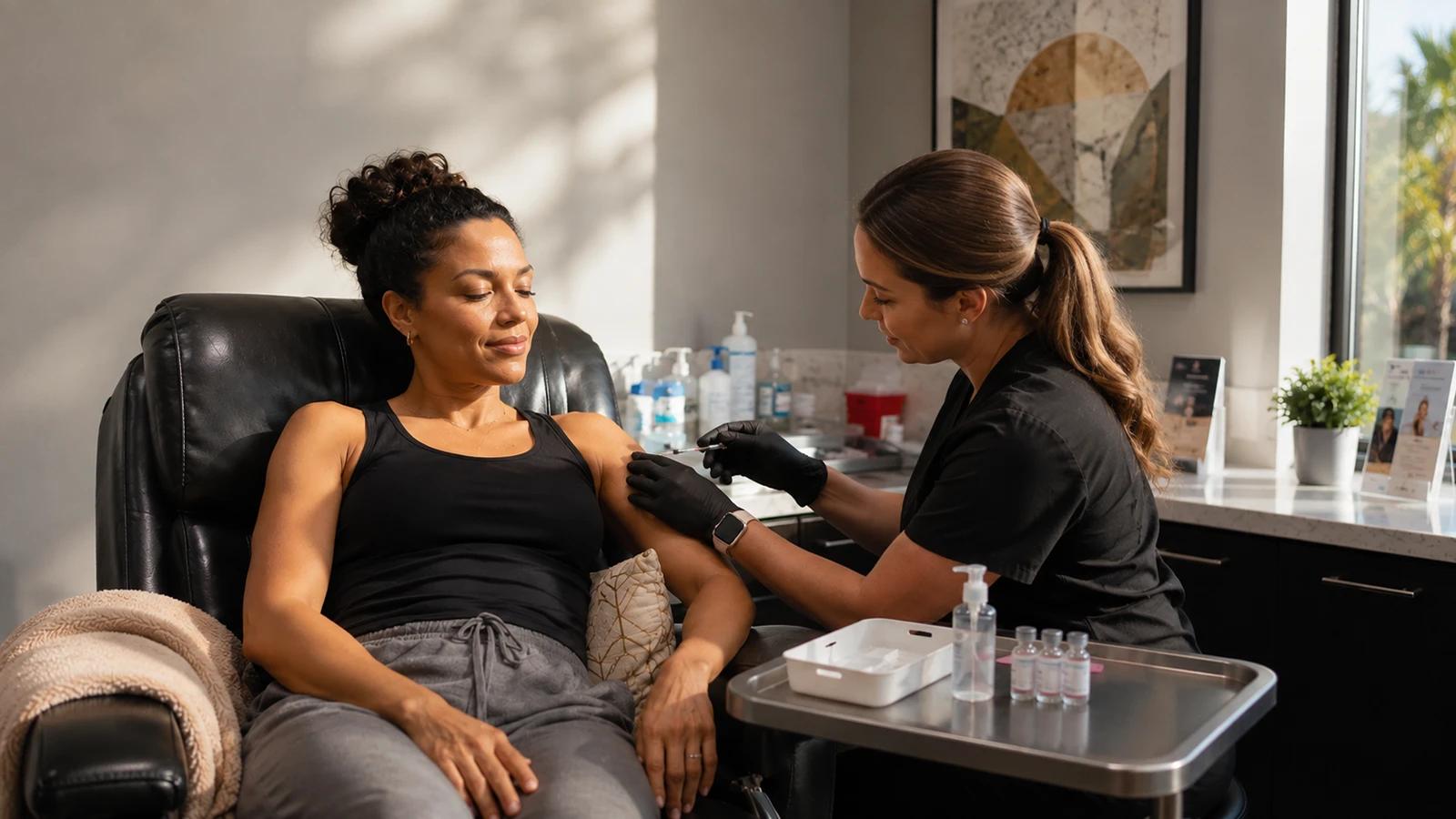
Peptide business margin lives in the gap between wholesale and retail. Compounded peptides cost $50 to $200 per vial from the pharmacy and sell for $99 to $500 per month as a peptide therapy program. That spread only survives if fulfillment, payments, and clinical review hold at volume.
Peptide business math is simpler than operators expect and far harder to protect. Three numbers decide whether you launch in weeks or stall for a year: what the pharmacy charges you, what the market pays you, and what the layer between them costs to run. Get those right and one customer is worth four figures. Get them wrong and you fund someone else's margin.
Most people researching how to sell peptides online start with retail price. Wrong end of the sheet. Retail is set by the market, wholesale by your pharmacy relationship. The only number you control is the third, and nobody quotes it upfront.
The Three Numbers Behind Every Peptide Business
Ask ten operators their margin and nine quote a product markup. That is a retail metric, and it says nothing about whether the business works. A peptide business is a subscription business wearing a product costume. Revenue arrives monthly, cost arrives monthly, churn eats the difference. What matters is contribution margin per active customer per month, times how many months that customer stays.
Wholesale: What the Pharmacy Actually Charges
Compounding pharmacy pricing is less mysterious than the industry pretends. Sourced directly with a prescription, published 2026 pricing lands in a tight band:
- BPC-157: $50 to $120 per vial
- TB-500: $60 to $150 per vial
- CJC-1295 with ipamorelin: $80 to $200 per vial
- Compounded semaglutide: $150 to $350 per month, against $1,000 or more for the branded equivalent
Those are patient-direct figures. Operator wholesale through a partnered peptide pharmacy sits below them, and volume tiers move it further. Cost of goods on a standard monthly protocol usually falls between $50 and $200.
Wholesale is not just the vial. Cold chain shipping, syringes, swabs, and pharmacy handling ride along, and supplies alone run $15 to $30 per patient per month. Build that in or your forecast is fiction from day one.
Retail: What the Market Pays
Retail has compressed hard. Knowing where the floor sits keeps you from pricing yourself out or leaving money on the table.
An August 2026 pricing index put median compounded semaglutide at $175 per month and tirzepatide at $249 per month, roughly 87% and 77% below list prices of $1,349 for Wegovy and $1,086 for Zepbound. The cheapest tenth of the market advertises $99 or less. The top tenth holds near $299.
Classic peptides price differently because there is no branded anchor:
- Sermorelin: $99 to $199 per month through telehealth, up to $500 at boutique clinics
- BPC-157: $199 to $350 per month through a telehealth peptide clinic
- Ipamorelin and CJC-1295 combinations: $200 to $600 per month
- NAD+ subcutaneous: $165 to $395 per month
Consultation and monitoring complete the picture: initial consults $150 to $400, follow-ups $75 to $200, lab panels $100 to $400 every three to six months. Most operators fold these into the subscription instead of billing separately, which raises perceived value and smooths revenue.
Operator Margin: Revenue Per Customer, Not Per Order
One category analysis pegged the spread between production cost and clinic retail at 300% to 700%. Real, but misleading, since it ignores everything between the vial and the customer.
A Worked Example
A sermorelin program priced at $149 per month.
- Retail: $149
- Pharmacy cost including shipping and supplies: roughly $70
- Payment processing at 3.5%: about $5
- Contribution margin: roughly $74 per customer per month
Now stretch it across time. FUSE reports a 94% monthly refill retention rate across its operator base, putting average tenure past a year. Seventy-four dollars across sixteen months is roughly $1,180 in gross profit from one customer. That is why subscription refills drive the margin, not the first order.
Run it on a GLP-1 program at $299 retail against a $175 landed cost and contribution lands near $115 per month. That is why operators anchor a catalog on a GLP-1 business, then expand into recovery, sleep, and longevity protocols. One fitness brand's peptide channel outpaced its best supplement launch within 90 days.
At 100 subscribers on a blended $85 margin, that is $8,500 in monthly contribution before platform cost. At 500, it is $42,500. Unit economics scale cleanly. The operations behind them do not, unless they were built to.
The Line Item Most Peptide Business Plans Miss
Here is where forecasts break.
Building your own telehealth infrastructure is not a rounding error. Published 2026 benchmarks put a custom telehealth platform at $50,000 to $500,000 or more, with MVPs alone consuming 1,400-plus engineering hours. First-year compliance review adds $5,000 to $25,000, annual re-certification another $5,000 to $10,000. Time to go live runs 6 to 18 months. Off-the-shelf white label telehealth launches in 2 to 8 weeks. Our build or buy comparison breaks down where each path costs you.

That delay is not neutral. Six months of lost launch time at 500 orders per month and $100 average order value is roughly $300,000 you never collected. That is where telemedicine startup costs actually hide.
Compare that to platform cost. FUSE prices Growth at $699 per month and Pro at $3,000 per month, with no per-visit fees stacked on top. At 100 subscribers producing $8,500 in contribution, infrastructure is 8% of gross margin. At 500, under 2%. It stops mattering the moment volume arrives, which is the opposite of what per-visit pricing does.
That is the case for white label peptides: you are not renting software, you are skipping a year of capital burn and a compliance build you have no reason to own.
How the Storefront-First Model Actually Runs
Operators sell. Clinicians prescribe. Pharmacies fulfill. Those three functions stay separate, and the workflow between them is what makes the model durable.
Step one: the storefront. Your brand, domain, and pricing. The customer never sees what runs underneath.
Step two: intake. HIPAA compliant patient intake captures history, medications, contraindications, and consent before anything is charged.
Step three: asynchronous clinical review. A licensed provider in the patient's state reads the file and prescribes, asks for more, or declines. FUSE maintains prescribers in all 50 states with average review under 24 hours. This step separates a telehealth business from a store selling a prescription product.
Step four: pharmacy fulfillment. The prescription routes to a partnered 503A or 503B peptide pharmacy. The operator never touches the drug, holds inventory, or ships anything.
Step five: refills. Automated sequences and CRM workflows keep the subscription alive. This is where the $1,180 lifetime figure is earned or lost.
What Breaks at Volume, and What Holds
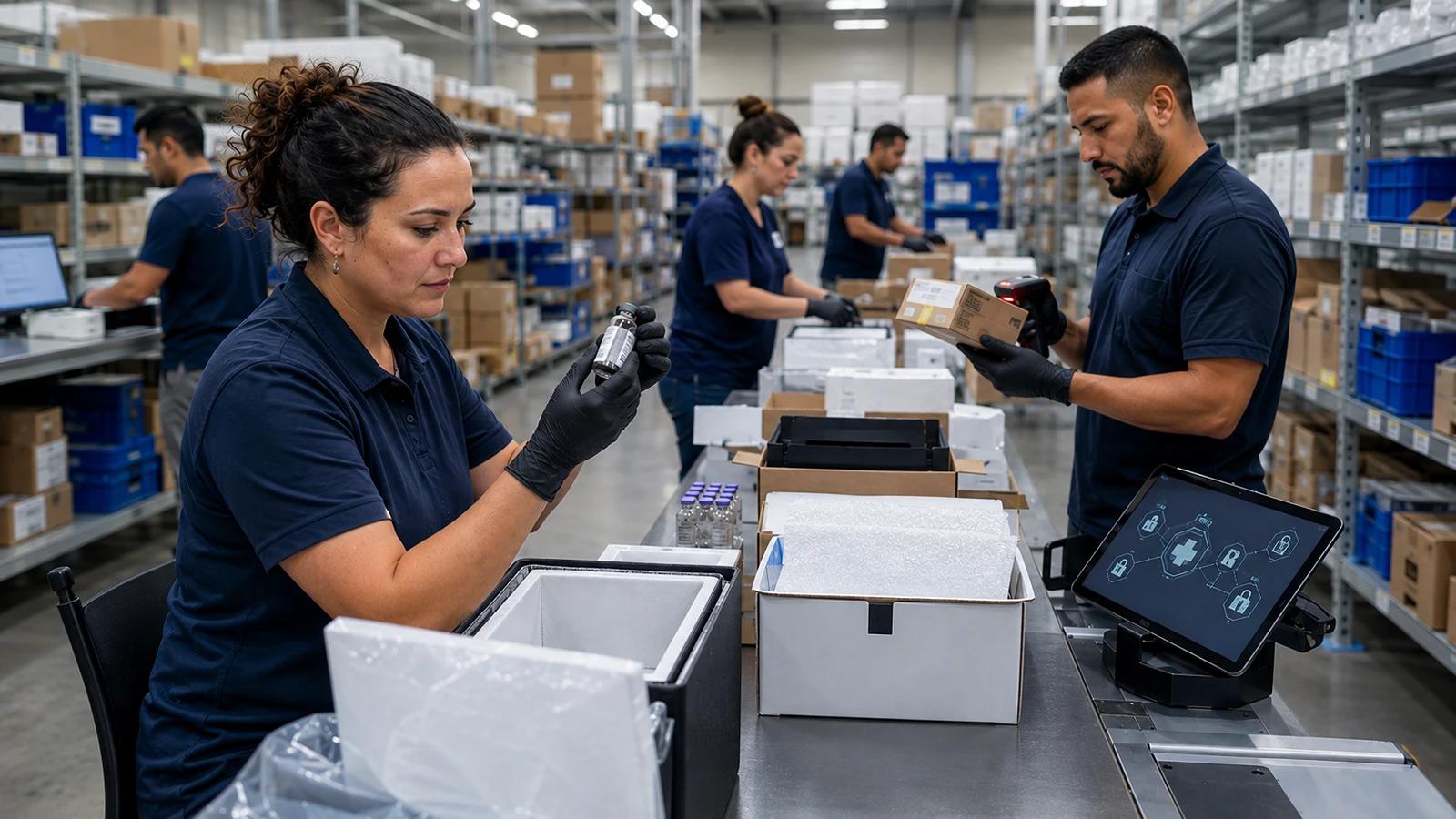
What fails: payments on a standard processor that freezes at the first chargeback wave. A prescriber bolted onto a storefront with no documented review trail. A custom build out of runway at month nine. Single-state coverage at 300 patients. Same points where telehealth launches break at scale.
What holds: payment rails built for the category. LegitScript, SOC 2 Type II, and HIPAA in place before volume, not after. Multi-state provider coverage from day one. Pharmacy redundancy, so one supplier disruption does not stop revenue.
Resilience is not something you add later. It is why the margin above survives 500 customers.
The Compliance Layer, Structured Not Improvised
This is where the business earns or loses the right to operate, and the ground moved recently.
FDA removed tirzepatide from the shortage list in December 2024 and semaglutide in February 2025. On February 6, 2026 the agency signaled enforcement against non-approved compounded GLP-1 drugs, then clarified on April 1, 2026. Under 503A, pharmacies may compound essentially-a-copy products only within a narrow safe harbor of four or fewer prescriptions per calendar month, and any patient-specific difference must be documented individually by the prescriber, not applied as a template. Under 503B, neither semaglutide nor tirzepatide currently appears on the bulks list.
On classic peptides, FDA maintains a Category 2 list of bulk substances that may present significant safety risks. GHRP-2, GHRP-6, and ipamorelin acetate are flagged on the 503B side, kisspeptin-10 on the 503A side. That list changes, and your catalog has to change with it. Our guide to which peptides are legal tracks the current picture.
None of this argues against the category. It argues for running on infrastructure where sourcing, prescriber documentation, and catalog eligibility are maintained by people tracking the register.
The Decision in Front of You
The margin is genuine. A $70 to $115 monthly spread per customer, held across a year of refills, builds a real business at a few hundred subscribers. That is published pharmacy pricing against published retail pricing, not a projection.

What separates operators who capture it from operators who talk about it is the middle layer. One group spends $150,000 and fourteen months building prescriber workflows, payment rails, and compliance documentation. The other launches in three weeks on infrastructure that already carries 50-state coverage, 503A and 503B pharmacy partnerships, LegitScript, and SOC 2 Type II, then spends those fourteen months acquiring customers.
Search demand for peptide business terms is up several hundred percent year over year. Your competitors are reading the same math you just did.
This article is written for business operators and covers commercial and regulatory considerations only. It is not medical advice and makes no treatment recommendations. Prescribing decisions belong to licensed clinicians. Compounded drug regulations differ by state and change frequently; consult qualified healthcare counsel before launching.
References
- U.S. Food and Drug Administration, Certain Bulk Drug Substances for Use in Compounding that May Present Significant Safety Risks (Category 2 list, updated April 22, 2026)
- Polsinelli, FDA Offers Additional Clarification on Compounded GLP-1 Policy (April 2026)
- Burr & Forman LLP, The FDA Removes Semaglutide from the Drug Shortage List
- Weight Loss Rankings, Compounded GLP-1 Pricing Index (August 2026)
- PeptideWise, Peptide Therapy Cost Breakdown, 2026 Pricing Guide
- Peptide News Digest, Compounding Peptide Pricing Guides (April 2026)
- TelehealthTech, Build vs Buy for Telehealth: The Hidden Costs of Custom Builds
- FUSE Health, Pricing
- FUSE Health, How a Fitness Brand Built a Peptide Revenue Channel

Daniel is a two-time founder who has scaled service businesses across major U.S. markets. A Y Combinator competition winner, he focuses on removing operational and regulatory barriers so operators can build and scale modern healthcare businesses.
- Background
- Startup Operations & Service Systems
- Experience
- 2x Founder, Multi-Market U.S. Scaling
- Qualifications
- Healthtech Market Expertise & Operational Scaling
- Key Achievement
- Scaled Premier Staff & Eventstaff across major U.S. markets