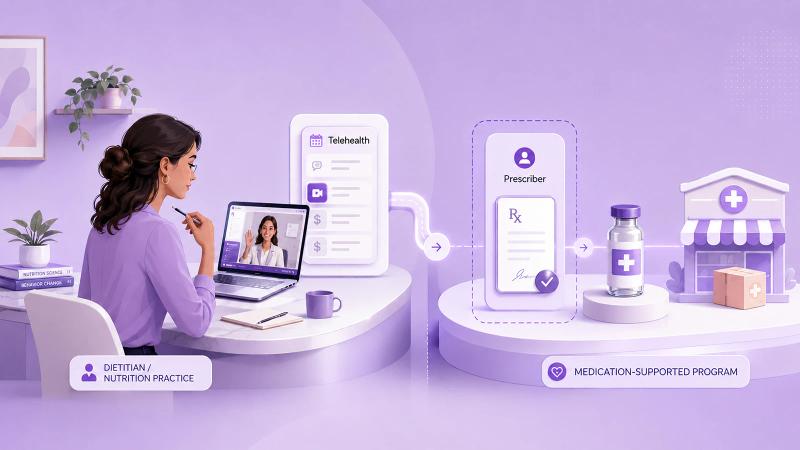

White label telehealth platforms rent you prescribers, pharmacy and compliance under your own brand. We compared 13 on pricing, pharmacy setup, security and launch time. FUSE ranks first for operators without a medical license, while Cuvo, Telegra and OpenLoop each suit narrower buyers.
Last updated October 2026. Written by Daniel Meursing, CEO of FUSE Health. Vendor details come from each company's own public pages, checked between September and October 2026.
White label telehealth platforms all make the same promise: your brand on the front, licensed prescribers and a pharmacy behind it, and a launch measured in days. I've spent the last few years building one of these platforms, and I can tell you the first thing operators ask me is never about features. They want to know what it costs, who fills the prescriptions, and how soon they'll be selling.
So we did the homework most comparison pages skip. We looked at 13 platforms, read what each one publishes about pricing, pharmacy, security and launch time, and matched each to the operator it actually fits. Fair warning, FUSE is on this list and we put ourselves first. We'll show you exactly why, and we'll give every other vendor credit where it's earned.
Executive Summary
If you don't hold a medical license and you want to sell prescription programs under your own brand, FUSE is the white label telehealth platform we'd point you to first. Our monthly pricing is public, there are no per-visit fees, orders route to 503A and 503B pharmacies, and brands go live in 3 to 5 business days. Cuvo suits founders who are happy to pay per consult, OpenLoop and Wheel suit insurance and enterprise programs, and the rest fill narrower gaps.

- Only three of the 13 publish full monthly tiers on their own pricing pages: FUSE, Cuvo and Telegra.
- Published monthly fees start at a listed $297 entry point (Karpa) and run up to $5,999 (Telegra Pro), with setup fees reaching $15,000 on Cuvo's Grow plan.
- Three vendors state a 503A or 503B pharmacy designation on a page they sell from: FUSE, Bask and Karpa.
- Per-consult fees are the cost most buyers miss. At 400 consults a month, a $25 fee adds $10,000 to your bill.
What is a white label telehealth platform?
A white label telehealth platform is the clinical back office you rent and sell under your own name. You own the storefront, the customer and the marketing. The platform supplies licensed prescribers in every state you sell to, the pharmacy that fills and ships each order, the payment setup, and the compliance work that keeps the whole thing legal.
Think of a restaurant brand running out of a commissary kitchen. Your name's on the door and the menu, while a licensed kitchen behind the wall handles the regulated work.
What do you actually get when you rent one?
A complete platform covers four layers. Plenty of vendors cover two or three and leave you to source the rest, which is where most first-time operators get burned.
- Prescribers: independent licensed clinicians who review every intake and make every prescribing decision.
- Pharmacy: compounding or retail partners that fill, package and ship orders to patients.
- Payments: a processor that's comfortable with telehealth, so your account doesn't get frozen mid-launch.
- Compliance: HIPAA-ready records, state-by-state consent, LegitScript certification and an audit trail.
Who usually buys a white label telehealth platform?
Med spas adding GLP-1 or hormone programs, creators and coaches whose audience already follows their protocol, gyms looking for a second recurring revenue line, e-commerce wellness brands moving onto prescription rails, and health apps that want care inside the app. They all have the audience and the brand, and none of them wants to run a medical practice.
What about telehealth software like Oystehr, Healee and Tellescope?

Search this topic and Google's AI answer often names software vendors like Oystehr, Healee and Tellescope. They're solid tools, and Oystehr even publishes clear unit pricing at $0.25 per monthly active user. What they sell is the software layer: video, intake, scheduling and workflow. You'd still need to find your own prescribers, sign a pharmacy, set up a professional entity and apply for LegitScript yourself.
If you're planning to sell a GLP-1, hormone or peptide program, you'll want a platform that carries the clinical layer too. Every vendor in the list below supplies at least part of it.
Which white label telehealth platforms made our 2026 list?
We started with the vendors that show up most when operators search for this, plus the names that keep coming up on our own sales calls. Then we narrowed it to 13 that sell some version of "launch your own branded telehealth program."
How did we score each platform?
We asked every vendor the same five questions and only counted what's on its own website:
- Can you see a price before booking a call?
- Who are the prescribers, and in how many states?
- Does it say which pharmacy type (503A or 503B) fills orders?
- Does it state a SOC 2 type and its LegitScript status?
- How fast does it say you'll launch, and does that match across its own pages?
Where a number wasn't published, we wrote "not published." Plenty of good products keep their numbers private, so read that as a note about transparency and a question to ask on the call.
Who made the cut, at a glance?
| # | Platform | Best for |
|---|---|---|
| 1 | FUSE | Operators launching prescription programs without a medical license |
| 2 | Cuvo Health | Founders who prefer per-consult pricing |
| 3 | Telegra MD | Brands that want fixed monthly tiers |
| 4 | Karpa Health | Testing one program on a low entry fee |
| 5 | MD Integrations | Companies facing enterprise security reviews |
| 6 | OpenLoop Health | Insurance-backed and payer programs |
| 7 | Wheel | Companies embedding care in an existing product |
| 8 | SteadyMD | Buyers who want a named-client track record |
| 9 | Beluga Health | Brands that want physician-only care teams |
| 10 | Bask Health | Trying the software before talking to sales |
| 11 | MyOrbitHealth | Apps, insurers and employers adding a clinical layer |
| 12 | DrCare247 | Healthcare organizations wanting a broad software suite |
| 13 | MyTelemedicine | Urgent-care style virtual visit benefits |
What are the 13 best white label telehealth platforms in 2026?
Here's each one in detail: what it does well, where it falls short, and who it's really built for.
1. Why does FUSE rank first for most operators?

FUSE is the platform we built for operators who have the brand and the audience but don't hold a medical license. You pick your programs and set your own retail prices. We run the regulated layer behind your storefront: independent licensed clinicians in all 50 states, 503A and 503B compounding partners, payments and compliance.
Here's what you can check on our site today, before you ever talk to us:
| What you get | FUSE |
|---|---|
| Monthly plans | DIY $0 to build, then $499 once live; Growth $5,600 upfront, then $699; Partner $30,000 onboarding, then $3,000 from month 13 |
| Per-visit or per-prescription fees | None |
| Other fees | Merchant service fee of 3% on DIY or 2% on Growth and Partner; upfront fee of $5,600 on Growth and $30,000 on Partner |
| Catalog | 70 visit types across 11 categories |
| Pharmacy | 503A and 503B partners, prescription-grade only |
| Compliance | LegitScript certified, HIPAA, SOC 2 Type II |
| Launch time | 3 to 5 business days |
| Track record | 1,200+ programs launched, 94% refill retention, under 24-hour average provider review |
The part operators like most is the math. Since we don't charge per visit, your cost doesn't climb every time a patient sees a provider. You get wholesale pricing on every order, and whatever you charge above it is your margin to keep.
One thing we don't publish is a prescriber headcount, and almost nobody in this category does. Ask us on a call and we'll show you coverage for the exact states you plan to sell in.
Best for: Med spas, creators, coaches, gyms, e-commerce brands and health apps launching prescription programs without a medical license.
2. Is Cuvo Health worth it if you want per-consult pricing?
Cuvo publishes more of its pricing than most: a flat $25 per completed consult, 0% medication markup, and month-to-month plans at $997 (Launch) and $2,500 (Grow). It also builds the MSO structure for you and runs a well-documented developer API, which technical teams will appreciate.
The catch is how the costs stack. Setup runs $9,800 on Launch and $15,000 on Grow before your first patient, and the $25 consult fee grows with every patient you bring in. Its SOC 2 Type II coverage is also tied to higher tiers.
Best for: Founders comfortable with upfront setup costs who'd rather pay per consult than a flat platform rate.
3. Who is Telegra MD built for?
Telegra deserves credit for publishing its tiers: Plus at $2,999 a month and Pro at $5,999, with a one-time onboarding fee of $5,000 or $10,000. It names its clinical leadership and quotes a sensible launch window of about 21 days.
Its entry tier costs more than four times FUSE's Growth plan every month, though, and its pricing page mentions a consultation fee that varies by type without saying what it is. That makes the full monthly cost hard to model until you're on a call.
Best for: Teams with a larger budget who want a fixed monthly tier and will confirm consult fees in writing.
4. Is Karpa Health the cheapest way to start?
On paper, yes. Karpa's entry point is listed at $297 a month, it states 503A pharmacy fulfillment on its homepage, and it holds LegitScript certification. It reached general availability in July 2026 and says most clinics go live in under a week.
Its own pages describe pricing as customized, so treat $297 as a starting point to confirm. We couldn't find a SOC 2 claim, and its launch and LegitScript timelines differ from page to page.
Best for: Testing a single program cheaply, once the full quote is in writing.
5. When does MD Integrations make sense?
MD Integrations brings one of the strongest compliance lists in the group: HIPAA, SOC 2 Type II, ISO 27001 and LegitScript. It reports 4 million+ patient visits and 200+ healthcare companies on an all-physician network.
There's no public pricing, its testimonials are credited to "MDI Client" instead of named brands, and its on-site security page returned a 404 when we checked. It works best when you already have your own platform to plug it into.
Best for: Funded digital health companies heading into an enterprise security questionnaire.
6. Should a weight loss brand build on OpenLoop?
OpenLoop has real scale. It works with 400+ virtual care brands, supports 600+ insurance plans and holds LegitScript certification, which makes it a strong pick if insurance billing matters to your program.
Two things give a cash-pay founder pause. OpenLoop also sells GLP-1 programs directly to consumers under its own name, so you'd be building on a competitor's rails. And a January 2026 intrusion led to a breach that HHS lists at up to 716,000 individuals, according to the HIPAA Journal. There's no public pricing either.
Best for: Insurance-backed and payer-facing virtual care programs.
7. Is Wheel a fit for smaller brands?
Wheel is one of the best-funded companies here, with $216M raised and 7 million+ patient visits reported on its site. Health plans, retailers and large consumer brands use it to plug clinical care into products they already run.
That focus works against a new brand. There's no turnkey storefront, no public pricing, and its compliance wording says "aligned" without naming a SOC 2 type. Expect an enterprise sales cycle.
Best for: Established companies embedding clinical care into an existing product.
8. What makes SteadyMD different?
SteadyMD names real clients on its site, including Amazon Clinic and 98point6, and it sits inside DocGo, a public company. Its clinical operations are well documented: licensing, credentialing, malpractice coverage and 200,000+ visits a month.
Its strength is clinician coverage, so most of the brand-facing storefront, payments and growth tooling sits with you. We couldn't find a current SOC 2 type or public pricing.
Best for: Buyers who need a clinician network with a client list they can check.
9. Who should choose Beluga Health?
Beluga is physician-founded, with Dr. Jonah Mink as CEO, and it says only physicians treat patients on its network. It's self-funded and says it's been profitable since 2020, which is reassuring in a young category.
You won't see a price until the scoping call, and we didn't find a named pharmacy partner, a 503A or 503B designation or a client list on its public pages.
Best for: Brands that want physician-only care and are fine with a scoping call first.
10. Can you try Bask Health before you buy?
Yes, and that's Bask's best feature. It offers a "Try for free" path, names client brands with real quotes, lists 503A and 503B pharmacy connections and links to 30+ pharmacies.
Its prices ($499 and $3,500 a month) appear in a July 2026 blog post under plan names that don't match its pricing page, and its headline volume figures don't line up across its own site. Get current numbers confirmed before you plan around them.
Best for: Operators who want to test the software hands-on first.
11. How does MyOrbitHealth compare?
MyOrbitHealth is the only vendor here that publishes a provider figure, 1,240+ board-certified providers across 38 specialties, and it covers a wide spread of verticals. Its homepage also states SOC 2 Type II controls.
Its own pages describe the network differently in different places, so ask which number applies to your states. There's no public pricing, and its pitch leans toward apps, employers and insurers, which leaves consumer brands handling more of the growth side themselves.
Best for: Apps, insurers and employers adding a clinical layer.
12. What does DrCare247 offer?
DrCare247 markets a broad stack: telehealth software, a multi-state clinician network, Surescripts e-prescribing, lab integrations and pharmacy connectivity. It identifies its parent company, Genix Technologies, and publishes contact details.
There's no public pricing or clinician headcount, and we didn't find a named pharmacy or a 503A or 503B designation. It's built mainly for healthcare organizations that want a wide software suite.
Best for: Healthcare organizations that want a broad white label software suite.
13. Is MyTelemedicine built for prescription programs?
MyTelemedicine has been around since 2015 and says it supports 100+ white labels and 5 million+ patients, with a nationwide clinician network and 24/7 care coordination.
Its model centers on urgent-care style visits and membership benefits. We didn't find a clearly described pharmacy or prescription program layer, so if you're planning GLP-1, hormone or peptide programs, confirm that first.
Best for: Employers and member groups offering virtual visit benefits.
How do white label telehealth platforms compare side by side?
Now that you've met all 13, here's how they stack up on the three disclosures that matter most before you sign anything.
Which platforms publish the details that matter?
| Platform | Price published | 503A / 503B stated | SOC 2 type stated |
|---|---|---|---|
| FUSE | Yes | Yes, both | Type II |
| Cuvo Health | Yes | Not stated | Type II, higher tiers |
| Telegra MD | Yes | Not stated | Not stated |
| Karpa Health | Entry point only | 503A | Not stated |
| MD Integrations | No | Not stated | Type II |
| OpenLoop Health | No | 503A, consumer site | Type 1 (2024) |
| Wheel | No | Not stated | "Aligned" only |
| SteadyMD | No | Not stated | Not stated |
| Beluga Health | No | Not stated | Not stated |
| Bask Health | Blog post only | Yes, both | Not stated |
| MyOrbitHealth | No | Not stated | Type II wording |
| DrCare247 | No | Not stated | Badge only |
| MyTelemedicine | No | Not stated | Badge only |
What do the gaps tell you?

Ten of the 13 make you book a call before you can budget, and ten don't say which pharmacy type fills your orders. Security is murkier still. "SOC 2" often shows up as a footer badge with no type attached, and the type matters: a Type I report checks controls on a single day, while a Type II report checks they held up over several months.
So for most of this list, the answers that decide your margin and your risk live in a sales conversation. Get them in writing before you sign.
How much does a white label telehealth platform cost in 2026?
Published monthly fees run from a listed $297 entry point to $5,999. The monthly fee is only one of three numbers that decide what you'll really pay, though, and the other two are easy to miss.
What does each vendor publish about price?
| Platform | Monthly fee | Setup or onboarding | Per-consult fee |
|---|---|---|---|
| FUSE | $499 DIY (once live), $699 Growth, $3,000 Partner | $0 DIY, $5,600 Growth, $30,000 Partner | None |
| Cuvo Health | $997 Launch, $2,500 Grow | $9,800 or $15,000 | $25 per completed consult |
| Telegra MD | $2,999 Plus, $5,999 Pro | $5,000 or $10,000 | Varies, not published |
| Karpa Health | From $297 (listed) | Not published | $0 per patient claimed |
| Bask Health | $499 or $3,500 (blog post) | Not published | Not published |
| The other eight | Not published | Not published | Not published |
Which fees change your real monthly cost?
Setup fees hit once, per-consult fees grow with patient volume, and percentage fees grow with revenue. Here's a simple example. Say you bring in 150 new patients in your first month, each paying $299.
- FUSE Growth: $699 plan plus our 2% merchant service fee ($897) comes to $1,596 a month, on top of the one-time $5,600 Growth fee, which includes expedited LegitScript coordination and your first month.
- Cuvo Launch: $997 plan plus 150 consults at $25 ($3,750) comes to $4,747, plus $9,800 setup.
- Telegra Plus: $2,999 plan plus consult fees it doesn't publish, plus $5,000 onboarding.
Medication cost and standard card processing apply on top for every vendor, so we've left them out. Run the same math at the volume you're aiming for in month six, and get every fee in writing. Our guide to break-even math walks through the full model.
What should you check before choosing a white label telehealth platform?
Price gets you a shortlist. These four checks decide whether your program holds up when a state board, a payment processor or an ad platform takes a closer look.
Why does 503A vs 503B pharmacy routing matter?
A 503A pharmacy compounds against a patient-specific prescription. A 503B outsourcing facility registers with FDA, follows cGMP manufacturing rules and is inspected on a risk-based schedule. Neither one produces an FDA-approved drug, which surprises a lot of first-time operators. Which one fills your orders changes what you can stock, how you can advertise and what a regulator expects to see, so ask for the pharmacy's registration in writing. Our 503A vs 503B guide covers the details.
If you're pricing a compounded GLP-1 program, FDA declared the tirzepatide shortage resolved in December 2024 and the semaglutide shortage resolved in February 2025. Any vendor still offering compounded versions should explain, in writing, the legal pathway it relies on today.
Who has to own the medical practice?
Many states don't let a non-physician own or control a medical practice. The usual structure pairs a physician-owned professional entity, which delivers clinical care, with a management services organization that runs the brand, marketing and admin. Licensed clinicians keep full authority over diagnosis and prescribing. Rules vary by state, so ask any vendor which entity employs the prescribers and holds the pharmacy relationships. Our MSO structure guide explains how it fits together.
On FUSE, independent licensed clinicians make every prescribing decision and we maintain the medical and compliance layer, so your team never touches the medicine.
How long does LegitScript certification add to your launch?
If you plan to advertise on Google or Meta, or simply keep a payment processor comfortable, you'll likely need LegitScript certification. LegitScript charges $975 to apply, $2,150 a year per website and $2,500 for expedited review. When a vendor gives you a launch date, ask whether it includes certification and a live merchant account, because that's usually where the extra weeks hide. LegitScript certification is part of the compliance we include on every FUSE plan.
What does a SOC 2 or HIPAA claim actually prove?
Here's a detail that catches people out: HHS doesn't certify any person or product as "HIPAA compliant." So treat a "HIPAA certified" badge as a marketing line and ask for a signed business associate agreement. Do the same with SOC 2. Ask for the type, the date of the last report, and whether the vendor will share it under NDA, since a badge in a footer can't be audited.
Is FUSE only a white label telehealth platform for peptides?

A couple of competitor lists call FUSE "peptide-only." It's an easy label to repeat, since peptides are where we started. It's also out of date.
What can you sell on FUSE today?
FUSE supports 70 visit types across 11 categories, including GLP-1 weight loss, hormones and TRT, sexual health, hair and skin, sleep, longevity and peptides. Operators run semaglutide, testosterone and NAD+ programs from the same storefront, and every order goes to a 503A or 503B pharmacy, prescription-grade only. You can start with one program and switch on more without moving platforms.
Why does starting with peptides make the platform stronger?
Peptides are one of the most closely watched categories in telehealth. FDA keeps a list of substances it considers risky to compound, payment processors are cautious with the category, and LegitScript reviews it closely. Building our intake rules, pharmacy routing and audit trail for that environment first meant they had to hold up under the toughest conditions in the market. Adding GLP-1 or hormone programs on top of that foundation is the easier direction to grow.
How does launching a white label telehealth brand on FUSE work?
You don't need a dev team or clinical hires. You bring the brand, and we wire up the rest.
What happens in your first week?
- Pick your catalog. Choose your programs and set your own retail price on each one.
- We wire the backend. We connect licensed providers, pharmacy partners and payments behind your storefront.
- Go live on your domain. Your branded storefront, intake and patient portal launch in 3 to 5 business days.
After launch, every intake goes to an independent licensed clinician, prescriptions route to the right pharmacy for each patient's state, and refills run on schedule. Our average provider review time is under 24 hours. You can see the full flow on how this works.
What should you ask on any demo, including ours?
- What's my total first-year cost at my target volume, including setup, consult, percentage and processing fees?
- How many prescribers hold active licenses in my top five states?
- Which pharmacy type fills my orders, and can I see its registration?
- Who is the merchant of record, and what happens to my customer data if I leave?
- What's your SOC 2 type, when was the last report, and will you share it under NDA?
We'll answer all five on the first call. If a vendor won't, that tells you plenty.
Which white label telehealth platform should you choose in 2026?

If you're running an enterprise or insurance-backed program, look closely at OpenLoop, Wheel or MD Integrations. If you want per-consult pricing with an API-first build and can carry the upfront setup cost, Cuvo is a reasonable fit.
For most operators reading this, the job is simpler: launch a branded prescription program fast, keep your margin, and stay compliant as you grow. That's the exact job we built FUSE to do. Our pricing is public, there are no per-visit fees, our pharmacy partners are 503A and 503B, and you can be live in under a week.
Take the five questions above into every call you book, and start with the vendor whose answers you can already check.
This comparison is based on what each vendor publishes on its own public pages and may change after publication. FUSE Health publishes this article and ranks itself first. It isn't medical or legal advice, and independent licensed clinicians make all prescribing decisions on programs powered by FUSE.
References
- FUSE Health. Pricing.
- FUSE Health. White-Label Telehealth Platform for Operators.
- Cuvo Health. The 9 best white label telehealth platforms in 2026 (Cuvo's published pricing).
- Karpa Health. General availability announcement, July 3, 2026 (ACCESS Newswire).
- The HIPAA Journal. OpenLoop Health Data Breach Affects 716,000 Individuals.
- FDA. Certain Bulk Drug Substances for Use in Compounding That May Present Significant Safety Risks.
- FDA. Compounding Laws and Policies (sections 503A and 503B).
- FDA. FDA Clarifies Policies for Compounders as National GLP-1 Supply Begins to Stabilize.
- HHS Office for Civil Rights. What You Should Know About OCR HIPAA Privacy Rule Guidance Materials.
- American Medical Association. State Legislative Approaches to Curb Corporate Influence in Health Care.
- LegitScript. Healthcare Certification Pricing.

Daniel is a two-time founder who has scaled service businesses across major U.S. markets. A Y Combinator competition winner, he focuses on removing operational and regulatory barriers so operators can build and scale modern healthcare businesses.
- Background
- Startup Operations & Service Systems
- Experience
- 2x Founder, Multi-Market U.S. Scaling
- Qualifications
- Healthtech Market Expertise & Operational Scaling
- Key Achievement
- Scaled Premier Staff & Eventstaff across major U.S. markets