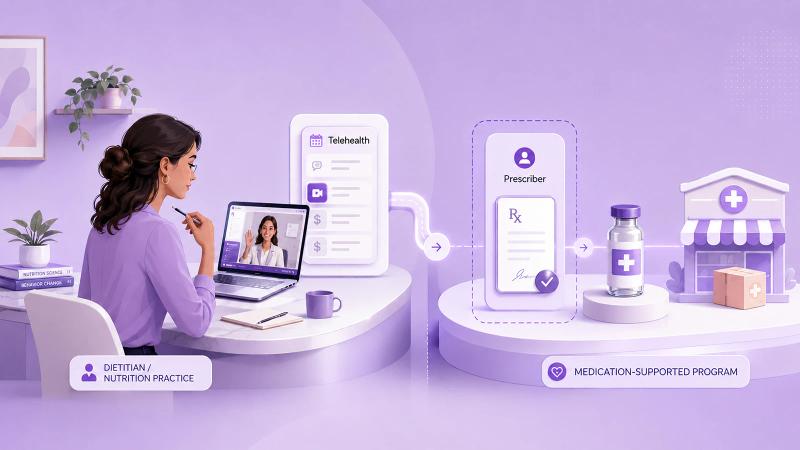
Most comparisons of HIPAA compliant telehealth platforms sort by clinical specialty, which is useless if you sell programs rather than practice medicine. Sort by business model instead. Compare six things: BAA terms, e-prescribing and EPCS, async visit support, pharmacy routing, white-label control, and published price.
HIPAA-compliant telehealth platforms are usually compared by speciality, which is why operators pick the wrong one. Nobody buying software to launch a peptide program, a GLP-1 line, or a med spa treatment menu is asking what therapists use. They are asking a different question: can this thing take an order, get a licensed provider to review it, route a prescription to a pharmacy, and keep the refill running, without me building a clinic.
That does not map to specialty. It maps to business model. So this comparison is built the way you actually buy.
One boundary before we start: this is an infrastructure article. It is informational, not legal advice, and it contains no treatment guidance. If you want the plain-language version of how the rules translate into a workflow, we wrote that separately in telehealth compliance without the legal rabbit hole.
See how the storefront workflow would run for your brand. Book a walkthrough with FUSE, and we will map intake, provider review, and fulfillment against your catalog.
The six columns that decide the outcome
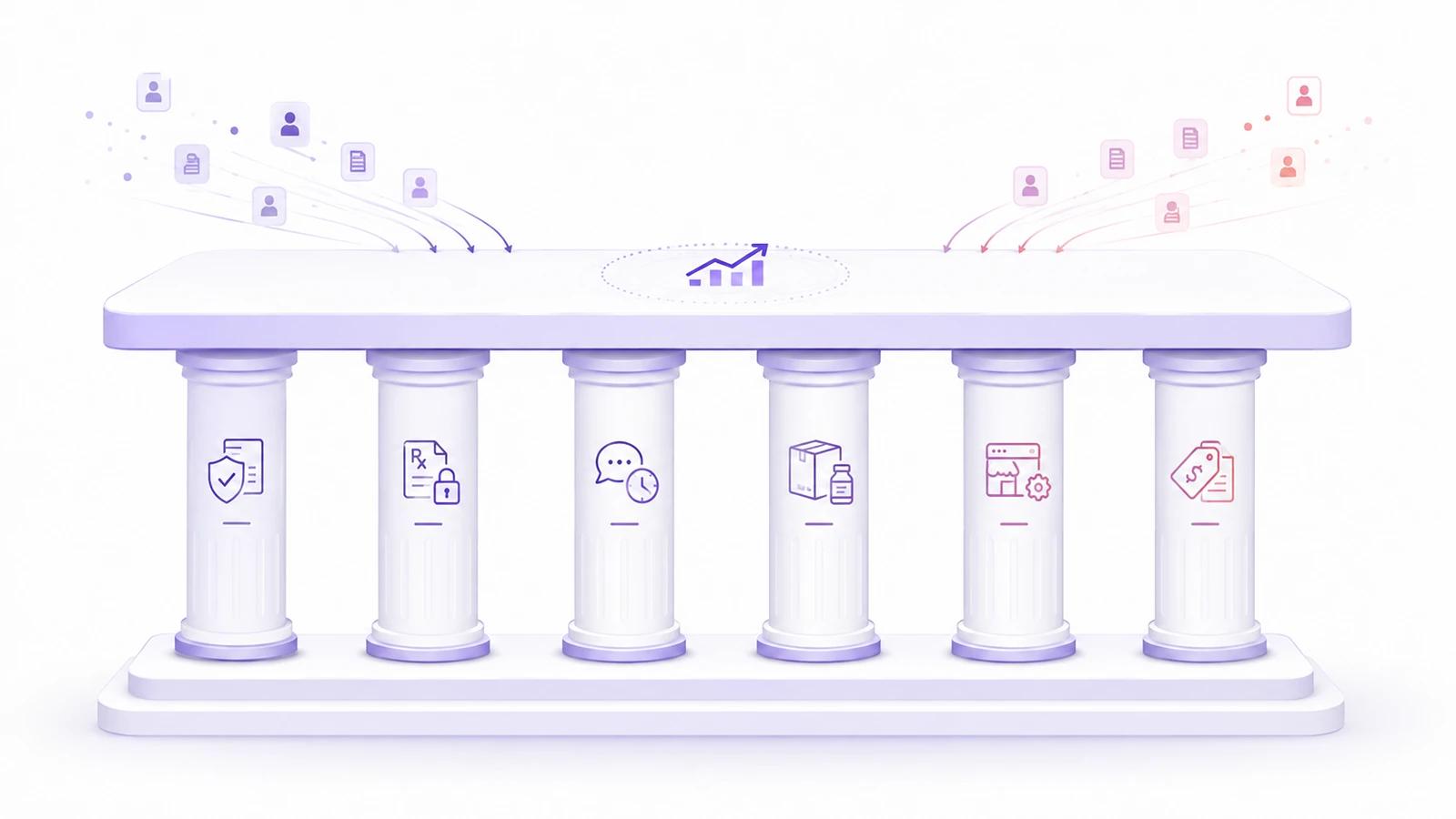
Vendor feature grids list forty things. Six of them predict whether HIPAA-compliant telehealth platforms hold up once your volume is real.
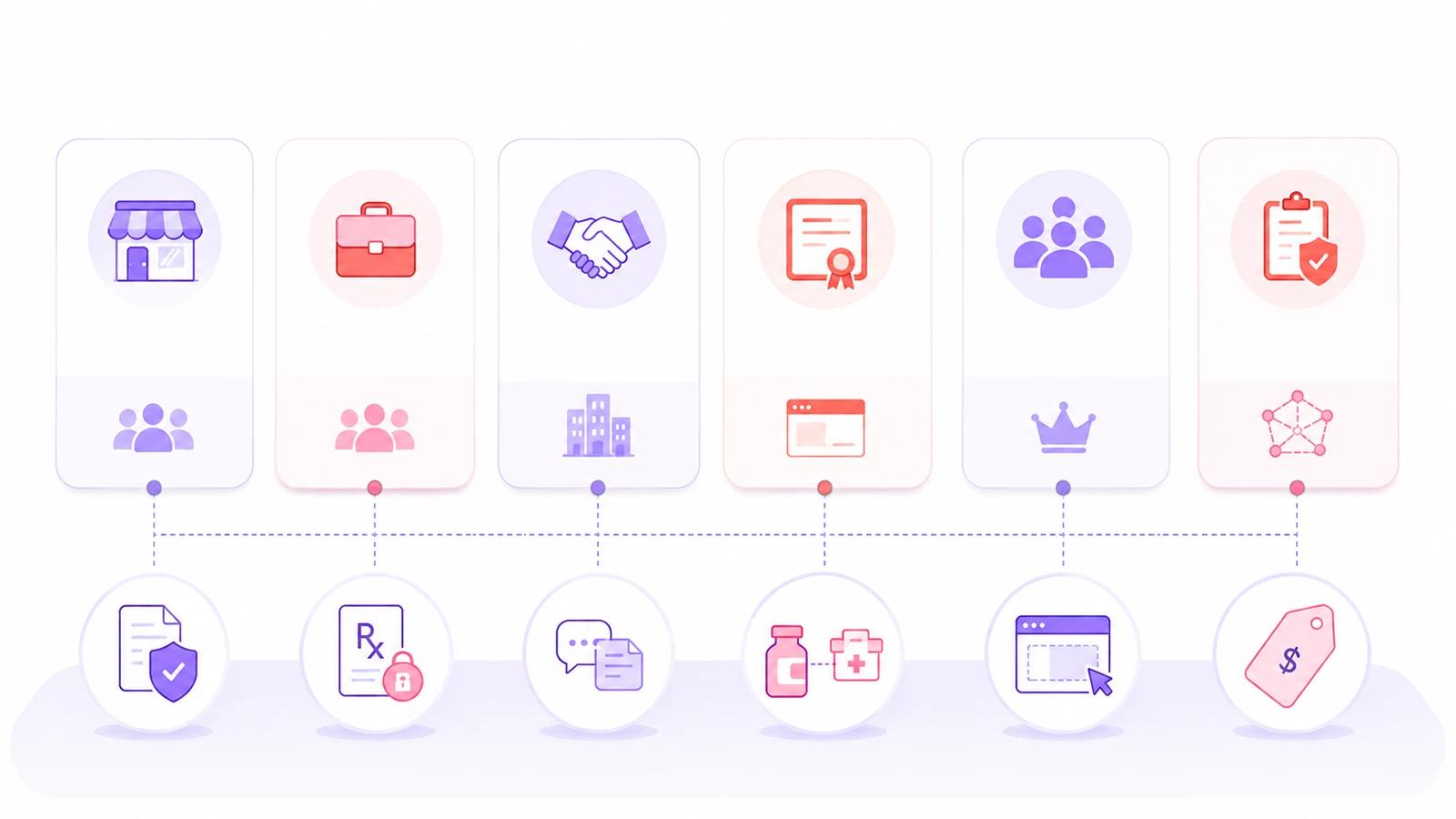
1. BAA, and on which plan. If a vendor touches protected health information for you, federal rules require a written business associate agreement. That is 45 CFR 164.502(e) on the privacy side and 164.308(b)(4) on the security side, and HHS says it plainly in its telehealth guidance: use vendors who will sign one. The trap is tier. Several vendors sign a BAA on paid plans only, and their free tier is not authorized for PHI. The same trap catches operators on the e-commerce side, where a standard Shopify storefront is not a HIPAA-compliant layer on its own. Also worth remembering that OCR's pandemic-era telehealth enforcement discretion expired at 11:59 pm on August 9, 2023. There is no grace period left.
2. E-prescribing, and separately, EPCS. Two different purchases. Standard e-prescribing routes a normal prescription. EPCS covers controlled substances and requires identity proofing plus two-factor hardware. Product mix decides which you need. Semaglutide and tirzepatide are not controlled substances. Testosterone is Schedule III. Sell TRT, and you are in EPCS territory whether you planned for it or not.
3. Async visit support. Store-and-forward review is the difference between a program that scales and a calendar you have to fill. If every order needs a scheduled video call, your margin is capped by provider hours.
4. Pharmacy routing. Sending a prescription and fulfilling it are separate problems. Most platforms only do the first. If nobody ships the box, you do not have a business, and the 503A versus 503B decision changes what you can ship and at what volume.
5. White-label depth. Custom branding usually means your logo in the corner. Real white-label means your domain, your checkout, your customer relationship, and the clinical workflow structured behind it. If you are still weighing custom development, the build or buy math is worth reading first.
6. Published price. Vendors that hide pricing are telling you something about the sales cycle you are about to enter. We publish ours for the same reason.
HIPAA-compliant telehealth platforms, sorted by who you actually are
| Platform | BAA | E-Rx / EPCS | Async | Pharmacy fulfillment | White-label | Published price |
|---|---|---|---|---|---|---|
| Doxy.me | Yes, on paid Premium | No | No | No | Branding only | Free tier plus paid Premium |
| Spruce Health | Yes, both plans | No | Yes, core strength | No | No | $24 and $49 per user per month |
| SimplePractice | Yes | Yes / Yes | Portal messaging only | No | No | $49, $79, $99 per month, plus $49 per month e-Rx and $89 setup |
| Healthie | Stated HIPAA and SOC 2 | Yes / Yes, Enterprise only | Yes, API-first | No | Partial, via API | Seat tiers published, plus $40 per provider per month e-Rx, EPCS adds $20 |
| Zoom for Healthcare | Yes, tiers not published | No | No | No | Video SDK embed | Sales quote |
| OpenLoop | Not published | Implied | Not stated | Yes, pharmacy network | Yes | Sales quote |
| Wheel | Not published | Not stated | Not stated | Not stated | Yes | Sales quote |
| FUSE Health | Yes, plus SOC 2 Type II and LegitScript | Yes, non-controlled programs | Yes, async-first | Yes, 503A and 503B routing | Yes, your domain and checkout | $699 per month Growth, $3,000 per month Pro |
Now match the row to the business.
Async D2C brand
You sell a program online. You need async review, pharmacy fulfillment, white-label checkout, and subscription refill logic. Doxy.me and Zoom cannot do this, and they do not claim to. SimplePractice and Healthie can prescribe but will not ship. Realistically, you are choosing between white-label infrastructure vendors, which is the row FUSE sits in alongside OpenLoop and Wheel. Wheel skews enterprise. OpenLoop and FUSE quote differently, and FUSE publishes price while the other two do not. The mechanics of this model are covered in how D2C brands launch white-label telehealth.
Med spa adding a treatment line
You already have customers and a brand. What you lack is a licensed provider network across states and a pharmacy that will actually fulfill. Practice management software solves neither. If the line includes semaglutide, controlled substance rules do not apply. If it includes testosterone, they do. Two other things decide this build: which states allow telehealth across state lines and whether you need an MSO structure because you are not the licensed party.
Coaching or wellness business
You are not a clinician and should not become one. The workable structure is simple: you own the storefront and the customer, while clinical review, prescribing, and fulfillment sit behind it in a defined workflow. A video tool does not create that separation. Infrastructure does, and we broke the setup down step by step in how coaches sell peptides online under their own brand.
Independent NP or small practice
Different animal entirely. You are delivering care, scheduling patients, and possibly billing. SimplePractice, Healthie or DrChrono fit here far better than any storefront platform. If your volume is low and your needs are video plus messaging, Spruce at $24 per user per month is the cheapest legitimate answer on this page, and it comes with a BAA on both plans. If you are going independent and want prescribing and fulfillment included rather than bolted on, that is a different setup, covered in telehealth infrastructure for nurse practitioners.
See the workflow end to end, with your product mix mapped in. Book a demo and we will show you which parts of the stack you already have and which parts are missing.
How the workflow actually runs
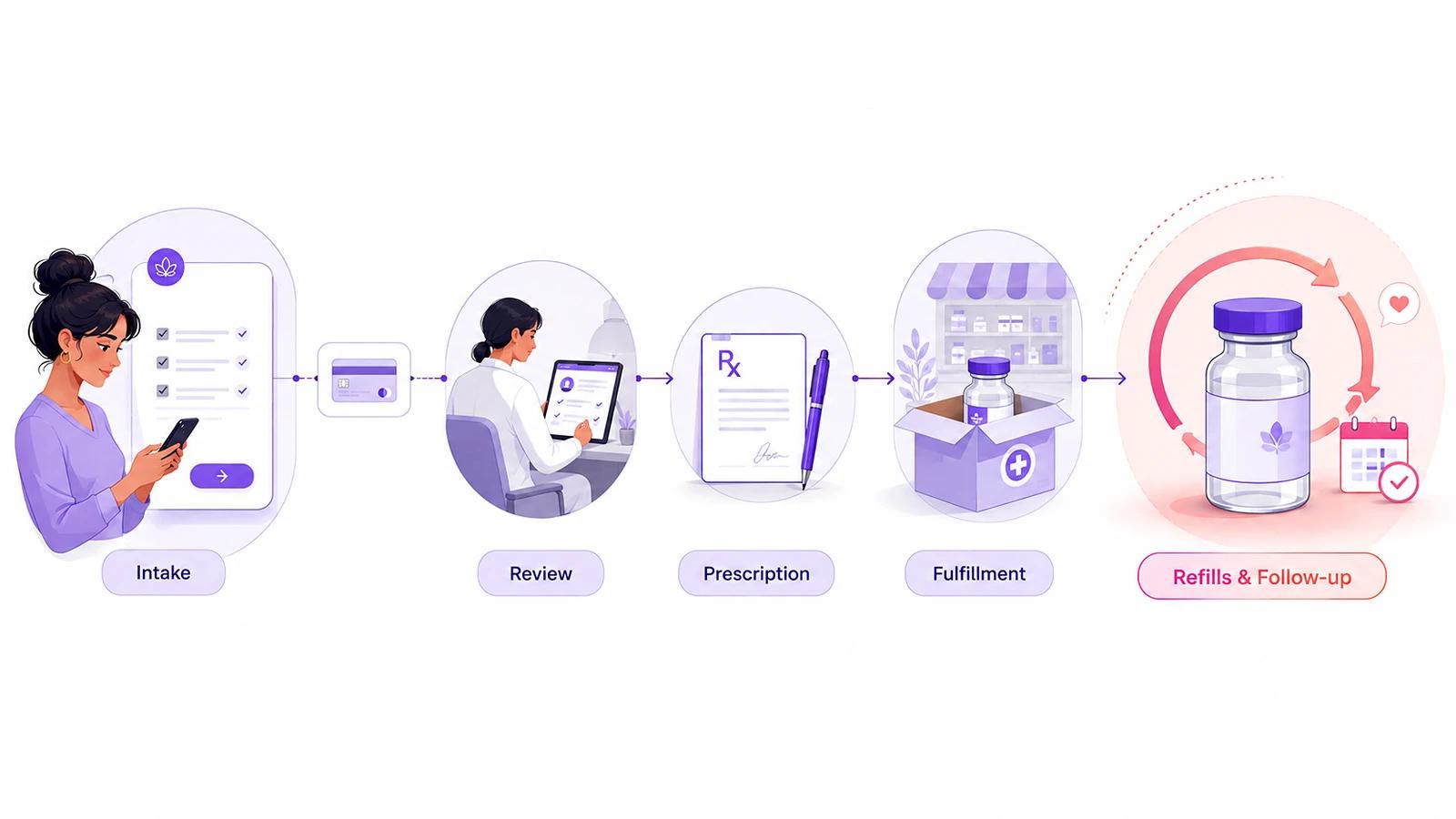
Five steps. No diagram required.
- Customer picks a program on your storefront and completes structured intake.
- A licensed provider reviews it, async by default.
- If appropriate, a prescription is issued through a defined prescribing flow.
- Fulfillment routes to the configured pharmacy, 503A or 503B depending on the product.
- Refills and follow-ups run on rules, so subscriptions do not quietly churn. This step is where the margin actually lives, which we covered in how subscription refills drive margin.
Payment sits inside this, and the detail operators miss is authorization versus capture. Card is authorized at checkout and captured after clinical approval. Nobody pays for a treatment they were not cleared for, and you are not processing refunds all week.
Where launches actually break
Four patterns, and none of them are the video call. We mapped these in more depth in where telehealth launches break at scale.
Payments. Processors treat telehealth as high risk. Brands running on a single consumer processor with no backup find out at the worst moment. Sort processor structure before volume, not after.
Certification. Google Ads only allows telemedicine advertisers accredited through LegitScript's Healthcare Merchant Certification Program in the United States. That is a published Google policy, not a rumor. LegitScript lists the cost at $975 to apply per site plus $2,150 annually. If your growth plan runs through paid acquisition, certification is a launch dependency, not a later project.
Pharmacy capacity. A pharmacy that says yes at 50 orders a month can say no at 500, or refuse a 90-day supply over how the prescription is written. Single-pharmacy dependency is a ceiling.
The regulatory calendar. DEA's telemedicine flexibilities for controlled substances were extended a fourth time and currently run through December 31, 2026. The permanent Special Registration rule proposed in January 2025 is still not final. If any part of your catalog is scheduled, that date belongs on your planning board.
The pressure is real: 789 large healthcare data breaches were reported in 2025, affecting roughly 138.5 million people. Structured beats improvised.
Resiliency box
- Payments: authorization at checkout, capture after approval, processor structure defined upfront.
- Data: your storefront and customer relationship stay yours. PHI sits inside the clinical workflow with defined boundaries.
- Certification: LegitScript readiness and SOC 2 Type II handled as part of infrastructure, not as a scramble.
- Providers: async-first routing across states, so review time does not become your bottleneck.
The decision, made simple
If you are delivering care, buy practice management software and stop reading comparison tables about storefronts. If you are selling programs, you need something else: a compliant storefront where intake, provider review, prescribing, fulfillment and refills are structured before your first order, not assembled after your hundredth.

That is the whole difference between the platforms above. One group helps clinicians run a practice. The other lets an operator add a digital healthcare revenue stream without building a clinic. FUSE Health is built for the second, publishes its price, and tells you plainly which row it belongs in.
If that model fits your catalog, we will map it: what you sell, how intake runs, which products trigger controlled substance rules, and what you can launch first.
Map your program with an operator, not a sales rep. Book a consultation and see exactly what launching costs and how fast it moves.
This article is informational and written for operators. It is not legal, regulatory or medical advice, and it contains no treatment or dosing guidance. Verify vendor terms and current regulatory dates directly before making decisions.
References
- HHS. HIPAA for Telehealth Technology.
- eCFR. 45 CFR 164.502 - Uses and disclosures of protected health information: General rules.
- eCFR. 45 CFR 164.308 - Administrative safeguards.
- Federal Register. Notice of Expiration of Certain Notifications of Enforcement Discretion Issued in Response to COVID-19.
- Federal Register. Fourth Temporary Extension of COVID-19 Telemedicine Flexibilities for Prescription of Controlled Medications.
- Federal Register. Special Registrations for Telemedicine and Limited State Telemedicine Registrations (proposed rule).
- DEA. Controlled Substances - Alphabetical Order.
- Google Ads Help. Healthcare and medicines policy.
- LegitScript. Healthcare Merchant Certification Pricing.
- Spruce Health. Pricing.
- SimplePractice. Pricing.
- Healthie. E-Rx and Healthie (pricing for e-prescribing and EPCS).
- Doxy.me. Pricing.
- Zoom. HIPAA Compliance.
- HIPAA Journal. Healthcare Data Breach Statistics.

Daniel is a two-time founder who has scaled service businesses across major U.S. markets. A Y Combinator competition winner, he focuses on removing operational and regulatory barriers so operators can build and scale modern healthcare businesses.
- Background
- Startup Operations & Service Systems
- Experience
- 2x Founder, Multi-Market U.S. Scaling
- Qualifications
- Healthtech Market Expertise & Operational Scaling
- Key Achievement
- Scaled Premier Staff & Eventstaff across major U.S. markets