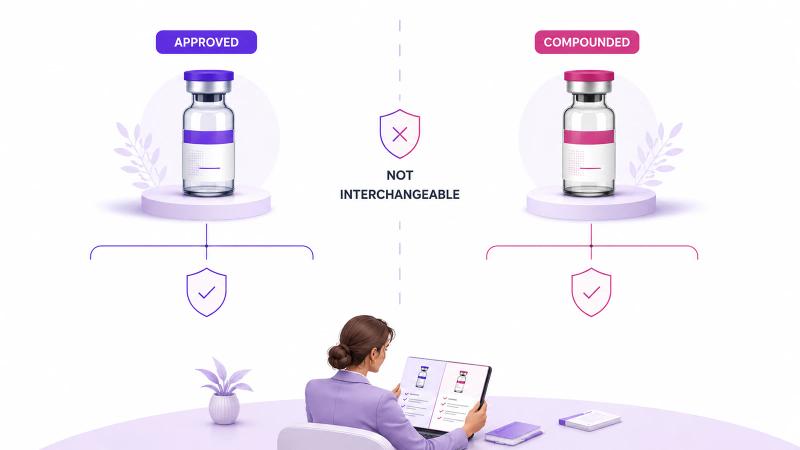
Asynchronous telehealth lets a licensed provider review a patient intake on their own schedule instead of on a video call. It is what makes storefront-style programs economically viable. State rules decide where async-only evaluation is enough, and the workflow behind it decides whether the business survives volume.
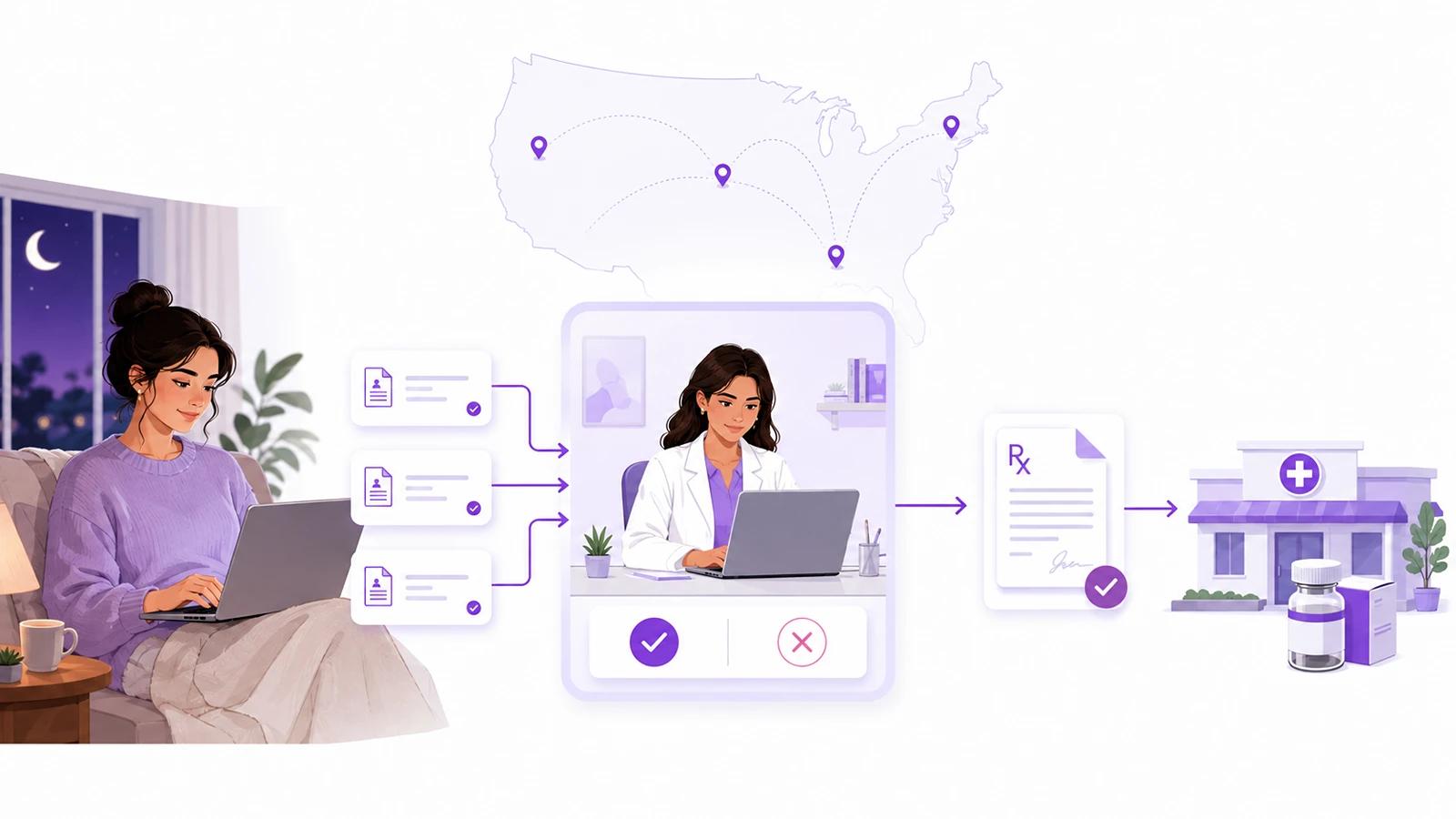
Asynchronous telehealth is why a two-person brand can run a nationwide program with no appointments on the calendar. A patient fills out an intake at 11pm. A licensed provider in that patient's state reviews it the next morning, approves or declines, and the prescription routes to a pharmacy. Nobody coordinated calendars. Nobody staffed a phone line.
That is the whole economic argument. Synchronous care caps you at the provider hours you can buy. Asynchronous telehealth caps you at the intakes your review queue can clear, a very different ceiling.
Most write-ups stop at the clinical definition. Operators need the other half: which states permit it, what the intake must capture, who staffs the queue, and whether reimbursement matters.
See the workflow before you commit. Book a walkthrough with FUSE and watch an intake move from storefront to provider review to pharmacy routing.
What asynchronous telehealth means in an operator's terms
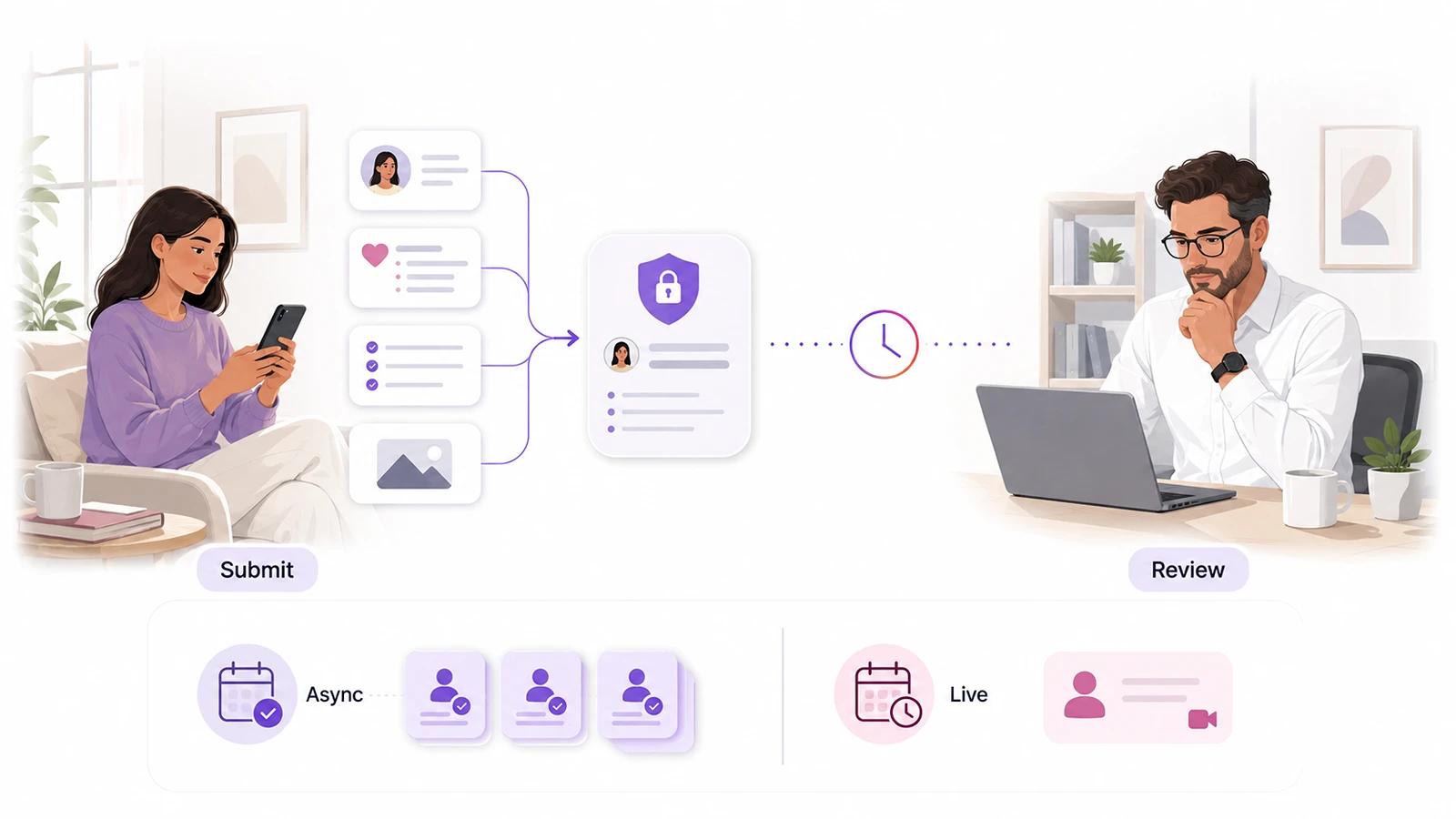
Asynchronous telehealth, or store-and-forward, means the patient submits information at one point and a clinician reviews it at another. Photos, health history, ID verification, and a symptom questionnaire go into a record. A provider opens it later and makes a clinical decision. Synchronous telehealth is the live version: two-way video or audio in real time.
Async vs synchronous telehealth: the difference that matters commercially
The clinical difference is timing. The operational difference is staffing math.
A synchronous program pays for provider availability during the hours patients want appointments. An asynchronous telehealth program pays per review. A provider clearing intakes in focused blocks handles volume no calendar can match, and acquisition stops being throttled by scheduling.
That is also why intake quality carries weight. In a live visit the provider asks a follow-up in the moment. In async, whatever the questionnaire missed becomes a message that stalls the queue and delays the patient.
The state rules: where async-only evaluation actually works
No single federal rule says asynchronous telehealth is permitted or prohibited. Practice standards sit with state medical boards, and they fall into two broad camps, with drug category acting as a third filter on top.
States with broad asynchronous authority
Some states write asynchronous care into the definition of telehealth. Florida defines telehealth as "the use of synchronous or asynchronous telecommunications technology" for assessment, diagnosis, consultation, treatment, and monitoring, and permits a patient evaluation sufficient to diagnose and treat without a prior in-person exam (FL Statute 456.47).
California takes a standard-of-care approach instead. Business and Professions Code Section 2242 requires an "appropriate prior examination," which does not mandate real-time interaction so long as the standard of care is met.
States that require a live visit or an in-person exam
Other states close the door on questionnaire-only evaluation. Arkansas says a professional relationship "does not include a relationship between a healthcare provider and a client established only by" an internet questionnaire, email, patient-generated medical history, or text messaging (Arkansas Medicaid Provider Manual, Rule 105.190). Georgia's medical board clarified in 2025 that asynchronous telehealth does not meet its requirements for establishing a relationship, while synchronous telehealth may.
For a national program this is a routing rule, not a blocker. Patients in async-permissive states move through the review queue. Patients in states requiring a live encounter get routed to a video visit, decided by the platform from the patient's state rather than operator guesswork. The credentialing side sits in our guide to which states allow telehealth across state lines.
The drug category question sitting underneath all of it
State modality rules are half the picture. What is being prescribed matters as much.
Non-controlled products, including GLP-1 medications like compounded semaglutide and tirzepatide and most peptides, sit under state practice rules alone. Controlled substances bring the Ryan Haight Act into it. The DEA extended telemedicine flexibilities allowing registered practitioners to prescribe Schedule II through V medications without a prior in-person exam through December 31, 2026, and has signaled it will finalize a special registration framework rather than issue a new proposal.
That shapes program design. A GLP-1 or peptide telehealth program has more room to run async than a testosterone program, where testosterone is Schedule III and long-term rules are unsettled. Our breakdown of what you can prescribe through telehealth in 2026 goes category by category.
What the intake questionnaire has to capture
The intake is the clinical record in an asynchronous telehealth program. If it is thin, the provider cannot make a defensible decision. A workable intake captures identity and location, health history relevant to the therapy requested, medications and allergies, contraindication screening, patient-reported measurements, photo or document uploads, consent to telehealth treatment and to the modality itself, and an audit trail of what was asked, answered, and when.

Two failure modes repeat. One is an intake written by marketing to maximize conversion, stripping the screening questions that make a clinical decision possible. The other is HIPAA compliant patient intake data sitting in a form tool never built to hold protected health information. Both are cheap to fix before launch and expensive after. Our note on HIPAA compliant telehealth platforms by business model covers where operators get this wrong.
How provider review queues actually get staffed
This is where async programs quietly break. A review queue is a work pool. Submitted intakes land in it, and the platform assigns each to a provider licensed in that patient's state. The provider approves, declines, or sends back a clarifying question. Approved orders route to a pharmacy. Three things keep that queue healthy:
- State coverage depth. One provider per state is a single point of failure. Vacations, volume spikes, and license lapses all stall a queue built that thin.
- Turnaround targets. Operators who set an internal target, commonly the same business day, and monitor it catch capacity problems before patients email support.
- Escalation paths. Not every intake is a clean approval. Some need a follow-up message, some a synchronous visit, some a decline with a clear reason. A queue with no defined path for the messy minority becomes a backlog.
Most operators should not build this themselves. Credentialing providers in fifty states, keeping licenses current, carrying malpractice coverage, and maintaining routing logic is a full operating function. It is why the storefront-first model wins: you own the brand, the offer, and the customer, and the clinical layer runs behind it. That separation also keeps you clear of corporate practice of medicine rules, covered in our 50-state operator guide.
Where reimbursement sits, and why it probably does not matter to you
For a cash-pay program, reimbursement for asynchronous telehealth is close to irrelevant. Forty state Medicaid programs reimburse for store-and-forward in some capacity, against all fifty states plus DC and Puerto Rico for live video (CCHP, 2025). Medicare coverage is narrower, limited to demonstration projects in Alaska and Hawaii.
If you bill payers, that gap shapes your service mix. If the patient pays by card at checkout, none of it applies. Your revenue questions become pricing, refill rate, and payment reliability, not codes and modifiers. That is a large part of why cash-pay telehealth businesses adopted asynchronous telehealth years before health systems did.
What holds up at volume
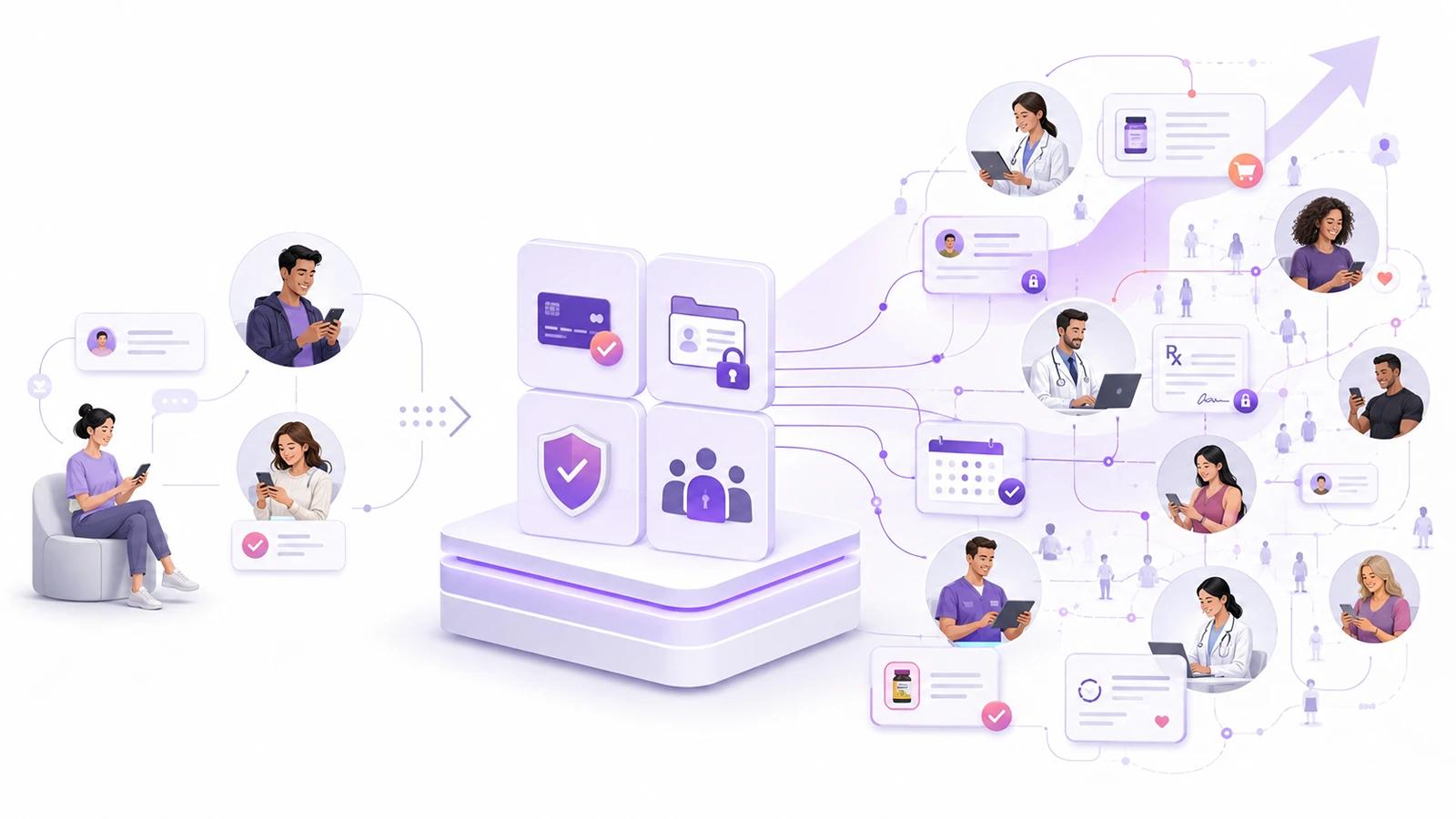
A program that works at 50 patients a month and collapses at 500 breaks in one of four places.
- Payments. High-risk merchant classification, chargebacks on renewals, and processors freezing a fast-growing account are common. Sorting payments before the growth curve is cheaper than during it.
- Data. Intake records, prescriptions, and messages need access controls and audit logging. Bolting compliance onto an e-commerce stack is where launches stall. Our piece on what sits inside a white label telehealth software stack breaks down the layers.
- Certification. LegitScript, SOC 2 Type II, and HIPAA safeguards gate ad platforms and payment processors. Not paperwork for later.
- Provider capacity. Queue depth has to scale ahead of marketing spend, not behind it. Automating the handoffs between intake, review, fulfillment, and renewal keeps that from becoming a headcount problem, as covered in how to automate the patient journey.
Talk it through with someone who has launched this before. Book a consultation, and we will map your program against state rules, provider coverage, and pharmacy routing before you spend a dollar on acquisition.
Bringing it together
Asynchronous telehealth is not a shortcut around clinical standards. It sequences them differently, and it holds up in most of the country when the intake supports a real clinical decision and routing respects states that want a live visit.
The operators who win are not the ones with the best legal memo. They are the ones whose telehealth workflow makes the compliant path the default path, so intake number 4,000 goes the same way intake number four did.
FUSE built its telehealth infrastructure around that idea: async and synchronous capability across all fifty states, state-matched provider routing, a compliant EMR, pharmacy integrations, and a storefront that stays fully under your brand. Fifty-plus operators run on it, and no medical license is required on the brand side. Start with the workflow and let compliance structure follow from it.
General operator information, not legal or medical advice, and not a recommendation of any treatment. Telehealth rules change often and vary by state, profession, and drug category. Confirm your program design with qualified healthcare counsel before launch.
References
- Florida Statute 456.47, Use of Telehealth to Provide Services.
- California Business and Professions Code Section 2242.
- Center for Connected Health Policy, Arkansas State Telehealth Laws (Arkansas Medicaid Provider Manual, Rule 105.190).
- Georgia Composite Medical Board, Rule 360-3-.07, Practice Through Electronic or Other Such Means.
- Center for Connected Health Policy, State Telehealth Laws and Reimbursement Policies, Executive Summary (2025).
- Center for Connected Health Policy, Store-and-Forward Policy Tracker.
- DEA temporary extension of telemedicine flexibilities for controlled substance prescribing through December 31, 2026.

Daniel is a two-time founder who has scaled service businesses across major U.S. markets. A Y Combinator competition winner, he focuses on removing operational and regulatory barriers so operators can build and scale modern healthcare businesses.
- Background
- Startup Operations & Service Systems
- Experience
- 2x Founder, Multi-Market U.S. Scaling
- Qualifications
- Healthtech Market Expertise & Operational Scaling
- Key Achievement
- Scaled Premier Staff & Eventstaff across major U.S. markets