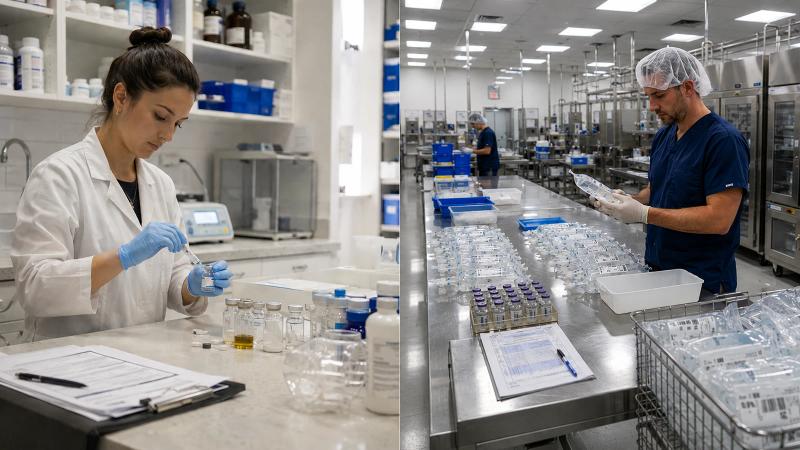
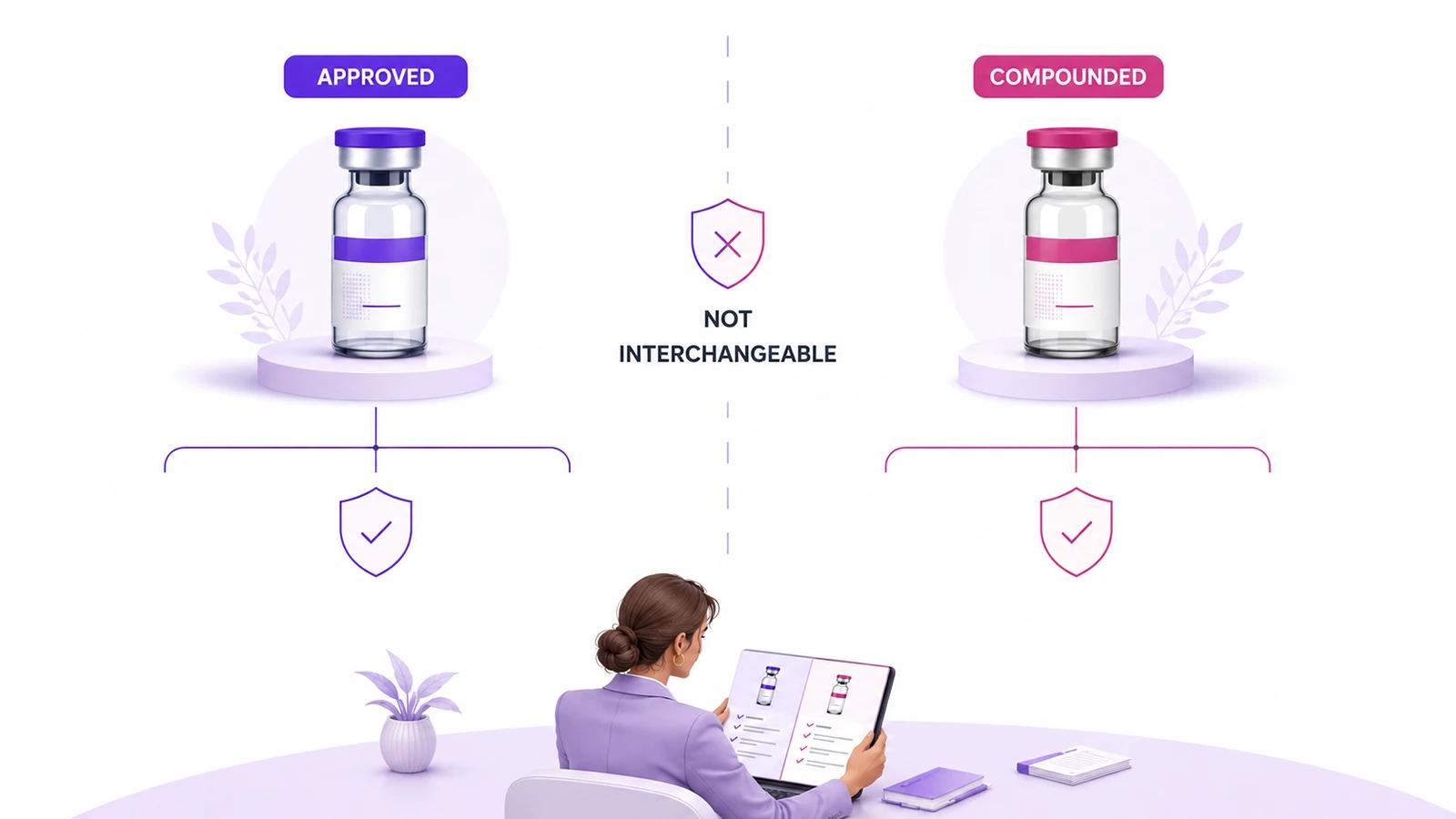
Compounded tirzepatide and Zepbound are not interchangeable, and saying they are is what draws warning letters. The supply question is settled by 503A rules. The marketing question is where operators actually get hurt. Here is the line, and how to build a program that stays on the right side of it.
Compounded tirzepatide vs Zepbound is a question most operators answer wrong, and they answer it in their own ad copy. Zepbound is an FDA-approved drug from Eli Lilly with an approved label, approved indications, and trial data behind it. Compounded tirzepatide is a preparation made by a licensed pharmacy for an individual patient, with none of those three.
That distinction is not trivia. In March 2026, the FDA sent 30 warning letters to telehealth companies marketing compounded GLP-1 products. The two things the agency objected to were marketing that presented compounded versions as effectively the same as the approved drug, and private-label branding that hid which entity actually made the product. Neither of those is a pharmacy problem. Both are storefront problems, and the storefront belongs to the operator.
If you run GLP-1 programs, sell peptides online, or operate a med spa moving into weight management, the exposure sits with your copy, your intake, and your routing logic. Not with your pharmacy partner.
See the workflow before you commit to it. Book a walkthrough and we will show you how storefront, clinical review, and pharmacy routing connect in a live FUSE environment.
What the distinction actually is
Zepbound sits inside the FDA approval system. Every claim on its label was reviewed, every dose studied, and Lilly carries the regulatory burden. Compounded tirzepatide sits outside that system by design. Section 503A of the Federal Food, Drug, and Cosmetic Act lets a state-licensed pharmacy prepare a drug for an identified patient with a valid prescription. That authority exists so clinicians can solve individual patient problems, not so a brand can sell a cheaper version of an approved product at scale.
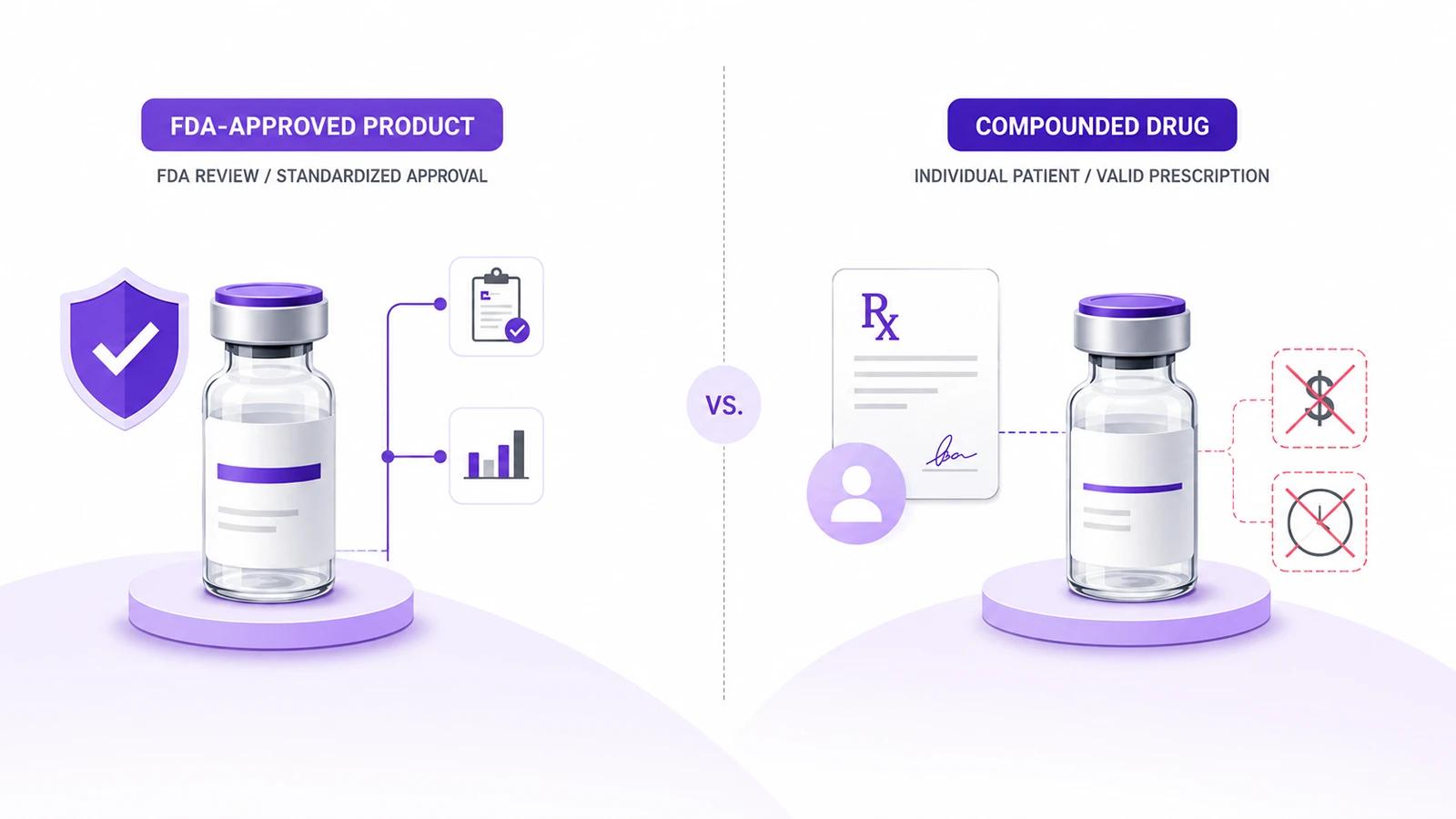
The FDA draws the line with a phrase worth memorizing: essentially a copy. A compounded drug counts as a copy when it uses the same active ingredient, at the same or an easily substitutable strength, by the same route as an approved product. Compounding a copy is defensible only when the prescriber documents a change producing a significant difference for that patient. Cost is not one. Neither is convenience.
The shortage window closed a while ago
Tirzepatide came off the FDA shortage list on December 19, 2024. Enforcement discretion ended February 18, 2025 for 503A pharmacies and March 19, 2025 for 503B facilities. Semaglutide followed months later. Operators who launched during the shortage often still describe the category in shortage-era language, and that language is now well out of date.
Where your supply can legally come from
This is the part most operators get backwards.
503A pharmacies compound for a specific patient against a specific prescription. They can still prepare tirzepatide, but only where the prescriber has documented a clinically meaningful difference for that patient. One-formula-for-everyone programs do not fit that authority, however the intake form is worded.
503B outsourcing facilities compound in batches from substances on the FDA bulks list. On April 30, 2026, the FDA proposed excluding semaglutide, tirzepatide, and liraglutide from that list, finding no clinical need to compound them from bulk. Comments closed June 29, 2026, and the agency was explicit that the call rests on patient safety, not economics.
If that exclusion holds, large-scale batch supply of compounded tirzepatide effectively ends, and programs routed through 503B facilities are the exposed ones. Our 503A vs 503B breakdown covers how each model behaves under load, and GLP-1 pharmacy routing explains how to structure routing so one supply change does not take your program dark.
What you may and may not say in your marketing
This is the section nobody in this category has written, and the one that matters most to your risk.
- Sameness language
Avoid anything positioning compounded tirzepatide as equivalent to Zepbound: generic, a version of, the same as, an alternative to, or Zepbound at a fraction of the price. There is no approved generic tirzepatide, so the word generic is a factual misstatement, and it was flagged specifically in the 2026 warning letters. Comparative pricing tables are the quiet version of the same problem. They do the equivalence work visually even when your text is careful.
- Personalization language
This one surprises operators, because personalization sounds like the safe framing. It is not, automatically.
In Eli Lilly v. Henry Meds, the Northern District of California let Lilly's false advertising claim proceed on September 24, 2025, finding it plausible that calling products individualized, tailored, and patient-specific was literally false when the underlying formula was standardized.
The rule that falls out of that is simple. If every patient at a given dose gets an identical preparation, do not call it personalized. Personalization language holds up only when the clinical record shows patient-specific decisions being made. If your marketing promises individualization, your workflow has to produce it and document it.
- Private-label branding
The FDA's second objection in March 2026 was branding that obscures the manufacturer. Your storefront can carry your brand. Your patient-facing materials still have to show that the product is compounded, that it is not FDA approved, and which pharmacy prepared it. Disclosure buried in a footer is not disclosure. Build it into the product page, the intake summary, and the shipment confirmation.
- A quick substitution list
| Retire this | Use this |
|---|---|
| Generic Zepbound | Compounded tirzepatide |
| Same as the brand | Compounded preparation, not FDA approved |
| Personalized dosing (standard formula) | Clinician-reviewed dosing |
| Guaranteed results | Program includes ongoing clinical oversight |
| Alternative to Zepbound | Compounded option, where clinically appropriate |
Run your live site against that table before your next ad flight. Most operators find three or four problems on the homepage alone. Our guide to compliance tools every GLP-1 platform should include covers locking this at the template level, so a marketing hire cannot undo it later.
Watch the claims layer work in practice. Book a demo and see how FUSE handles disclosures, intake logic, and pharmacy routing inside one workflow.
How the workflow runs behind the storefront
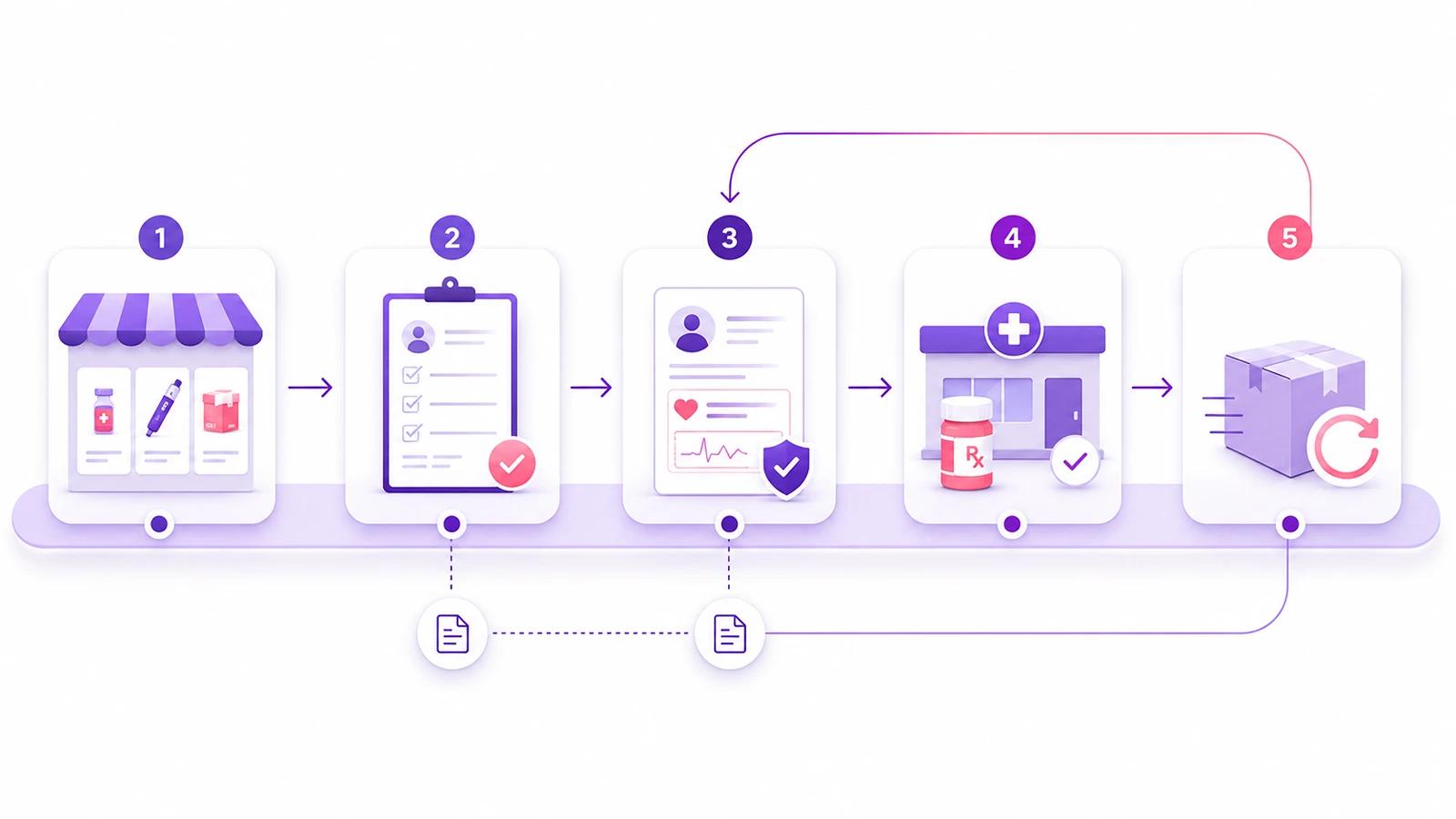
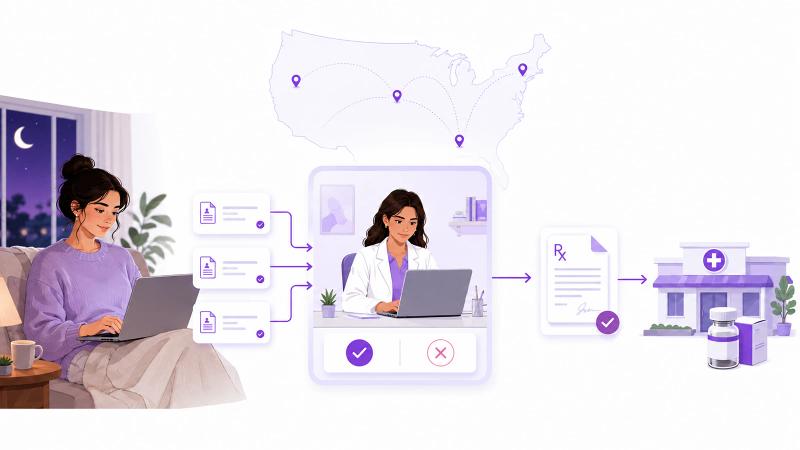
The operators who stay clean are not the ones with better lawyers. They are the ones whose systems make the wrong move difficult. A structured GLP-1 program runs in five steps:
- Storefront. Your brand, pricing, and catalog. Product pages carry compounded status and disclosures as fixed template elements, not editable copy.
- Intake. Async health history and contraindication screening, with a record of what the patient reported. This is the evidence layer for any personalization decision made later.
- Clinical review. A licensed provider in the patient's state approves, adjusts, or declines, and the reasoning is recorded.
- Pharmacy routing. The prescription moves to a partner pharmacy based on state, product, and availability rules you set in advance.
- Fulfillment and refills. Shipping, tracking, and refill logic that re-triggers clinical review instead of auto-shipping indefinitely.
Steps two and three turn a marketing claim into a defensible one. How compounded semaglutide programs work through telehealth walks the same architecture with a different molecule, and telehealth prescribing in 2026 covers what providers can authorize across state lines.
What breaks at volume
Three failure patterns repeat in this category.
- Single-pharmacy dependency. One supply relationship, one regulatory change, program dark. Operators running multi-pharmacy routing absorbed the 2025 cutoffs. Operators who did not, stopped selling.
- Copy drift. The compliant version ships at launch. Six months later a growth hire has added comparison language nobody reviewed. Claims control belongs in the platform, not in a document.
- Manual clinical review. A queue that works at 40 patients a month collapses at 400. Providers start rubber-stamping, and the documentation justifying your personalization claims stops existing.
FUSE was built around those three failure points. Storefront, intake, clinical review, pharmacy routing, payments, and HIPAA-compliant data handling run as one system, which is why operators launch GLP-1 programs on it in days rather than quarters. If you are still weighing infrastructure, build or buy lays out the real cost comparison.
The decision in front of you
Compounded tirzepatide vs Zepbound is not really a product question. It is a question about whether your business survives scrutiny.

The FDA has said what it objects to. A federal court has said which words carry litigation risk. The proposed 503B exclusion says where supply is heading. What that asks of you is infrastructure enforcing the rules automatically, so growth does not quietly reintroduce risk. That is the difference between an operator compliant today and one still compliant at ten times the volume.
Map your program against the current rules. Book a consultation and the FUSE team will pressure-test your claims, routing, and clinical workflow before a regulator does.
This article is written for telehealth operators, med spa owners, and healthcare brands. It covers business and regulatory considerations only and is not medical advice, legal advice, or guidance for patients. Regulatory positions in this category change quickly. Confirm current FDA policy and consult qualified healthcare counsel before launching or modifying a GLP-1 program.
References
- FDA. FDA clarifies policies for compounders as national GLP-1 supply begins to stabilize.
- FDA. FDA Proposes to Exclude Semaglutide, Tirzepatide, and Liraglutide on 503B Bulks List (April 30, 2026).
- Federal Register. List of Bulk Drug Substances for Which There Is a Clinical Need Under Section 503B.
- FDA. Declaratory Order: Resolution of Shortages of Tirzepatide Injection.
- Venable LLP. FDA's Latest GLP-1 Crackdown: What Compounders and Telehealth Platforms Need to Know (March 2026).
- Orrick. FDA Moves to Shut the Door on Large-Scale Compounding of GLP-1 Drugs (May 2026).
- Eli Lilly and Co. v. Henry Meds, N.D. Cal., order on motion to dismiss (September 24, 2025).