GLP-1 telehealth providers are not equivalent. Some deliver only provider networks. Others provide full white label infrastructure covering intake, pharmacy fulfillment, subscriptions, and payments. Operators who evaluate on pitch rather than mechanism end up rebuilding mid-growth. This guide walks through what each layer of a GLP-1 platform actually covers and the questions that surface real capability from marketed capability.
What the Clinical Layer Actually Covers
The clinical layer in a GLP-1 program includes provider evaluation, prescribing authority, and ongoing patient management. When you partner with a telehealth platform, the first question is how much of that layer the platform actually owns versus how much it brokers through third parties.
A platform that owns its clinical layer maintains licensed providers on staff or under direct contract, manages credentialing across states, and operates defined prescribing protocols for GLP-1 medications. A platform that brokers clinical capacity connects you to external provider networks it does not control. The distinction matters when patient volume scales and SLA consistency becomes critical.
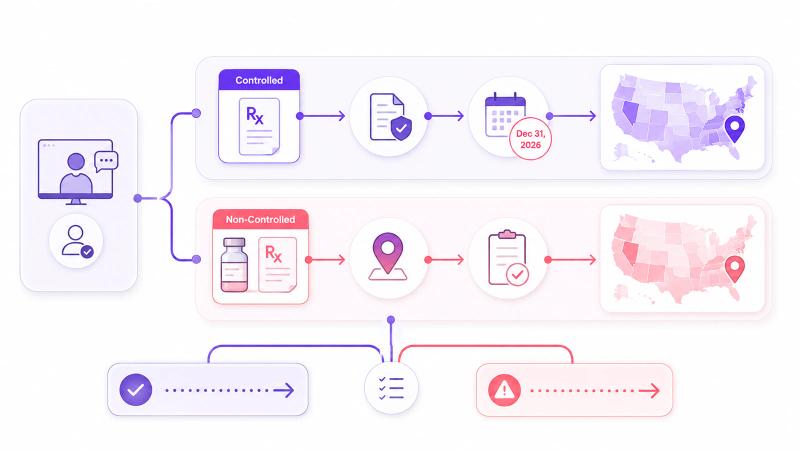
The clinical layer must cover five specific functions to be considered complete. Licensed providers must be available across the states where your patients will enroll. Asynchronous intake review workflows must be in place so patients do not face scheduling bottlenecks. Prescribing protocols for GLP-1 medications must be documented and consistently applied, not evaluated on an ad hoc basis per provider. Refill management must be tied to the clinical workflow so ongoing prescriptions are processed within a defined structure. And a documented MSO structure must maintain appropriate operational separation between clinical and commercial functions.
If the platform you are evaluating cannot describe its prescribing protocol in plain language, that is a signal the clinical layer is thinner than marketed. Request the protocol documentation before committing. A platform with real clinical infrastructure produces it without hesitation.

What the Operational Layer Covers and Why It Matters More
Beyond the clinical layer, the operational layer is what determines whether a GLP-1 program scales. Most telehealth launches fail not because the clinical piece breaks, but because the supporting operational infrastructure collapses under volume. An operator who has clinical capacity but no pharmacy routing automation, no subscription billing logic, and no HIPAA-compliant data handling discovers those gaps at exactly the moment they can least afford to.
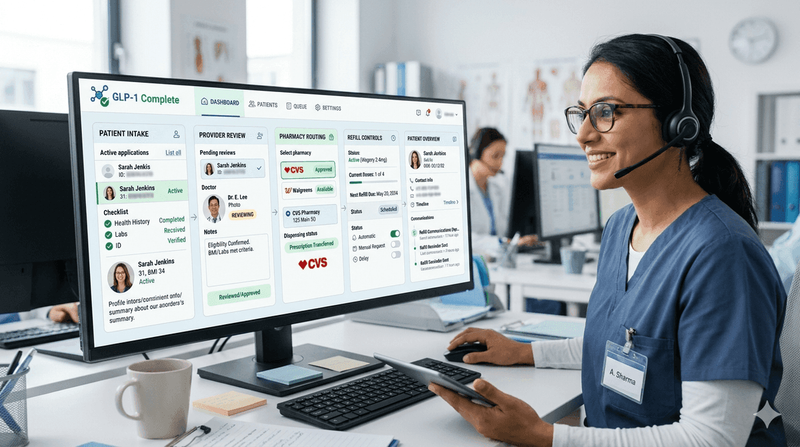
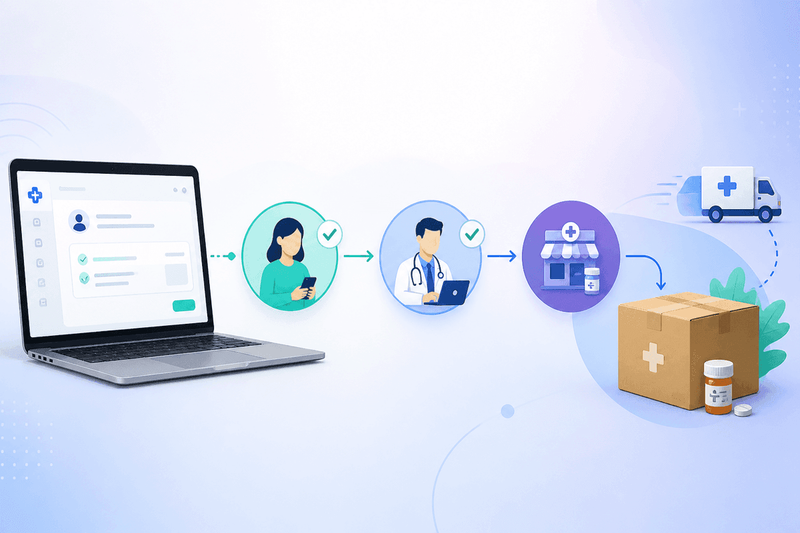
A complete operational layer covers pharmacy integration and fulfillment routing, which ensures approved prescriptions are transmitted electronically to compounding pharmacy partners and patients receive proactive shipment notifications. It covers subscription billing and refill automation, which removes manual reorder friction and keeps patients on program through the refill cycle. It covers patient data handling within HIPAA boundaries, including encrypted storage, access controls, and business associate agreements. It covers intake and checkout forms optimized for conversion without sacrificing clinical qualification depth. And it covers support escalation paths for prescription issues that arise between fulfillment milestones.
The operational layer is also where the economics of scale emerge. Operators running 100 patients on a platform with manual operational gaps can manage the coordination cost. Operators running 1,000 patients on the same configuration cannot. The inflection point arrives faster than most operators expect, and rebuilding operational infrastructure during growth is significantly more expensive than building it correctly before launch.
FUSE Health is built as a storefront-first platform. The clinical layer is configured and maintained behind the scenes. The operator owns the brand, pricing, and customer relationships. The platform handles clinical governance, pharmacy routing, subscription logic, and compliance infrastructure.

The Questions That Surface Real Platform Capability
Vendor pitches for GLP-1 telehealth platforms are generally optimistic. The questions that reveal actual infrastructure are the ones that require specific, operational answers rather than general positioning statements.
On the clinical side: who owns the provider relationships and how is credentialing maintained across states? What is the prescribing protocol for GLP-1 medications and who updates it when FDA guidance changes? What is the provider review SLA and how does routing scale when submission volume doubles?
On the pharmacy side: which pharmacy partners are currently configured for GLP-1 fulfillment? What are the fulfillment timelines for those pharmacies today? How does the platform handle routing continuity if a pharmacy partner changes operational status or exits a program category?
On the operational side: how are payments processed and who is the merchant of record for prescription program transactions? What certifications does the platform carry for healthcare advertising on Google and Meta? How is subscription billing structured and what is the retry logic for failed payments?
A platform with real infrastructure answers all of these clearly and quickly. A platform that deflects, provides general answers, or defers to post-signing onboarding conversations on these questions is signaling that the infrastructure is thinner than the pitch suggests. This is not a minor distinction. These are the operational foundations your entire revenue model runs on.

Clinic-First vs Storefront-First: Which Model Fits Your Goals
GLP-1 telehealth platforms organize around different primary orientations. Clinic-first platforms optimize for clinical operations: provider throughput, EMR integration, documentation efficiency, and clinical workflow management. They are designed for entities that operate as healthcare practices and need technology to run those practices more efficiently.
Storefront-first platforms optimize for selling treatments online at scale. They treat the clinical layer as infrastructure behind the storefront, not the primary product. The storefront, the patient acquisition funnel, the subscription model, and the refill retention logic are the primary design constraints. Clinical workflow is configured to serve that commercial structure compliantly.
For operators with existing audiences, wellness brands, supplement companies, fitness platforms, and media brands who want to add a GLP-1 revenue channel, the storefront-first model is almost always the correct fit. Their competitive advantage is the audience and the brand. The clinical infrastructure is an operational requirement, not a product differentiator. Choosing a clinic-first platform adds complexity they do not need and removes flexibility they do.
The practical difference shows up in implementation speed. A clinic-first platform typically requires weeks of clinical configuration, EMR integration, and workflow mapping before the first patient can enroll. A storefront-first platform like FUSE Health is configured around your brand and program parameters, with clinical infrastructure already built. Most operators move from program decision to first patient enrollment in weeks, not months.
What Evaluating on Mechanism Actually Looks Like
Evaluating a GLP-1 platform on mechanism means testing the claim against the operational reality before you sign. The most reliable method is asking for a live demo of the full patient journey from intake submission through provider review to pharmacy routing to patient notification. A platform that can demo this end-to-end in real time, not in a slide deck, has built it. A platform that cannot is usually describing what it intends to build.
Request documentation on three specific items: the current pharmacy partner list with active compounding status, the prescribing protocol for GLP-1 medications, and the MSO structure documentation. These are not proprietary trade secrets. They are operational documents that any legitimate platform can produce. Their absence is a signal.
Ask about the regulatory history on compounded GLP-1 specifically. Branded semaglutide supply recovery has changed what compounding pharmacies can offer and under what conditions. A platform that has maintained active pharmacy partnerships through the regulatory shifts has done the operational work. One that does not have a clear answer on current compounding status has not.
The gap between what a GLP-1 telehealth platform markets and what it delivers operationally is wide enough to derail a launch, delay revenue by months, and create compliance exposure that is expensive to unwind. Evaluate before you commit. The questions are not complicated, and the answers are available before you sign.
Conclusion
Picking the wrong GLP-1 telehealth platform creates technical debt that compounds. The right evaluation framework looks at clinical ownership, operational completeness, pharmacy routing depth, and platform orientation before committing. A platform that answers every operational question clearly, demonstrates the workflow end-to-end, and produces compliance documentation on request is describing real infrastructure. One that cannot is describing a roadmap.
FUSE Health provides full-stack infrastructure for GLP-1 program operators: intake, provider review, pharmacy routing, subscription billing, and refill management. Operators configure their brand and program parameters. The platform handles the rest.
References
- FDA Warning on Unapproved Compounded GLP-1 Drugs
- HHS HIPAA Security Rule
- LegitScript Certification for Telemedicine Providers

Daniel is a two-time founder who has scaled service businesses across major U.S. markets. A Y Combinator competition winner, he focuses on removing operational and regulatory barriers so operators can build and scale modern healthcare businesses.
- Background
- Startup Operations & Service Systems
- Experience
- 2x Founder, Multi-Market U.S. Scaling
- Qualifications
- Healthtech Market Expertise & Operational Scaling
- Key Achievement
- Scaled Premier Staff & Eventstaff across major U.S. markets