
Healthcare workflow automation is the operational lever that determines whether a telehealth business reaches profitability at 500 patients or requires 5,000 to break even. The difference is not clinical. It is operational. The platforms that automate the right workflows at the right stages compress cost structure in ways that manual operations cannot replicate. Operators who understand which workflows to automate and when are the ones building scalable, margin-positive businesses in 2026.
What Healthcare Workflow Automation Handles
Healthcare workflow automation handles the administrative and logistical functions that surround clinical care. It does not replace clinical judgment. It removes the operational friction that slows patient throughput, increases manual coordination cost, and creates the fulfillment gaps that drive subscription churn.
The functions that can be fully automated include patient intake data collection and verification, case routing to licensed provider queues, prescription routing to compounding pharmacy partners, patient notification at each stage of fulfillment, refill triggering at the appropriate interval, and subscription renewal management. These are not clinical functions. They are the operational connective tissue that moves a patient from inquiry to enrolled subscriber without requiring a staff member to manually manage each step.
The functions that remain with licensed providers are clinical evaluation of patient intake data, all prescribing decisions, and any direct patient communication that involves clinical guidance. Automation does not touch these functions. Every prescription in a properly structured telehealth system still requires a licensed provider to independently review the case, evaluate the intake data, and make a prescribing decision. Automation handles what happens before and after that decision, not the decision itself.
This distinction matters because it is the source of a common misunderstanding among operators entering the telehealth space for the first time. Workflow automation is not an attempt to remove the provider from the clinical process. It is an attempt to remove manual overhead from every non-clinical function so that providers can review more cases in less time and operators can serve more patients without proportionally increasing headcount.
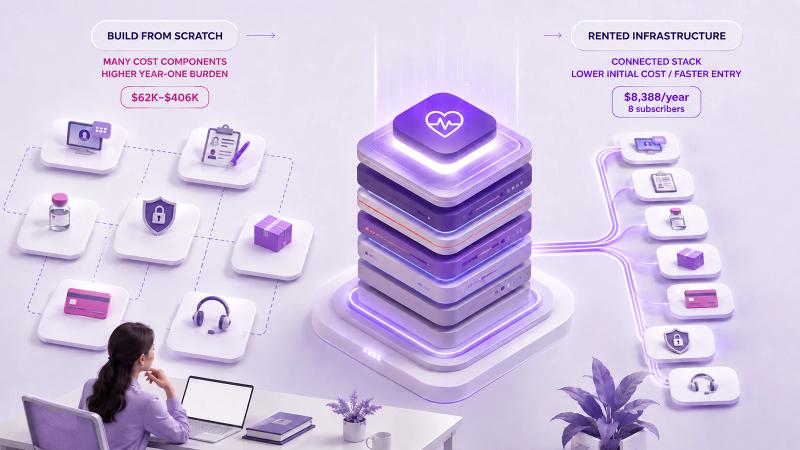
On a platform like FUSE Health, this layer is pre-built. Operators do not configure intake routing, prescription transmission, or fulfillment notification systems from scratch. The automation infrastructure is already in place. What operators configure is their specific program: the intake questions relevant to their compounds, the pricing and subscription structure, and the branding. The operational layer that connects intake to provider to pharmacy to patient runs automatically underneath.
The Three Workflows That Benefit Most from Automation
Patient Intake Processing
Patient intake processing benefits most from automation at high patient volume. The intake stage is where the highest percentage of patient drop-off occurs in manual telehealth operations. When intake requires back-and-forth communication, document requests, or delays before a provider can begin review, a significant portion of interested patients abandon the process before completing it.
Automated intake pre-screening identifies disqualifying conditions before a provider ever reviews the case. This has two effects on the economics of the business. First, it ensures that providers are only spending time on cases that are eligible for the program, which increases provider throughput and reduces cost per completed review. Second, it reduces the time between a patient starting the intake process and receiving a clinical decision, which directly increases the completion rate of the intake funnel.
On an automated intake system, a patient completes a structured eligibility form, the system verifies completeness and routes the case to the appropriate provider queue, and the provider receives a clean case for review. There is no manual case management step in between. At 1,000 patients per month, the difference between a manual and automated intake process can represent dozens of operational hours that are either eliminated or redeployed to patient acquisition and brand activities.
Pharmacy Fulfillment Coordination
Pharmacy fulfillment coordination is the highest impact automation for patient retention. Fulfillment failures, delayed shipments, missed refills, and patients who have to manually request prescription renewals, are the primary driver of involuntary churn in subscription telehealth programs. Patients who do not receive their medication on schedule either cancel or lapse, and winning them back requires acquisition spend that should never have been necessary.
Automated prescription routing ensures that once a provider approves a case, the prescription is transmitted to the pharmacy immediately without a manual handoff. Shipment confirmation triggers automated patient notifications. Refill timing is calculated based on the protocol length and triggered automatically before the patient runs out of supply. This turns what is otherwise a reactive fulfillment process into a proactive retention system.
The compounding pharmacy integrations on platforms like FUSE Health make this possible without operators building direct pharmacy relationships or managing transmission protocols themselves. The pharmacy routing infrastructure is pre-configured. Operators benefit from it without building it.
Subscription Renewal Management
Subscription renewal management automated with refill reminders, pre-authorization workflows, and re-engagement sequences keeps patients on program without requiring manual follow-up at the individual patient level. In manual operations, renewal management is one of the most time-intensive functions at scale because it requires tracking every patient protocol status and intervening before lapse occurs. At 500 patients this is manageable. At 2,000 patients it is operationally unsustainable without automation.
Automated renewal management identifies patients approaching the end of their protocol period, triggers refill requests at the appropriate window, processes payment renewal, and notifies the patient of their upcoming shipment. Patients who might otherwise lapse because they forgot to manually renew continue receiving their medication without interruption. The retention benefit compounds over time: each patient retained for an additional 90-day protocol cycle represents significant incremental revenue from a single acquisition event.
Measuring the ROI of Automation
ROI from healthcare workflow automation comes from three sources: reduced operational headcount, lower churn from improved fulfillment reliability, and higher provider throughput that enables more patients to be served at the same clinical cost.
Headcount reduction is the most visible ROI signal. Without automation, telehealth operations typically require one operations staff member for every 100 to 150 active patients. Tasks like intake case management, pharmacy coordination, patient follow-up, and renewal tracking consume hours per patient per month at scale. With full workflow automation, a single operations person can support 500 to 1,000 patients because the manual coordination tasks between those functions are eliminated.
For an operator running 1,000 active patients, the difference between a manual and automated operation can represent three to five fewer full-time operations hires. At a loaded cost of $60,000 to $80,000 per operations employee, that represents $180,000 to $400,000 in annual savings that goes directly to margin. This is before accounting for the revenue impact of improved retention and higher intake completion rates.
Churn reduction is the second and often larger ROI driver. Telehealth subscription churn is disproportionately caused by administrative friction: missed refills, slow fulfillment, and patients who disengage because they had to manually chase their prescription. Automated fulfillment and renewal management eliminates the majority of these friction points. A one percentage point improvement in monthly retention on a 1,000-patient subscriber base represents thousands of dollars in preserved monthly recurring revenue that compounds across the lifetime of the retained cohort.
Provider throughput is the third ROI source. Providers who receive clean, pre-screened cases with complete intake data can review more cases per hour than providers managing cases with incomplete information or requiring back-and-forth with patients to gather missing data. Automated intake pre-screening improves the quality of the case queue, which directly increases the volume of cases a provider can complete in a given time period. This means operators can serve more patients on the same provider network without increasing provider cost.
An operator managing 1,000 active patients manually needs a dedicated operations team to handle what automated platforms handle without staff involvement. The same volume on an automated platform like FUSE Health runs with a fraction of that overhead, with better patient experience, lower churn, and faster provider throughput throughout.
When to Invest in Automation and When to Wait
The timing of automation investment matters as much as the automation itself. Operators who automate too early, before they have validated their program pricing, intake conversion, and patient retention, can spend capital on infrastructure before the business model is confirmed. Operators who automate too late find themselves hiring operations staff to manage processes that a platform would have handled automatically, and then facing the cost and disruption of migrating to an automated system while the business is already running at volume.
The right signal to begin full automation is when manual coordination is visibly limiting throughput. If an operations team member is spending more than a few hours per day managing intake routing, pharmacy follow-ups, or renewal tracking, that is a direct signal that automation will generate immediate ROI. At that point, the cost of the platform is offset by the headcount it replaces within the first month or two of operation.
For operators launching on FUSE Health, this decision is already resolved. The automation layer is part of the platform from day one. Operators do not choose when to add automation. They launch with it configured and scale on top of it from the first patient enrolled. The infrastructure cost is fixed. The operational leverage it creates compounds with every additional patient on the platform.
How Automation Changes the Operator Role
The practical effect of full workflow automation on a telehealth operator is a fundamental shift in where time and attention go. In a manual operation, the operator's team spends a significant portion of each day managing the processes between clinical and fulfillment functions: following up with pharmacies, tracking intake completions, sending renewal reminders, and resolving the coordination gaps that exist between disconnected systems. These are necessary functions, but none of them build the business.
On an automated platform, those coordination functions run without staff involvement. The operator's team shifts entirely toward patient acquisition, brand development, community engagement, and program improvement. These are the functions that determine whether the business grows. They are also the functions that a founder-led team is typically best positioned to execute.
This shift has a compounding effect on growth. An operator whose team is freed from manual coordination can move faster on acquisition campaigns, respond to community feedback about program design, and launch new product categories without the operational drag that would otherwise limit how quickly new programs can go live. The business scales on the infrastructure layer rather than being limited by the operational capacity of the team managing it.
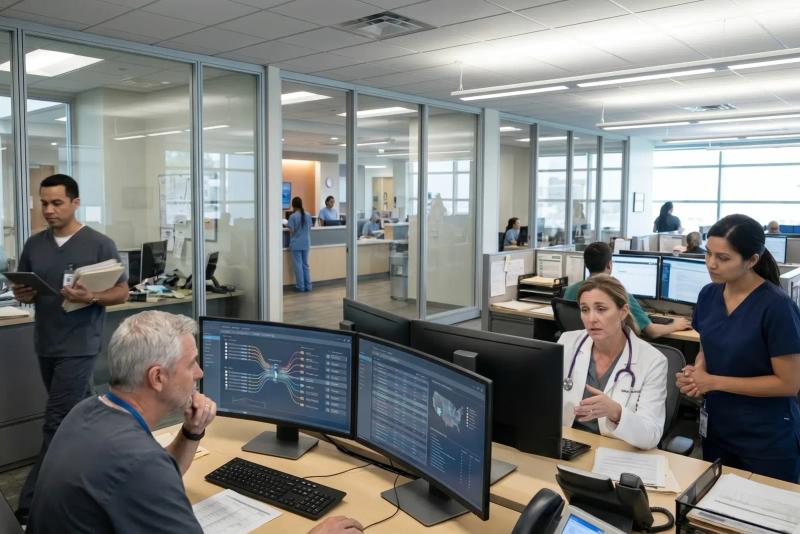
FUSE Health is designed to create this shift from the first patient onboarded. Operators monitor performance through a unified dashboard, act on exceptions, and focus the rest of their time on growing the subscriber base that runs on top of the platform.
Conclusion
The practical effect of full workflow automation on a telehealth operator is a fundamental shift in where time and attention go. In a manual operation, the operator's team spends a significant portion of each day managing the processes between clinical and fulfillment functions: following up with pharmacies, tracking intake completions, sending renewal reminders, and resolving the coordination gaps that exist between disconnected systems. These are necessary functions, but none of them build the business.
On an automated platform, those coordination functions run without staff involvement. The operator's team shifts entirely toward patient acquisition, brand development, community engagement, and program improvement. These are the functions that determine whether the business grows. They are also the functions that a founder-led team is typically best positioned to execute.
This shift has a compounding effect on growth. An operator whose team is freed from manual coordination can move faster on acquisition campaigns, respond to community feedback about program design, and launch new product categories without the operational drag that would otherwise limit how quickly new programs can go live. The business scales on the infrastructure layer rather than being limited by the operational capacity of the team managing it.
FUSE Health is designed to create this shift from the first patient onboarded. Operators monitor performance through a unified dashboard, act on exceptions, and focus the rest of their time on growing the subscriber base that runs on top of the platform.
References
- American Medical Association: Reducing Administrative Burden
- American Academy of Family Physicians: Relieving Administrative Burden
- MGMA: Practice Operations Data Report
- AMA: Prior Authorization Research and Reports
- CMS: Interoperability and Prior Authorization Final Rule
- McKinsey: The Next Frontier of Care Delivery in Healthcare

Daniel is a two-time founder who has scaled service businesses across major U.S. markets. A Y Combinator competition winner, he focuses on removing operational and regulatory barriers so operators can build and scale modern healthcare businesses.
- Background
- Startup Operations & Service Systems
- Experience
- 2x Founder, Multi-Market U.S. Scaling
- Qualifications
- Healthtech Market Expertise & Operational Scaling
- Key Achievement
- Scaled Premier Staff & Eventstaff across major U.S. markets