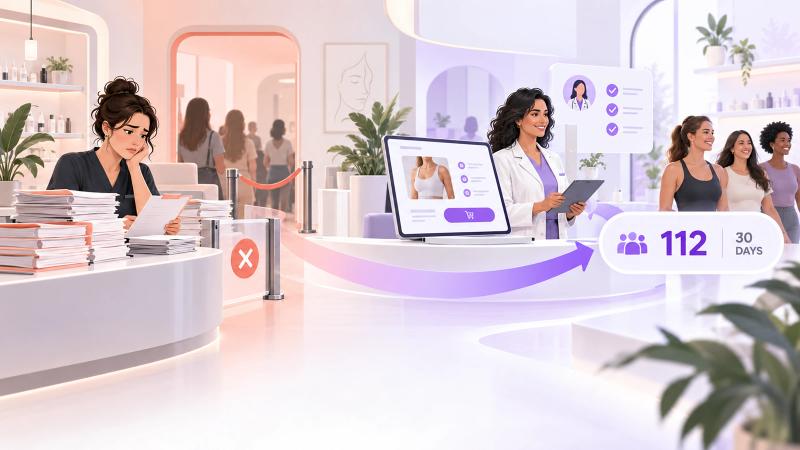
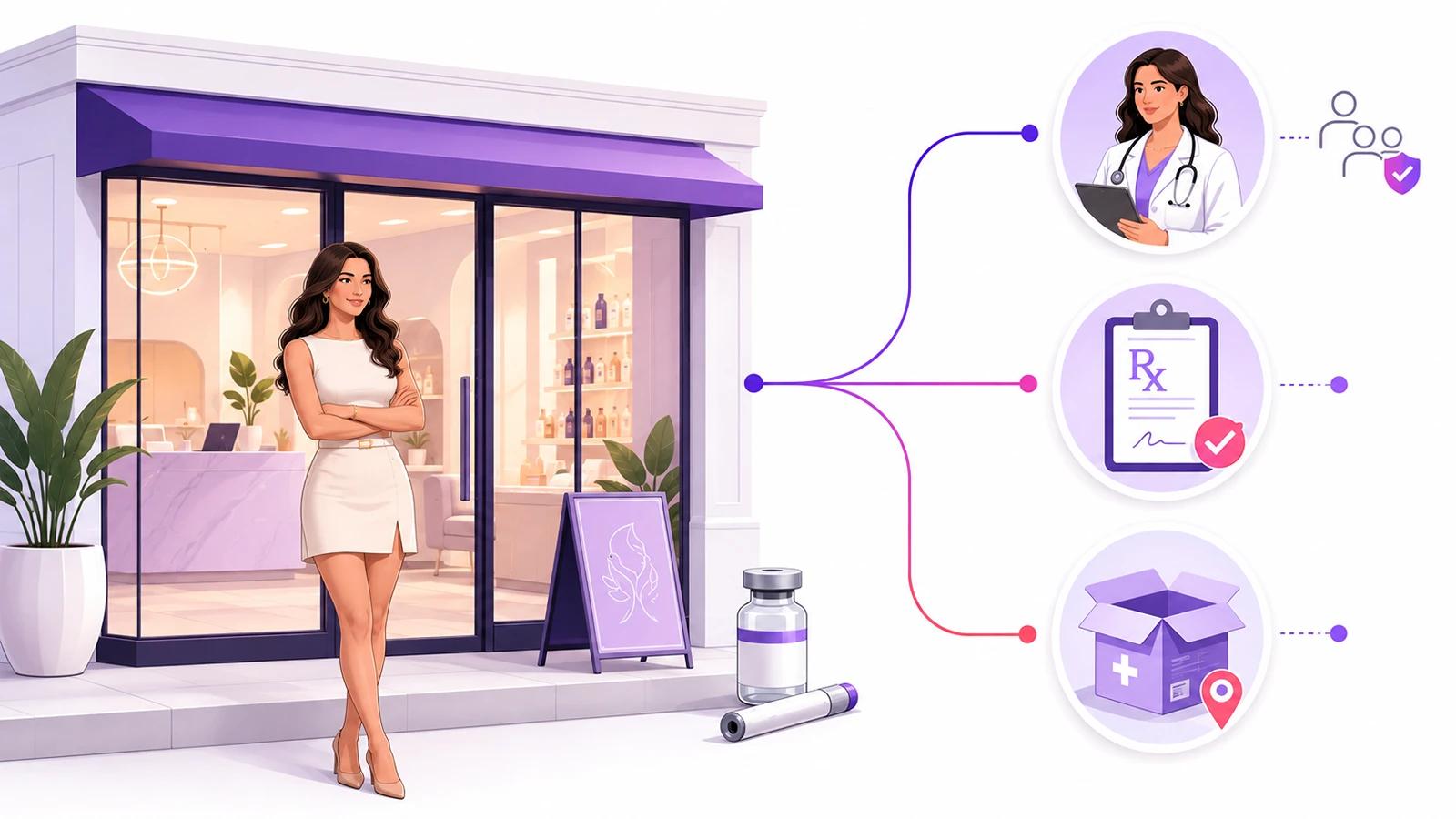
GLP-1 is the fastest-growing revenue line in aesthetics, but hiring a physician to run it is slow, expensive, and legally risky for a med spa. This case study walks through the storefront-first model: the med spa owns the brand and the client relationship, while a licensed medical group and FUSE's MSO infrastructure run intake, prescribing, and fulfillment behind the scenes.
A note before you read this: the scenario below is a composite, built from patterns FUSE sees across its med spa partners and publicly available program data. It is not a single named client, and nothing here should be read as legal or medical advice specific to your business. Talk to your own healthcare attorney about how the corporate practice of medicine doctrine applies in your state.
The Situation: A Med Spa Wants In on GLP-1, Without Becoming a Clinic
GLP-1 medications are no longer a niche add-on. Prescribing rates per 100,000 adults more than quadrupled between 2021 and early 2026, and roughly 12% of U.S. adults now report taking one. Nine percent of GLP-1 users say they got their prescription through a medical spa, not a hospital or primary care office. For an industry that already generates more than $17 billion a year across 10,000+ locations, that is not a rounding error. It is the biggest growth lever most owners have seen in years.
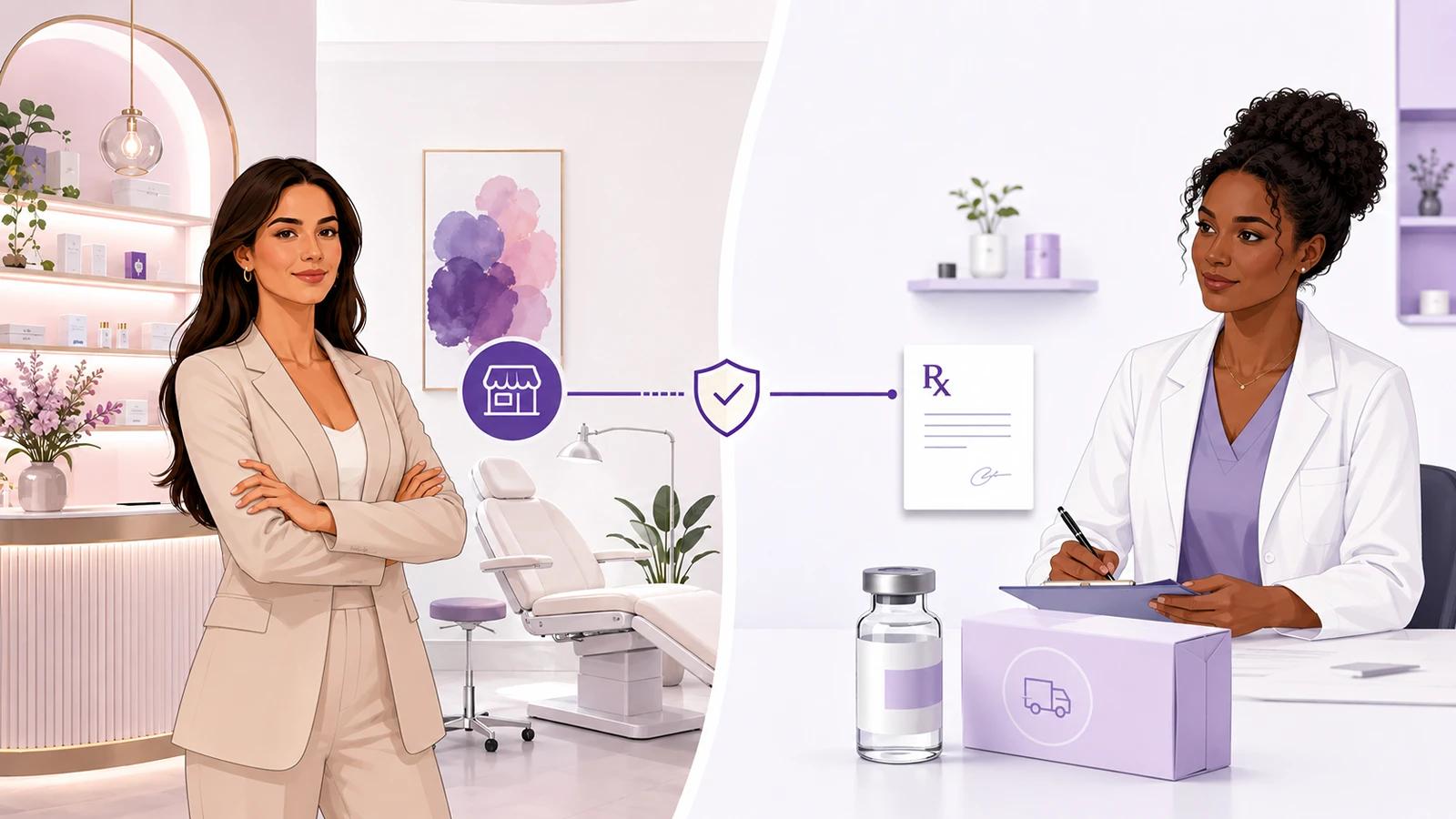
Here is the problem. A med spa owner is not a physician. In most states, they legally cannot own a medical practice, employ a prescriber to make independent clinical calls, or decide who gets a prescription. That restriction is called the corporate practice of medicine doctrine, or CPOM, and it exists specifically to keep clinical decisions with licensed providers rather than business owners chasing revenue. States like California, New York, and Texas enforce it strictly. Even states with lighter CPOM rules still apply fee-splitting and fraud statutes that catch owners who try to shortcut it.
So the med spa is stuck between two bad options: hire in-house medical staff and absorb the cost, the liability, and a slow hiring timeline, or skip the structure entirely and hope nobody asks questions.
What Usually Goes Wrong First
Before finding a compliant path, most operators try one of three shortcuts, and each one tends to fail the same way.
The first is hiring a single contracted nurse practitioner and calling it done. This works until that one person goes on leave, moves states, or gets overwhelmed by patient volume, and the whole program stalls.
The second is signing up with a loosely affiliated telehealth vendor that never explains who actually owns the clinical decision. When a state board asks who is legally responsible for a prescription, there is no clear answer, and that ambiguity is exactly what CPOM enforcement targets.
The third is building the workflow internally with no licensed medical group involved at all, treating prescribing like a checkout flow. This is the version that draws regulatory attention fastest, because the business, not a physician, is effectively making the medical call.
Each of these shortcuts can look fine for a few months. They break down at the exact moment a med spa's GLP-1 program starts to scale, which is the moment it matters most.
The Storefront-First Model: How the Workflow Actually Runs
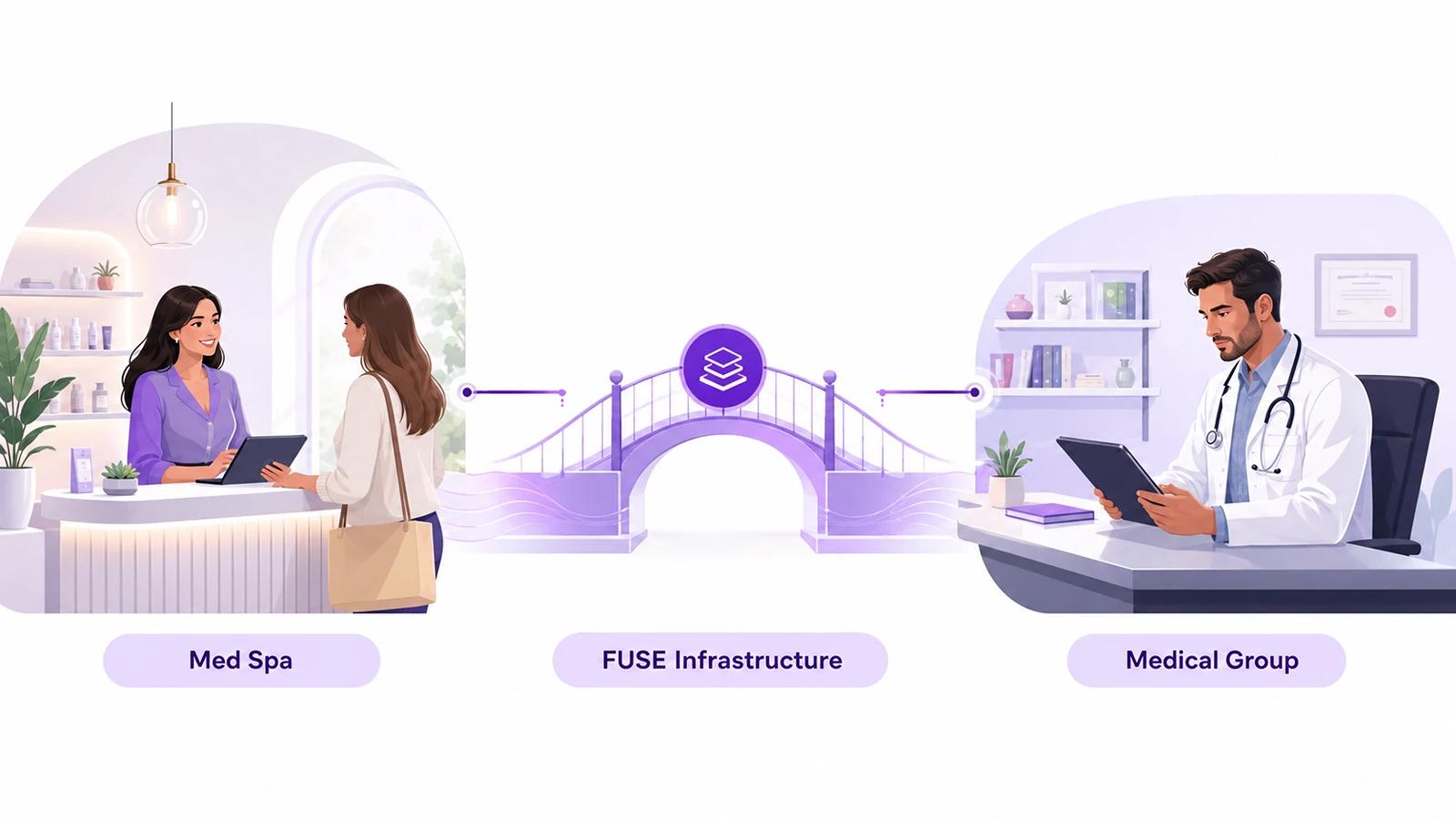
The alternative is a structure built around a simple idea: the med spa runs the brand and the customer experience, and a separate, physician-led medical group runs every clinical decision. FUSE's infrastructure sits in between, connecting the two without either side needing to manage the other's job.
Here is what that looks like in practice, step by step.
The Objections Owners Raise, and Why They Hold Up
Every med spa owner who looks at this model asks a version of the same three questions before signing on.
- "Isn't this more expensive than just hiring someone?" Usually not, once you count the real cost of a hire: salary, benefits, malpractice coverage, credentialing, and the risk of that one person leaving. An infrastructure model spreads those costs across a provider network instead of resting on one employee.
- "Who is actually liable if something goes wrong?" The licensed medical group carries clinical liability, because it made the clinical decision. That separation is the entire reason the MSO structure exists, and it is also why owners should confirm in writing exactly where that line sits before launching.
- "Will my clients notice they're not talking to my staff?" Not if the storefront is built right. The intake and review process should feel like an extension of the med spa's brand, not a redirect to somebody else's website. This is where a white-labeled workflow matters more than most owners expect going in.
Handling these questions before launch, not after a client asks them, is what keeps the model from feeling improvised.
What Changed for Operators Using This Model
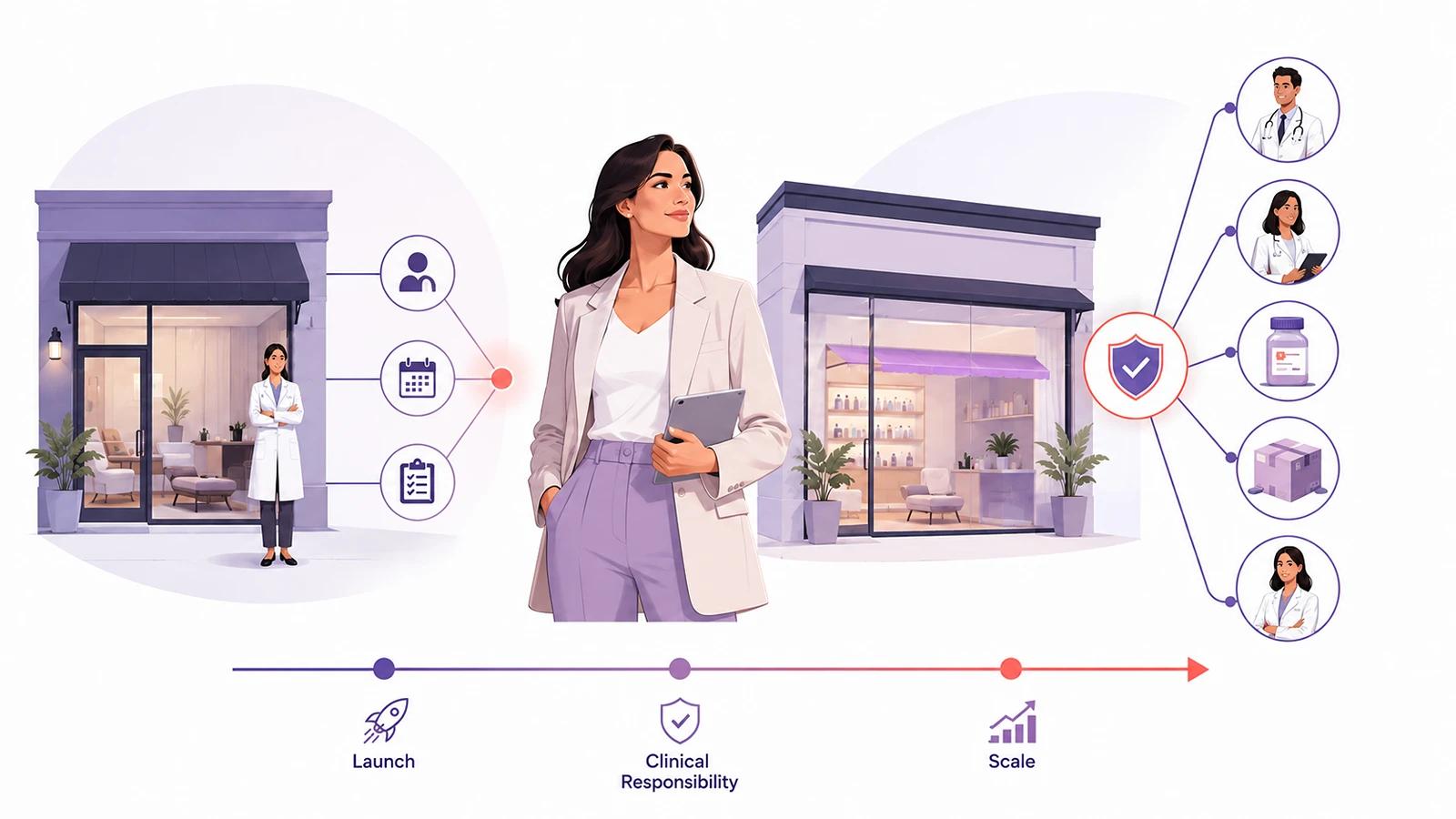
Med spas that move to a storefront-first structure typically report three things changing at once: launch timelines shrink from months of licensing and hiring work down to days, ongoing clinical liability moves off their books entirely, and program growth stops being capped by how many providers they can personally recruit and manage. FUSE's own published figures put typical launch timelines under seven days for new programs built on its platform.
None of this means GLP-1 becomes risk-free. It means the risk sits with the party legally built to carry it, which is the entire point of the CPOM doctrine in the first place.
The Learning: Why This Model Holds Up as Volume Grows
The real test of any compliance structure is not how it looks on day one. It is whether it still works on day two hundred, when patient volume is ten times higher and a state regulator could ask questions at any point.
A structure built on one contracted provider does not survive that test. A structure built on a licensed medical group, a defined MSO agreement, and standardized workflows for intake, review, and fulfillment does, because none of it depends on one person staying available. That is what makes a program resilient instead of just functional. Payments flow through the physician-owned entity as required, data handling follows a set process instead of ad hoc decisions, and provider capacity grows with a network instead of a single hire.
The Bottom Line
A med spa does not need to become a medical practice to offer GLP-1. It needs a partner where the clinical side is handled by people licensed to handle it, and the business side stays entirely in the owner's hands. That separation is not a workaround. It is the structure the law already requires, built into a workflow instead of left for an owner to figure out alone.
If GLP-1 is on your roadmap for this year, the question worth asking is not whether to add it. It is whether the way you add it can survive real volume and real regulatory scrutiny. FUSE built its entire platform around answering that question for med spas specifically, which is why it is one of the most established MSO partners operators turn to for this exact launch.
Ready to see the workflow for your own med spa? Book a walkthrough with FUSE and get a clear answer on launch timing before you commit to anything.
This content is for informational purposes only and does not constitute legal or medical advice. Consult a licensed healthcare attorney for guidance specific to your state and business structure.
References
- 65 GLP-1 Statistics for 2026, Pabau
- Med Spa Industry Statistics 2026, Medical Spa Locator
- Overview and Guide for Corporate Practice of Medicine (CPOM), Guardian Medical Direction
- FuseHealth
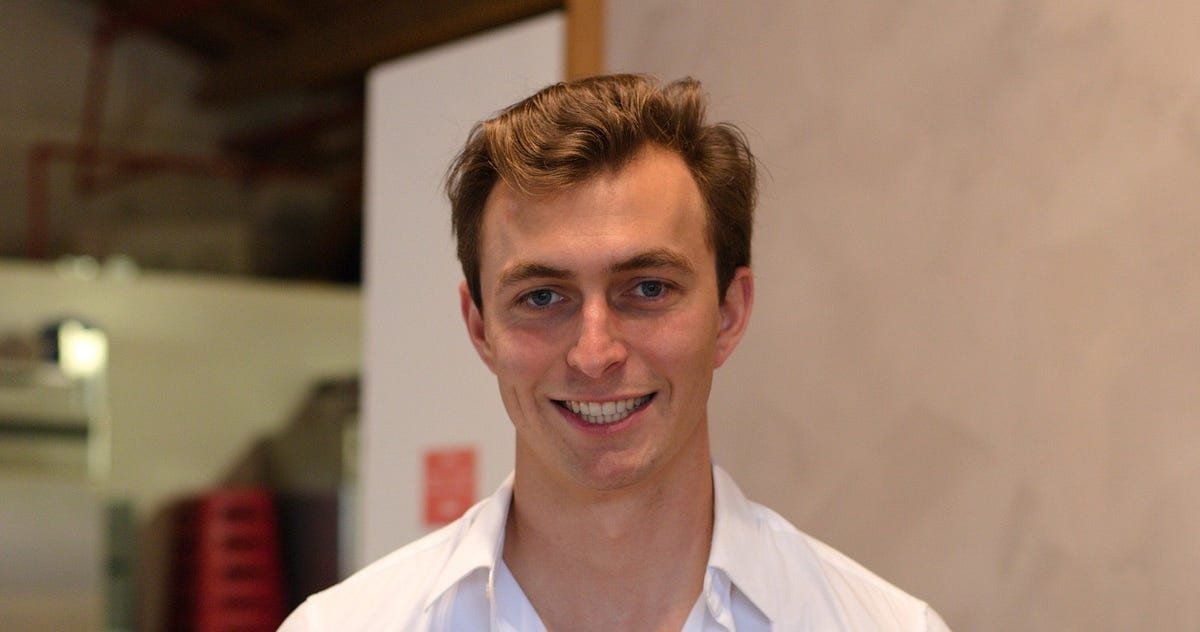
Daniel is a two-time founder who has scaled service businesses across major U.S. markets. A Y Combinator competition winner, he focuses on removing operational and regulatory barriers so operators can build and scale modern healthcare businesses.
- Background
- Startup Operations & Service Systems
- Experience
- 2x Founder, Multi-Market U.S. Scaling
- Qualifications
- Healthtech Market Expertise & Operational Scaling
- Key Achievement
- Scaled Premier Staff & Eventstaff across major U.S. markets