

A telehealth business in 2026 lives or dies on two numbers: what you spend before your first patient and how many paying members it takes to cover that spend. This guide breaks down the real cost lines, the break-even formula, and the build-versus-infrastructure choice.
A telehealth business pays LegitScript $975 just to have its website reviewed, then $2,150 every year once it's approved, and all of that happens before a single patient fills out an intake form (LegitScript). It's one of the smaller lines on the budget, which is why operators who launch well start with the full math.
That's what this guide gives you: what a telehealth company actually is in 2026, the steps to start a telemedicine business in order, the telehealth startup costs with a source behind every number, and a break-even formula you can run on your own pricing. It's written for operators with a brand, an audience, or a clinic who want recurring revenue from an online telehealth platform.
What Is a Telehealth Company in 2026?

A telehealth company delivers or sells clinical care through technology instead of an office visit. HHS uses the HRSA definition, which covers electronic and telecommunication tools for long-distance clinical care and names videoconferencing, the internet, and store-and-forward tools as examples (HHS). Store-and-forward is how most asynchronous programs work: the patient submits an intake, and a licensed provider reviews it later without a live video call.
The three layers every telehealth business runs on
Every telehealth business runs on three layers, and your costs depend on which ones you own.
| Layer | What it covers | Who usually owns it |
|---|---|---|
| Clinical | Licensed providers, intake review, prescribing decisions, medical records | A medical group or provider network |
| Fulfillment | Licensed pharmacies, dispensing, shipping, refills | Partner pharmacies |
| Commerce | Brand, storefront, checkout, subscriptions, marketing, support | The operator |
The clinical layer is the one you can't fake. State laws decide who can practice where, and the patient's location is what counts, so a provider has to be licensed in the state where each patient sits. LegitScript builds that exact rule into its first certification standard.
Where operators fit in the model
The model we see operators choose most often at FUSE is storefront-first. The operator owns the brand and the customer relationship and plugs into an online telehealth platform that runs the clinical and fulfillment layers behind the scenes. A med spa, a fitness brand, or a creator with a loyal audience can run this model without hiring a medical team.
How to Start a Telemedicine Business in Six Steps
Here's the order that holds up in practice.
Step 1: Pick one program for one audience
Start with a single program your audience already asks about. One program means one intake form, one set of provider protocols, and one message to test before you spread your budget thin.
Step 2: Decide what you'll build and what you'll plug into
This decision sets your cost curve. Building means hiring providers, negotiating pharmacy agreements, and paying for HIPAA-ready software yourself, while plugging into an online telehealth platform gives you those layers for a monthly fee.
Step 3: Secure the clinical layer
You need licensed providers in every state you sell in, plus written protocols they own and approve. Operators don't make clinical calls, so the workflow has to put every order in front of a provider before anything ships.
Step 4: Line up licensed pharmacy fulfillment
Pharmacies must be licensed to ship into each patient's state, and LegitScript generally expects partner pharmacies to be certified or accredited (LegitScript). Confirm shipping times, cold-chain handling, and refill triggers before you sign.
Step 5: Build the storefront, intake, and payments
This is what customers see: product pages, intake, checkout, subscriptions, and a refill portal. Anything that collects health information falls under HIPAA, so build for it from day one.
Step 6: Get certified, then turn on marketing
Google, Meta, Microsoft, TikTok, and LinkedIn rely on LegitScript certification for most healthcare ads, and Visa and Mastercard recognize it for card-not-present payments (LegitScript). Get certified first, then launch ads that hold up under its advertising standards.
Telehealth Startup Costs: What a Telehealth Business Really Pays in 2026
Telehealth startup costs fall into two buckets: what you pay before your first patient and what you pay every month after. Every figure below comes from the organization that sets it.
Costs you pay before launch
| Cost line | Real 2026 figure | Source |
|---|---|---|
| LegitScript application | $975 per website, nonrefundable | LegitScript |
| LegitScript annual certification | $2,150 per website per year, due on approval | LegitScript |
| LegitScript expedited review (optional) | $2,500 per application | LegitScript |
| Provider licenses in each state you serve | Set by each state board, so it grows with every state you add | State medical and nursing boards |
| HIPAA-ready intake, records, and messaging | Quote-based from vendors | Vendor pricing |
Costs that keep running after launch
If you build in-house, clinical labor is usually the biggest monthly line. The median annual wage for nurse practitioners was $132,300 in May 2025, and for physicians it was $275,930 (BLS). One full-time NP at the median is roughly $11,000 a month in wages alone, before benefits, malpractice coverage, or multi-state licensing.
Pharmacy costs, payment processing, support, and ad spend come after that. Those scale with volume, but salaries and software contracts don't, and fixed linespush break-even further out.
Building it yourself vs plugging into an online telehealth platform
| Cost area | Build in-house | Infrastructure platform (FUSE example) |
|---|---|---|
| Licensed providers | Hire or contract, plus state licensing | Included, all 50 states |
| Pharmacy fulfillment | Negotiate your own agreements | Included, with cold-chain |
| HIPAA, SOC 2, LegitScript | Your own program and fees | Included in plan |
| Monthly platform cost | Your software stack | $699 Growth or $3,000 Partner |
| Transaction cost | Your processor's rate | 2% merchant service fee |
| Setup | Your build budget | One-time onboarding fee |
FUSE figures are from the FUSE pricing page as of September 2026. The build path front-loads fixed costs, while the platform path turns most of them into one monthly number.
Telehealth Business Break-Even: The Formula and the Math
Break-even for a telehealth business is the number of paying members whose monthly margin covers your fixed monthly costs. Everything past that number is profit you can reinvest in growth.

The break-even formula
You need two inputs: your contribution per member (what's left from each monthly payment after product cost, pharmacy fees, and payment processing) and your fixed monthly costs.
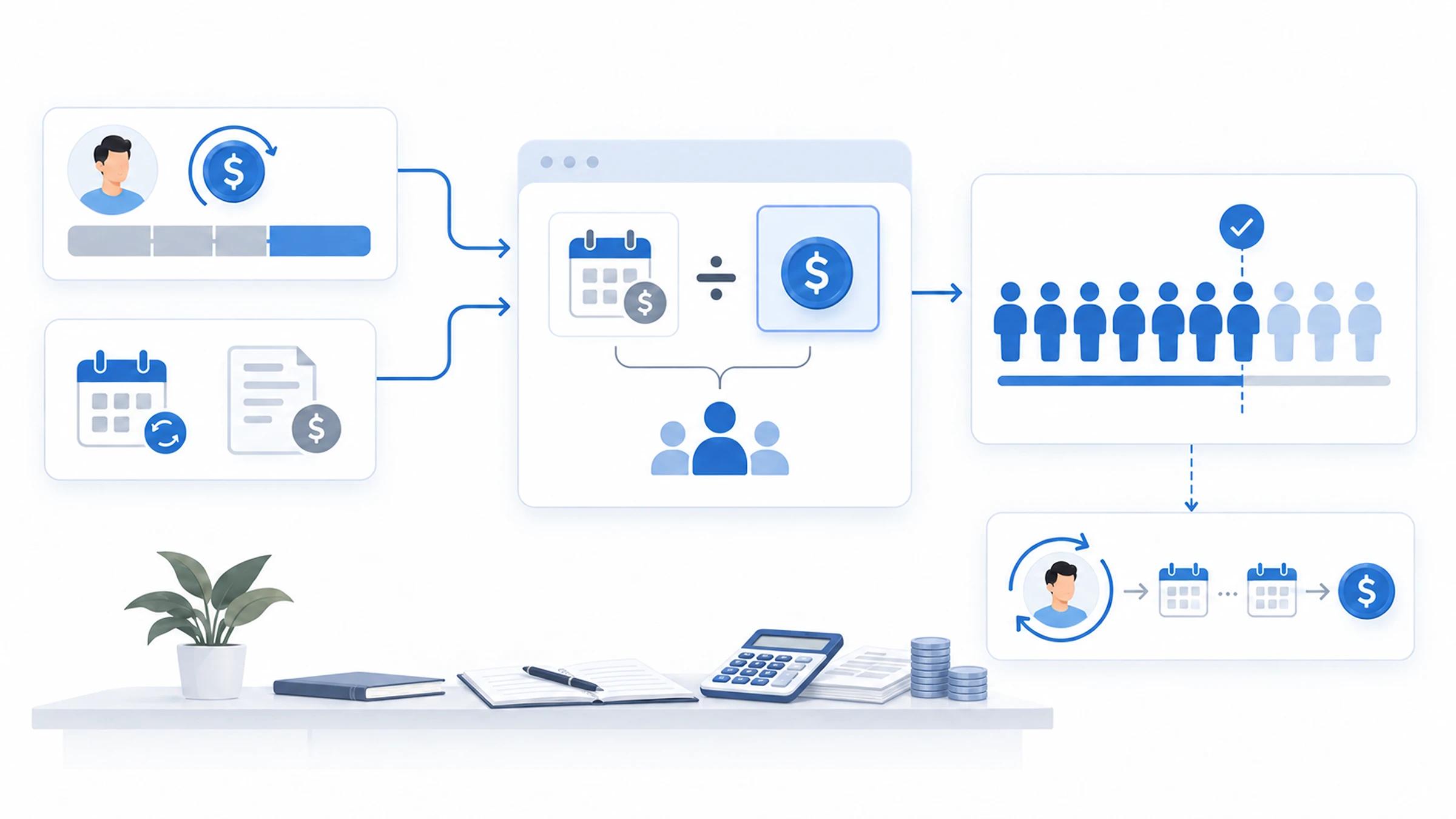
Break-even members = fixed monthly costs ÷ contribution per member
At $2,000 in fixed monthly costs and $100 contribution per member, you'd need 20 paying members to break even.
What break-even looks like on real fixed costs
Here's that formula on three real fixed-cost bases: FUSE's two published plans, and one full-time nurse practitioner at the BLS median wage plus the LegitScript annual fee, which comes to about $11,204 a month. The contribution columns are sample inputs, so swap in your own.
| Fixed monthly cost base | $50 contribution | $100 contribution | $150 contribution | $200 contribution |
|---|---|---|---|---|
| FUSE Growth ($699) | 14 members | 7 members | 5 members | 4 members |
| FUSE Partner ($3,000) | 60 members | 30 members | 20 members | 15 members |
| In-house, one NP + LegitScript ($11,204) | 225 members | 113 members | 75 members | 57 members |
The in-house row is the optimistic version, since it leaves out benefits, malpractice coverage, state licenses, software, and backup providers.
Don't forget what each member costs to acquire
Monthly break-even leaves out one more cost: what you pay to win each member. Divide ad spend by new paying members to get your acquisition cost, then divide that by your monthly contribution to see how many months a member has to stay to pay you back. If members churn sooner, growth burns cash, which is why refills and retention matter as much as launch day.
What Fails and What Works When You Launch a Telehealth Business
Launches tend to break in the same few places, and we cover the five biggest in our guide on where telehealth launches break. Here's the short version.
A real example of rules shifting under a business
When Medicare's pandemic-era telehealth flexibilities lapsed on September 30, 2025, one national analysis found fee-for-service telemedicine visits fell 24% in the first 17 days (Federal Register). Congress later extended them, but the lesson for a cash-pay operator holds: build on settled rules and treat temporary ones as temporary.
Where launches break and how durable operators handle it
| What fails | What works |
|---|---|
| Intake forms tuned only for conversion, so unqualified orders pile up in provider review | Intake built with provider input so qualified patients move through cleanly |
| Selling in states where no licensed provider can review | Launching only where provider coverage already exists |
| Pharmacy routing sorted out after the first orders arrive | Pharmacy partners and refill routing confirmed before launch |
| Ads that promise results the program can't back up | Claims that describe access to a program, reviewed against LegitScript and platform policies |
| Fixed costs hired ahead of demand | Costs that scale with paying members |
For the pharmacy side, see how FUSE handles refill routing before launch.
The Compliance Layer Every Telehealth Business Needs
Compliance is a cost line too, so it belongs in your plan from the first day. Our guide to telehealth compliance without the legal rabbit hole covers the workflow side. Here are the three areas that carry real 2026 numbers and dates.
- HIPAA and patient data
Any intake, message, or record that holds health information has to be protected under HIPAA. HHS raised its civil penalty amounts effective January 28, 2026, and the calendar-year cap for violations of an identical provision is now $2,190,294 (Mercer). That's why it matters where your forms, storage, and messaging actually live.
- Prescribing rules and the dates to watch
If a program ever touches controlled substances, the federal telemedicine flexibilities that let DEA-registered practitioners prescribe without a prior in-person visit currently run through December 31, 2026 (Federal Register). Plan for that date now, and have counsel check your specific program before you sell it.
- Advertising and product claims
LegitScript's standards require that no prescription is issued before a licensed professional provides care, and that every claim is accurate and supported (LegitScript). Product choice matters here as well. LegitScript published a September 2026 analysis noting that many popular peptides aren't currently permissible under the existing FDA framework (LegitScript), so check a product's regulatory status before it goes on your storefront.
How FUSE Health Helps You Launch a Telehealth Business
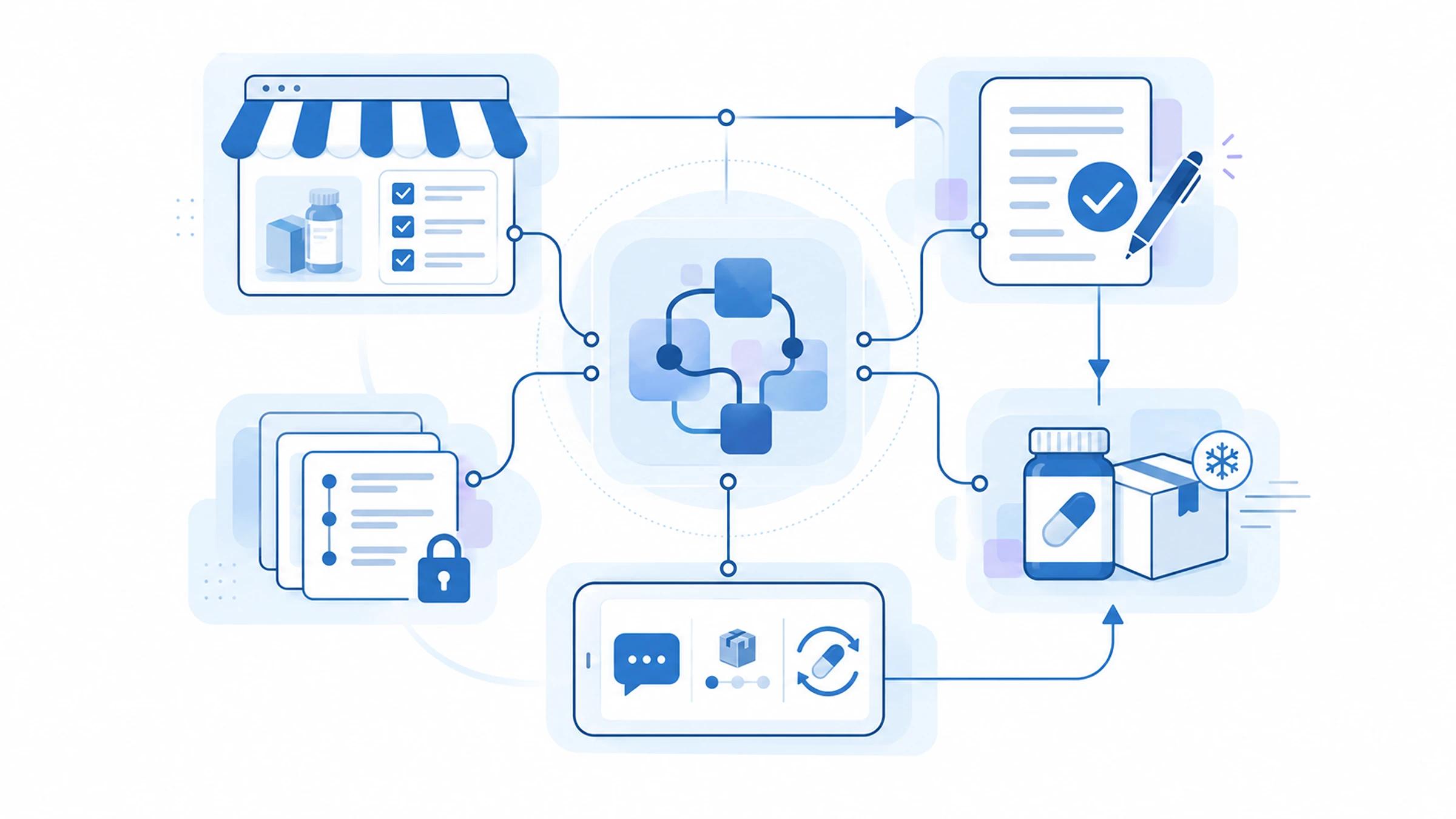
FUSE Health is the infrastructure layer behind storefront-first telehealth brands. You own the brand, the pricing, and the customer relationship. FUSE runs the clinical, pharmacy, and compliance layers behind it, and you don't need a medical license to launch (FUSE pricing).
How the workflow runs behind your storefront
- A customer finds your brand, picks a program, and completes your branded intake form.
- A licensed provider in the customer's state reviews the intake. Every order is provider-reviewed before anything is prescribed.
- If the provider approves, the prescription routes to a partner pharmacy for fulfillment, including cold-chain shipping where the product needs it.
- Refills, messages, and order updates run through your customer portal, and every intake, prescription, and refill lands in an audit trail that can't be edited.
You can see the full sequence on how FUSE works.
Why the numbers stay predictable
Licensed providers in all 50 states, pharmacy fulfillment, and HIPAA, SOC 2, and LegitScript compliance are included in both plans, with no per-visit or per-prescription fees. You pay $699 a month on Growth or $3,000 on Partner, plus a 2% merchant service fee and a one-time onboarding fee, which is why the Growth row in the break-even table lands between 4 and 14 members.
What operators have built on it
See the model in a real launch in how a lab brand launched white label telemedicine on FUSE, or read what a white-label telehealth platform provides layer by layer.
Start Your Telehealth Business With the Math Done
Starting a telehealth business in 2026 comes down to three numbers: what you spend before launch, what you spend each month, and how many members it takes to cover it. Building gives you full control but loads salaries, licenses, and certification onto you before the first order, while infrastructure turns most of that into one monthly figure you can plan around.
If you've already picked your program and your audience, the next step is seeing how fast your storefront can go live on infrastructure that's already licensed, certified, and running. Book a launch walkthrough with FUSE and map your path from offer to first member.
Disclaimer: This article is for informational purposes only and doesn't constitute medical, legal, tax, or financial advice. All clinical decisions, including whether a prescription is appropriate, are made by licensed providers. Fees and regulations cited here were current as of September 2026 and can change, so confirm them with each source and with qualified counsel before you launch.
References
- LegitScript Healthcare Merchant Certification: standards and pricing
- LegitScript: The Peptide Boom, Why So Many Popular Products Are Still Off-Limits (September 2026)
- U.S. Bureau of Labor Statistics, Occupational Outlook Handbook: Nurse Anesthetists, Nurse Midwives, and Nurse Practitioners
- Federal Register: Fourth Temporary Extension of COVID-19 Telemedicine Flexibilities for Prescription of Controlled Medications
- HHS: What is telehealth?
- Mercer: HHS adjusts 2026 HIPAA monetary penalties
- FUSE Health pricing

Daniel is a two-time founder who has scaled service businesses across major U.S. markets. A Y Combinator competition winner, he focuses on removing operational and regulatory barriers so operators can build and scale modern healthcare businesses.
- Background
- Startup Operations & Service Systems
- Experience
- 2x Founder, Multi-Market U.S. Scaling
- Qualifications
- Healthtech Market Expertise & Operational Scaling
- Key Achievement
- Scaled Premier Staff & Eventstaff across major U.S. markets