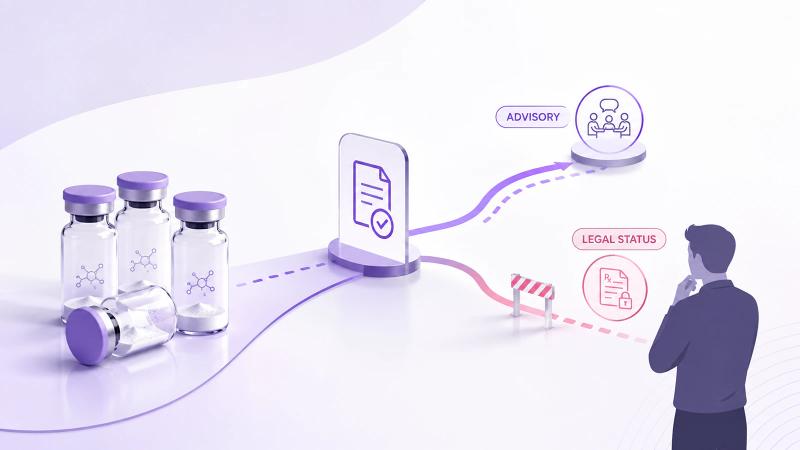

A peptide business is legal when a licensed provider writes the prescription and a licensed pharmacy fills it. Your job is the brand, the storefront and the retention. If you are working out how to start a peptide business, this guide covers the three operating models, real 2026 startup costs, and what you can legally sell today.
A peptide business can take its first payment on a Tuesday and lose its merchant account by Friday. The product is rarely the problem. The missing piece is the layer underneath: who holds the prescription, who ships the vial, and who answers the state board.
Executive Summary
A peptide business is legal when a licensed provider writes the prescription and a licensed pharmacy dispenses it, which means you can run the brand without holding a medical license. Three models exist: build your own clinic at $50,000 to $500,000 over 6 to 18 months, resell as an affiliate and lose the customer, or launch a branded storefront on shared infrastructure in 2 to 8 weeks. Year-one fixed costs start around $3,125 for LegitScript certification plus $499 to $3,000 a month for the platform. What you can legally sell keeps moving, so the catalog decision comes before the launch date.
Demand is not the hard part anymore. KFF found that 18% of adults have used a GLP-1 drug and 12% are on one right now. People are already searching for a brand they trust. The operators who win in 2026 are the ones who can take that demand and route it through a structure that holds up. That structure is what separates a peptide business that scales from one that stalls at month four.
What does a peptide business actually sell in 2026?
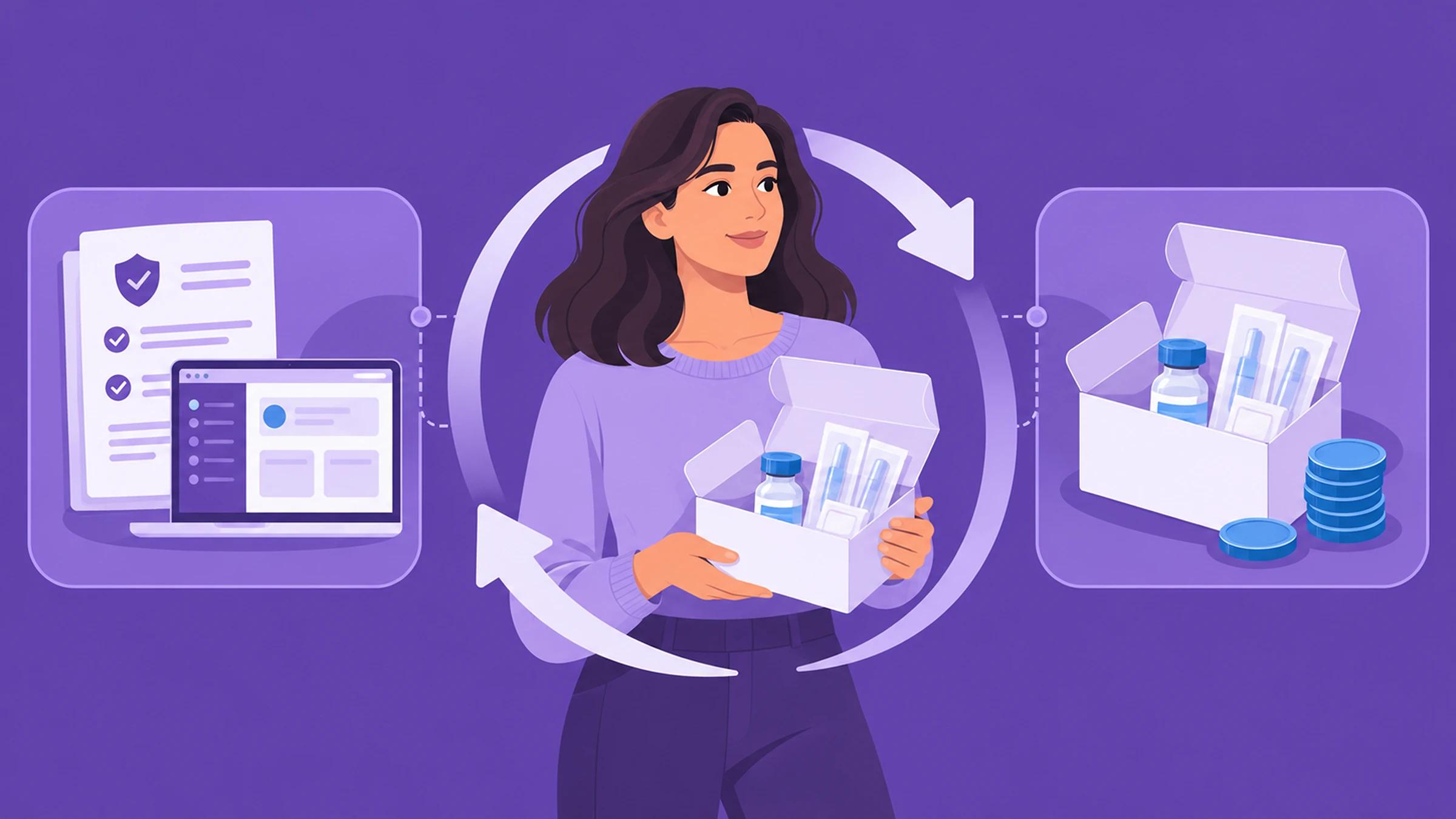
A peptide business sells a program rather than a product. The customer buys a branded experience: intake, a provider consult, a prescription if they qualify, a vial at the door, and a refill that shows up on time. Everything clinical runs behind that storefront.
Who holds the prescription, and who holds the customer?
This split is the whole business. Get it right and the rest gets simple.
- The licensed provider owns the clinical decision. They review intake, approve or decline, and write the script.
- The licensed pharmacy owns fulfillment. It compounds or dispenses and ships to the patient.
- You own the brand, the pricing, the marketing and the customer relationship.
That last line is the one operators underestimate. You keep the customer file, the retention and the lifetime value. You do not touch the prescription pad, and you do not need to.
Which peptide business model should you start with?
Three routes dominate right now. They differ in speed, capital and how much of the risk sits on your side of the table. Most people asking how to start a peptide business are really choosing between these.
| Model | Time to launch | What you carry |
|---|---|---|
| Build your own clinic | 6 to 18 months | Licensing, providers, pharmacy contracts, software |
| Affiliate or reseller | Days | Almost nothing, including the customer |
| Branded storefront on shared infrastructure | 2 to 8 weeks | Brand, pricing, marketing, customer data |
Building your own stack runs $50,000 to $500,000 and up before a single order ships. Affiliate links are fast, but you are renting someone else's brand and you lose the customer the moment they click out. Neither route gives you a peptide business you own outright.
The third route is where most serious operators land. You launch under your own name on infrastructure that already has providers in all 50 states and pharmacy relationships in place. The storefront playbook breaks down how that flow runs end to end.
What does it cost to start a peptide business?
Here is what it really costs to start a peptide business in 2026, split into the spend you cannot avoid and the spend that scales with you.

Fixed compliance costs
- LegitScript certification: $975 application plus $2,150 annual per website, so $3,125 in year one on the standard track
- Entity setup, MSO or PC structuring and legal review
- Merchant processing with a health-friendly acquirer, typically at a 2% service fee
Platform costs
FUSE Health runs at $499 per month on DIY once you go live, $699 per month on Growth after a $5,600 upfront fee, and $3,000 per month on Partner after a $30,000 onboarding that includes the first year. Full detail sits on the platform pricing page.
Cost of goods
Pharmacy cost per month lands between $50 and $200 for most common peptides, and $150 to $350 for compounded semaglutide. Supplies add $15 to $30 per patient.
Where does the margin actually come from?
Markup per order is a weak signal. Contribution margin per customer over time is the number that pays your rent.
Run the break-even math before you set prices: fixed monthly costs divided by contribution per member tells you how many customers you need, and the break-even model walks through the scenarios.
A sermorelin program priced at $149 a month returns roughly $74 per customer per month after product and supplies. At the refill retention these programs typically see, that compounds into four figures of gross profit per customer across the life of the relationship. A GLP-1 program at $299 against a $175 landed cost contributes around $115 a month. The full margin math is worth reading before you set your price list.
Price for the refill rather than the first order. That single shift changes how a peptide business budgets acquisition.
Which peptides are legal to sell in 2026?
This is where most new operators get the answer wrong, because the list of what you can legally sell peptides under keeps moving.
The FDA sorts compounding substances into interim categories. Category 2 covers substances with significant safety concerns, and the agency has said compounders may not use them while review continues. Several popular peptides landed there in September 2023, and in September 2024 five were removed after their nominators withdrew, including CJC-1295 and ipamorelin acetate.
Then came the July 2026 shift. The FDA's Pharmacy Compounding Advisory Committee reviewed seven peptides and voted to recommend adding BPC-157 to the 503A Bulks List. That recommendation is advisory. The FDA still has to act on it through rulemaking, so nothing has changed in practice yet.
Our operator guide tracks the current status by compound. Check it before you build a catalog page, not after.
What changed with compounded GLP-1s?
The FDA declared the semaglutide shortage resolved in February 2025. Enforcement discretion ended April 22, 2025 for 503A pharmacies and May 22, 2025 for 503B outsourcing facilities. After those dates, compounded copies of the approved drug are off the table, though personalized formulations for an individual patient need remain possible.
If your launch plan assumed cheap compounded semaglutide forever, rebuild the plan.
How do you sell peptides without the compliance stack breaking?
Four things need to be structured before you sell peptides to anyone, rather than patched after your first chargeback.
- Corporate structure. Roughly 33 states restrict the corporate practice of medicine. A physician-owned PC holds the clinical side while your company sells administrative and infrastructure services. Management fees tied to fair market value hold up. Percentage-of-revenue fees draw scrutiny. The corporate practice guide covers the state-by-state picture.
- Certification. LegitScript is what unlocks paid advertising and most merchant accounts. Prepared applicants clear review in weeks. Unprepared ones spend three to four months answering deficiency notices.
- Payments. Health merchant accounts fail when the storefront language promises outcomes. Keep marketing claims clean and your processor stays calm.
- Data. HIPAA-grade handling of intake, consults and records, with you retaining your own customer data rather than leasing it back.
What breaks first when volume goes up?
Provider capacity and refill logistics, almost every time. A program that runs smoothly at 50 patients turns into a support queue at 500 if consults are manually routed and refills are manually chased. Automate intake routing, provider assignment and refill triggers before you scale spend.
Where should you launch, and how fast can you go live?
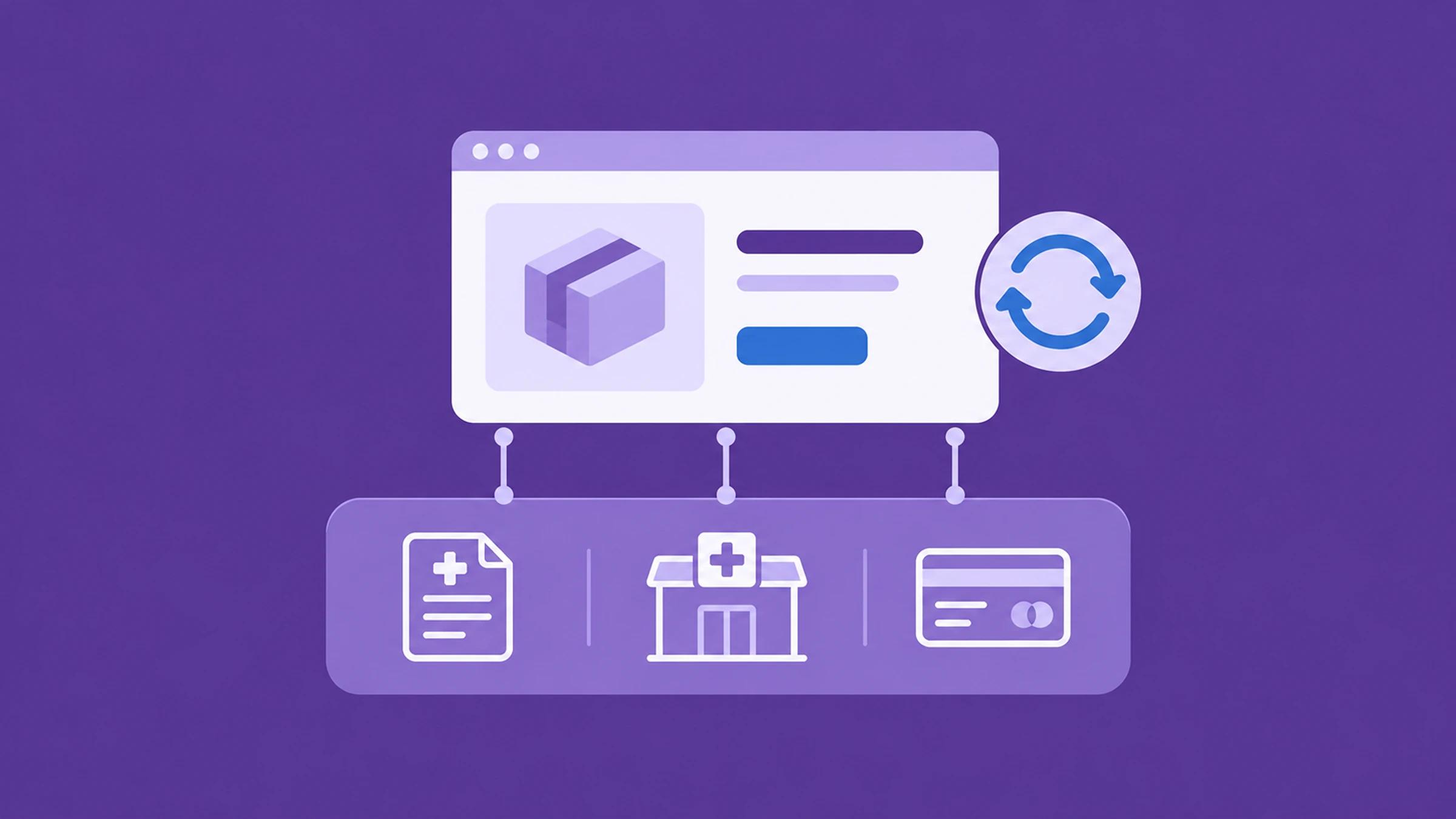
Start a peptide business in the states your provider network already covers, which on shared infrastructure usually means all 50. Pick one flagship program rather than a wide catalog. A single peptide program with a tight funnel beats twelve SKUs with no retention engine.
A realistic timeline on existing infrastructure: brand and storefront in week one, catalog and pricing in week two, certification and payments running in parallel, first orders inside two to eight weeks.
So what is the real first move?
The operators who build a durable peptide business in 2026 are rarely the ones who found a clever supplier. They are the ones who decided early that the clinical layer would be structured by people who do it for a living, and then spent their own energy on brand, acquisition and retention.
You already know the demand is there. The question is whether your storefront can take it without cracking. Peptide businesses that launch on tested infrastructure skip the 12-month build, skip the pharmacy negotiation, and get to the only work that compounds: keeping customers.
This article is written for business operators and is not medical advice. Licensed providers and licensed pharmacies are responsible for clinical decisions, prescribing, and dispensing. Regulatory status of compounded substances changes, so verify current FDA guidance before listing any product.
References
- KFF Health Tracking Poll: Prescription Drug Costs and GLP-1 Use (November 2025)
- Alston & Bird: FDA Resolves the Semaglutide Shortage, compounding enforcement deadlines
- American Med Spa Association: FDA Advisory Committee Recommends Adding BPC-157 to Compounding List (July 2026)
- Reed Smith: FDA and Certain Peptide Bulk Drug Substances, Category 2 and the 503A Bulks List
- FUSE Health pricing