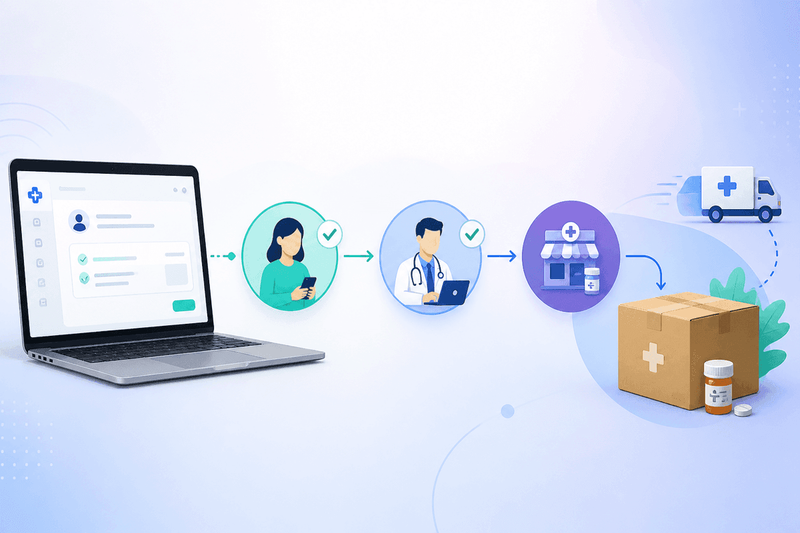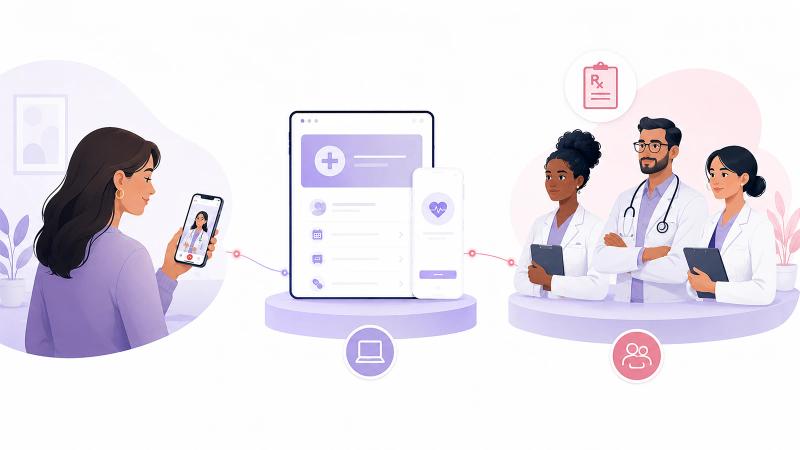
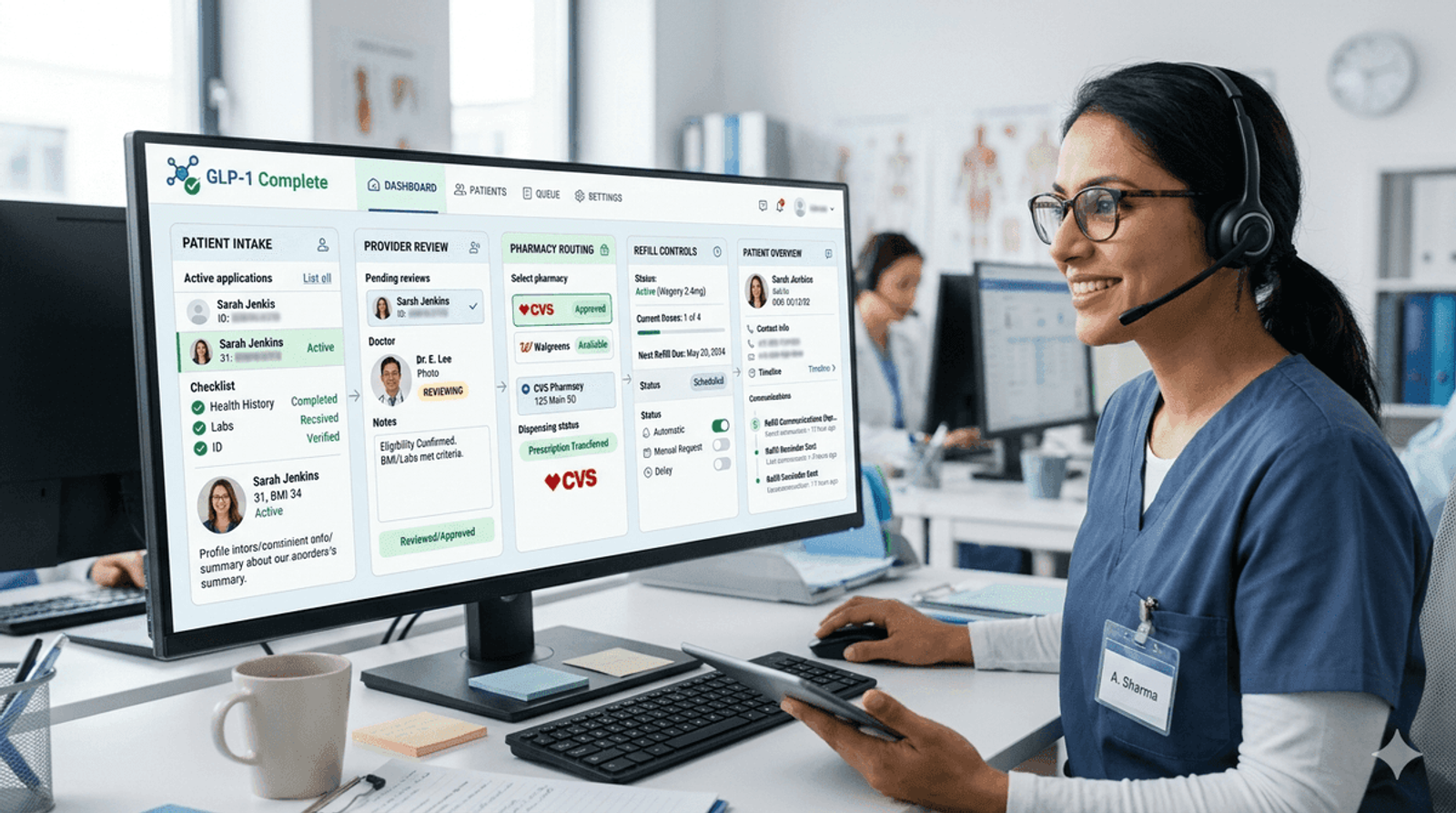
Patient trust in GLP-1 telehealth is fragile—every touchpoint either builds confidence or erodes it, and branded portals eliminate the fragmentation that kills retention. The trust gap is real: patients enter high-scrutiny treatment expecting clarity but receive silence, and portals close this gap with five core signals on day one. Portal design that mirrors treatment stages (intake → titration → refill → escalation) prevents the support volume spike that kills profitability, while privacy transparency visible to patients (consent history, access logs, secure defaults) builds credibility faster than compliance claims alone. Portals drive retention by making progress visible, refill timing explicit, and clinical touchpoints consistent—reducing churn by 30-40%—and FUSE Health enables operators to own the entire patient journey without building clinic infrastructure or hiring medical staff.
Why Patient Trust Matters More in GLP-1 Than Traditional Telehealth
GLP-1 telehealth isn't routine telehealth. Patients entering this category are entering high-stakes territory where stigma runs deep, where medication safety fears are real, where eligibility questions create friction before treatment even starts. A patient wondering whether a compounded semaglutide differs from Ozempic shouldn't have to call support. They should see the answer in their portal, dated, explained, and connected to their specific prescription.
That's what branded patient portals do. They transform silence into clarity. They replace generic login screens with operator-owned experiences that signal one thing: someone prepared for this patient's treatment to start.
The stakes compound quickly.
- Is this provider actually licensed in my state?
- Does my pharmacy have this medication in stock right now?
- What exactly happens at week four when my dose changes?
- Will I understand the new dosage instructions when they arrive?
- What do I do if I experience side effects the provider didn't mention?
Generic portals don't answer these questions. They just hold a login. A branded portal designed around GLP-1 reality answers them before the questions become reasons to churn.
Five Trust Signals That Matter on Day One
The first dashboard a patient encounters sets the tone for the entire relationship. It should contain five specific trust signals delivered in plain language:
| Trust Signal | What the Patient Sees |
|---|---|
| Licensed Provider Review | Provider name, credentials, and photo confirm their intake was reviewed by a real person. Not 'under review.' Completed. Verified. Real. |
| Intake Completion Status | Simple checkboxes: intake complete, consent signed, prescription pathway clear. No vague 'in progress' labels that feel like delays. |
| Expected Prescription Timeline | Specific date and time: 'Based on your intake, expect a prescribing decision by Tuesday, 2 p.m.' Silence kills trust. Specificity builds it. |
| Pharmacy Confirmation | Configured pharmacy name, expected fulfillment timeline, real-time inventory status. The patient knows before the Rx arrives where it's coming from. |
| Support Access & Hours | Secure messaging, phone hours, FAQ specific to their program. Help is visible on the first screen, not buried three clicks deep somewhere. |
Portal Design That Evolves with Treatment Stage
GLP-1 titration creates operational friction that generic portals weren't built to handle. Doses change on a schedule. Refill windows matter. Missed shipments derail subscriptions. Confusion during escalation creates support volume spikes. A portal designed for GLP-1 shows this complexity as a clear workflow, not as friction.
The key: create status modules that evolve with the patient's treatment stage:
- Week 1: Initial dose, injection technique video, side-effect tracker, emergency escalation pathway
- Week 4: Dose escalation module, refined side-effect monitoring, refill preview, supply countdown
- Week 12: Maintenance dose status, refill automation indicators, clinical check-in scheduling, progress review
- Ongoing: Monthly progress dashboard, provider messaging history, pharmacy communication log, next refill window
When refill windows open, the patient gets a specific, non-negotiable notification: 'Your 90-day supply runs out March 15. Your next refill order window opens March 1 at 9 a.m. You have 14 days to order.' No ambiguity. Just dates they can plan around. Just clarity that prevents the churn that happens when patients miss refill windows by accident.
Privacy Transparency: When Compliance Becomes Trust
HIPAA compliance is table stakes. It's not trust. Trust arrives when the patient can see how their data is handled, displayed, and protected. This is where most telehealth platforms fail—they hide compliance behind footer links and vague language. Portals built for trust make it visible.
- Plain-Language Privacy Controls: Visible in account settings, not hidden in footer links. Click 'Privacy' and see exactly what data you've authorized, which providers have access, and to whom information is shared.
- Secure Message Defaults: Every communication inside the portal is encrypted automatically. The patient doesn't opt into security. It's the standard, not an upgrade.
- Consent History & Versioning: Patients can see every consent they've signed, the date it was signed, a summary of what they consented to, and a link to the exact document they signed.
- Identity Verification Logs: Patient knows when their account was accessed, from which devices, at what time, and by whom (prov
Educational Content That Prevents Unsafe Self-Management
Generic health libraries fail because they flood the patient with information at the wrong time. A portal triggers education based on treatment stage and patient behavior, not on search keywords. This prevents the dangerous scenarios where patients find conflicting information online instead of in their portal.
- Patient starts first injection → Injection technique guide appears (video, written, step-by-step)
- Prescription issued → Storage and handling protocol displayed with temperature ranges and expiration info
- Patient reports side effect → Escalation framework appears: when to monitor vs. when to contact care team
- Week 4 escalation → New dosage instructions, updated side-effect expectations, revised food interaction guidance
- Quarterly check-in → Progress review, dosage sustainability assessment, refill authorization confirmation
This prevents the scenarios that kill programs. The patient gave themselves the wrong dose because they found conflicting information on Reddit instead of in their portal. The patient stored medication at room temperature because the portal never told them it needed refrigeration. The patient does not know when to escalate a side effect to the care team—so they stop using the medication silently instead of asking for help.
Conclusion
Forget login screens. Think about the first moment a patient opens their account after their first week on medication. They want to know: Is this normal? Is anyone monitoring this? What do I do if it gets worse? A portal that answers these questions without requiring a phone call is the confidence center they need.
That portal is also the retention lever you control. Every notification, every milestone marker, every dose increase becomes a touchpoint. The patient sees their progress visualized. They see the care team engaged. They see the system working. The portal becomes the emotional center of their treatment experience, not just a utility.
The brands winning in GLP-1 right now aren't the ones with the cheapest prescriptions. They're the ones whose patients feel guided, monitored, and in control. Branded patient portals built for GLP-1 from the start are how you build that feeling at scale without burning yourself out on support calls that never should have happened.
References
- HHS HIPAA Security Rule (Minimum Safeguards)
- HHS Telehealth & HIPAA Compliance Guidelines
- HIPAA Patient Portal Privacy & Access Guidance
- HealthIT.gov Patient Engagement & Digital Experience Standards
- DA Drug Information & Approved Drugs Database

Daniel is a two-time founder who has scaled service businesses across major U.S. markets. A Y Combinator competition winner, he focuses on removing operational and regulatory barriers so operators can build and scale modern healthcare businesses.
- Background
- Startup Operations & Service Systems
- Experience
- 2x Founder, Multi-Market U.S. Scaling
- Qualifications
- Healthtech Market Expertise & Operational Scaling
- Key Achievement
- Scaled Premier Staff & Eventstaff across major U.S. markets