
GLP-1 Weight Loss Program for Med Spas
Your clients are already asking about GLP-1s. We help you say yes: a GLP-1 weight loss program under your spa's name, with the licensed clinicians, pharmacies, and paperwork handled for you. Add peptide and hormone programs whenever you're ready.
 Your BrandRx enabled
The compliance & infrastructure layer behind your brand
Key takeaways
- You can offer a GLP-1 weight loss program without a prescriber on payroll. We connect your spa to licensed clinicians who review every intake and licensed pharmacies that fill each prescription.
- It’s your brand, your clients and your prices. Everything your clients see carries your spa’s name, and we work behind the scenes.
- Pricing is simple: from $0 upfront ($499/month once you’re live) or $5,600 for guided Growth ($699/month from month 2). No per-visit or per-prescription fees. See pricing.
- Whoever you choose, ask who the prescribing entity is, which pharmacy fills orders, who owns the client data and how you can leave. Our seven questions below make that easy.
- State rules and FDA compounding policy keep changing, so have a healthcare attorney look over your setup. These guides help you prepare: compounded tirzepatide vs Zepbound and compounded semaglutide.
What a GLP-1 weight loss program looks like for a med spa
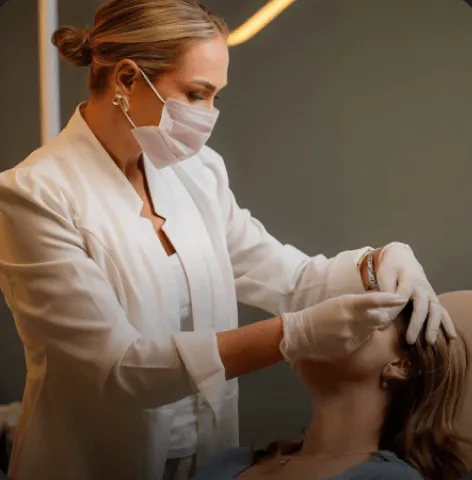
Your client fills out an intake on your storefront. A licensed clinician decides whether treatment is right for them, and if medication is prescribed, a licensed pharmacy ships it. Your spa stays the face of the program the whole way. Results vary by person, and the clinician decides what’s appropriate for each client.
Most med spas weigh three ways to get there:
- Work with a white-label partner (that’s us). Independent clinicians and pharmacies run behind your brand, and you can be live in days.
- Refer clients to someone else’s program.Simple to start, but it’s their brand, their price and their relationship with your client.
- Open your own medical practice. You get the most control, and it costs the most and takes the longest. Our MSO structure guide explains how it works.
Which of these is allowed depends on your state’s ownership and fee-splitting rules, so it’s worth a quick conversation with a healthcare attorney.
How we make it work for your spa
Four things happen behind your storefront. We take care of them so you can focus on your clients.
Licensed clinicians review every client
Every intake goes to an independent licensed clinician in the client’s state, and that clinician makes every treatment decision. Your team never makes a clinical call, and clients who travel or live out of state stay with you. See which states allow telehealth across state lines.
Licensed pharmacies fill and ship
Prescriptions are filled by licensed pharmacies and shipped straight to your client. Whether a product is FDA-approved or compounded, and whether a 503A or 503B pharmacy fills it, changes your costs and your risk, so we keep it plain: 503A vs 503B and telehealth pharmacy licensing.
Your storefront, portal and billing
Intake, the patient portal, checkout and shipping updates all carry your spa’s name. You set the prices and run the subscriptions; we run the technology. Here’s what a white-label telehealth platform includes.
Compliance built in
HIPAA-compliant systems and an audit trail across intakes, prescriptions and refills keep your program on solid ground, and LegitScript coordination is included on Growth and Partner. Your ownership structure and advertising still deserve your own legal review. A good place to start is telehealth compliance without the legal rabbit hole.
Who this works best for
- Med spas whose clients already ask about weight loss.
- Multi-location groups that want one program and one brand everywhere.
- Aesthetic and wellness clinics adding monthly recurring revenue next to injectables and facials.
- Owners without a clinician on payroll who still want licensed care behind every client.
Why med spas add a GLP-1 weight loss program
Clients ask about GLP-1s, then buy them somewhere else
When a client asks about semaglutide or tirzepatide and you send them elsewhere, a telehealth brand ends up with the monthly revenue your spa earned the trust for. With your own GLP-1 program, that client stays with you.
You don't need a prescriber on payroll
Medical weight loss takes licensed clinicians, proper exams, and compliant pharmacy sourcing. We bring the clinicians and pharmacies; you bring the clients. Curious how ownership works? Our MSO guide walks through it.
Treatment rooms can only do so much
Injectables and facials are limited by rooms and staff. A weight loss program bills every month without taking a minute of room time, and you can serve clients across state lines.
The engine behind yourspa.com
Same four rails behind every storefront — rented, maintained, and updated as the rules move.
Full white-label breakdown →Independent licensed clinicians in all 50 states review every intake and make every prescribing decision.
503A and 503B compounding partners fill and ship every order — prescription-grade, never research-use-only.
Billing built for telehealth from day one — a processor never shuts your brand down mid-scale.
Intake, consent, and clinical guardrails maintained at the infrastructure layer — updated as the rules move.
GLP-1 weight loss and other programs to launch first
Start with the programs your audience already wants, then expand across the full catalog.
GLP-1 Weight Loss
The program your clients are already asking for: monthly, medically supervised, and sold under your name. See how one med spa added GLP-1 revenue in 30 days.
Peptides & Recovery
Skin, recovery, and longevity programs to offer alongside weight loss. Here's how med spas sell peptides online.
Hormones & TRT
Hormone programs that keep clients with you for years, not visits. Here's how to launch one.
You set retail.
The margin is yours.
Here's the math with example numbers: 60 clients on a $299/mo GLP-1 program covers your platform fee many times over, and the rest is yours to keep.
- You set the retail price on every program
- Growth: $699/mo platform fee after $5,600 upfront — no per-visit fees
- Margin scales with patients — the fee doesn’t
Illustrative economics. Wholesale varies by program; retail is always yours to set. Growth plan: $5,600 upfront, then $699/mo.
Seven questions to ask any vendor, including us
Ask every company the same questions so you can compare offers fairly. We’re happy to answer them for FUSE.
- Who is the clinical entity? Ask for the name of the medical group that reviews intakes and writes prescriptions, and the states its clinicians are licensed in.
- Who fills the prescriptions? Get the pharmacy’s legal name and state licenses, and ask whether each product is FDA-approved or compounded. 503A vs 503B explains the difference.
- What does each active client really cost you? Add up the platform fee, any setup fee, merchant fees, clinical and pharmacy costs, and shipping. You can compare our plans on the pricing page.
- Who bills the client? Find out who is the merchant of record, and who handles refunds and chargebacks.
- Who owns your brand and your client data? Make sure the portal carries your brand, that you can export client and marketing-consent data, and that you know what happens to active clients if you leave.
- Who approves your advertising? Weight-loss claims, testimonials and before-and-after photos need a second pair of eyes. The FDA has published guidance for telehealth companies promoting compounded drugs.
- What happens if you leave? Check contract length, minimum commitments, price-change terms, and how your data comes back to you.
What a med spa GLP-1 program costs on FUSE
Every plan includes the full platform. There are no per-visit or per-prescription fees. You pay your plan’s monthly fee plus a merchant service fee.
| Plan | Upfront | Monthly | Merchant fee |
|---|---|---|---|
| DIY | $0 (build free) | $499 once you go live | 3% |
| Growth | $5,600, includes expedited LegitScript coordination and your first month | $699 from month 2 | 2% |
| Partner | $30,000 onboarding, first 12 months of platform included | $3,000 from month 13 | 2% |
3% on DIY, 2% on Growth and Partner, charged on the total of each patient payment processed through FUSE. Payment-processing and other third-party fees may apply separately. Clinical, pharmacy, payment-processing, advertising, and other third-party costs may apply and are shown before you commit. Full details are on the pricing page.
How many clients does it take to cover the fee?
Take the example above: $299/month retail, $180/month wholesale, and a $119 spread per client. After a 2% merchant fee that leaves about $113 per client, so roughly 7 clients cover the $699 Growth fee. On DIY, a 3% fee leaves about $110 per client, so roughly 5 clients cover the $499 fee. These are illustrations. Your wholesale cost, retail price and other costs will differ.
Three ways to launch, side by side
| White-label (FUSE) | Referral program | Your own practice | |
|---|---|---|---|
| Clinical care | Independent licensed clinicians behind your brand | The partner’s clinicians | Clinicians you hire or contract |
| Brand and price | Your brand; you set retail | Usually the partner’s program and price | Yours |
| Time to launch | Days to weeks, once agreements and setup are complete | Fast, but you don’t run the program | Months: entity, licensing, hiring |
| Upfront cost | From $0 (DIY) to $5,600 (Growth) | Usually low | Highest: legal setup, licensing, payroll |
Ready when you are
We handle the clinicians, pharmacies, billing and compliance. You choose the programs, set the prices and keep the client relationship. See how it works in three steps, browse the program catalog, or read our white-label telehealth overview.
Keep reading
Live in three steps
Pick your programs
Pick the programs your clients ask for and set retail
We wire the backend
FUSE wires the providers, pharmacy, and payments.
Go live
Go live on your domain in 3–5 business days.
Questions med spa owners ask us
The compliance and operations questions, answered straight.
What is a GLP-1 weight loss program at a med spa?
It's a medically supervised program built around prescription GLP-1 medicine. Your client fills out an intake on your branded storefront, a licensed clinician decides whether treatment is right for them, and a licensed pharmacy ships the medication if one is prescribed. We run the clinical and pharmacy side; you run the relationship. Results vary by person, and the clinician decides what's appropriate for each client.
How does a med spa GLP-1 weight loss program work with FUSE?
Clients sign up on your storefront, a licensed clinician reviews their intake, and if medication is prescribed, a pharmacy ships it to them. You keep the client relationship and the monthly billing. What GLP-1 telehealth providers offer operators goes deeper.
What is the difference between semaglutide and tirzepatide programs?
Both are GLP-1-based medicines, and which one suits a client is the clinician's call. On the business side, the differences are sourcing, supply, and pricing. Our compounded tirzepatide vs Zepbound guide and compounded semaglutide guide walk through them.
Can peptide therapy be part of a med spa weight loss program?
Many med spas add peptide programs next to weight loss. Every program has to stay within what a licensed clinician prescribes and what the FDA allows, so check the FDA Category 2 list and which peptides are legal before you build your menu.
How much does a med spa weight loss program cost clients?
You set the price. This page uses $299/month as an example, and the economics section above shows what's left after wholesale and the platform fee. See pricing for the platform plans.
Do I need a medical license to add telehealth to my med spa?
No. Independent licensed clinicians review every intake and make every prescribing decision. Your spa markets the program and never handles the medicine.
Will clients know a third-party provider is involved?
No. Intake, portal, checkout, and shipping updates all carry your brand. We work behind your storefront and never appear in front of your clients.
Can estheticians run a med spa weight loss program?
Your team keeps doing what they already do well: marketing the program and answering business questions. Anything clinical routes to the licensed providers automatically.
Can my med spa serve clients in other states?
Yes. Each intake goes to a clinician licensed in the client's state, so snowbirds and travelers aren't lost revenue. Which states allow telehealth across state lines explains the rules.
How much does it cost to add telehealth to a med spa?
DIY is free to build and $499/month once you go live. Growth is $5,600 upfront, then $699/month. There are no per-visit fees, and you set retail on every program. Full details are on the pricing page.
How long does it take to launch telehealth at a med spa?
Typically 3–5 business days once agreements and setup are complete. How it works shows the three steps from choosing programs to your first order.
Is it legal for a med spa to offer GLP-1 and peptide programs through telehealth?
It can be, when a licensed clinician makes every prescribing decision and a licensed pharmacy fills the order. State rules differ and FDA compounding policy keeps changing, so read which peptides are legal and the 503A vs 503B guide before you set your menu, and have a healthcare attorney look over your setup.
What is the difference between a white-label platform and building my own?
A white-label platform gives you the clinicians, pharmacy network, and software already running under your brand. Building your own means licensing, hiring, and engineering first. See what a white-label telehealth platform includes and the platform comparison.
Serving a different audience?
Same engine behind every storefront.
Add white-label telehealth to your med spa this week
Providers, pharmacy, payments, and compliance — wired behind your spa in 3–5 business days.
Independent licensed clinicians make all prescribing decisions on programs powered by FUSE. FUSE does not prescribe, diagnose, or treat patients. Prescription products require evaluation by a licensed provider. Example figures are illustrative only and not a guarantee of revenue.